
Aramco CEO: Oil inventories at stress level as buffer runs out
 4 Min Read
Aramco's CEO and other executives warn that accessible oil stocks are running low after over 1 billion barrels were drawn this year, Reuters reported.
-
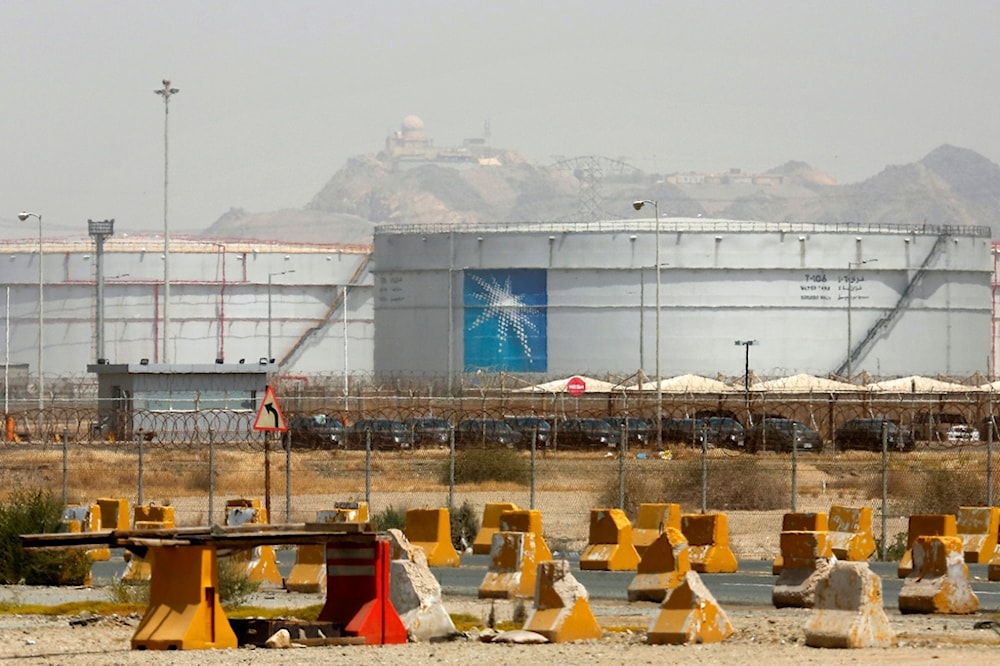
Storage tanks are seen at the North Jiddah bulk plant, an Aramco oil facility, in Jiddah, Saudi Arabia, on March 21, 2021. (AP)
The amount of oil in storage that is accessible to the global market is running low, industry executives said at a forum in London this week, Reuters reported, leaving the market more fragile and putting upward pressure on prices.
Amin Nasser, CEO of Saudi Aramco, told the Energy Intelligence Forum that fewer than six billion barrels of commercial inventories remain, and that the vast majority are not practically available. He said the system is already straining.
"Inventories are reaching a stress level," Nasser said, adding that only 10% or less of those stocks can actually be drawn on.
More than a billion barrels already drawn
Nasser said more than one billion barrels have been released, mainly from onshore commercial inventories, since the start of the crisis, which began with the US-Israeli war on Iran on February 28. He described that drawdown as the last major tool available.
Governments and energy companies have tapped stocks to ease pressure on a market facing unprecedented supply disruptions this year from the wars in West Asia and Ukraine, Reuters reported.
Not all stored oil is usable, as some of it sits in tank bottoms or pipelines, and government rules set minimum emergency stock levels. Nasser said there is huge demand to build inventories back up around the world.
The IEA's 100 million barrels
Currently, the International Energy Agency (IEA) puts world oil demand at about 102 million barrels a day.
The IEA is preparing to release 100 million barrels of crude and diesel to ease soaring diesel prices,. It is not yet clear whether the total includes volumes from the record 400 million barrel release agreed in March that had not reached the market.
Nasser said the decision took a lot of negotiation, and that with so little oil available, the 100 million barrel figure is a struggle to deliver.
G7 leaders agreed the release on October 2, which will run over four months, with diesel front-loaded in the first 20 days.
IEA Executive Director Fatih Birol told the G7 leaders that about 325 million barrels of the March action, over 80% of the pledge, had been released and had helped plug the supply gap. He said the market impact of the Strait of Hormuz crisis remains acute, especially for diesel, according to the IEA.
Executives: turmoil will outlast the year
Chevron CEO Mike Wirth said Tuesday that the loss of the market's buffers has made it more fragile and raised oil's price floor. Executives said at the conference on Monday that market turmoil will continue beyond next year, because refilling inventories will take years on top of meeting demand.
Russell Hardy, CEO of commodities trader Vitol, said the world depends on seaborne oil exports leaving West Asia to keep the market in balance through the winter, because there are no more inventories to drain in the West. Kuwait Petroleum Corporation CEO Shaikh Nawaf Al-Sabah said his company aims to expand storage at home and at its overseas refineries. Tengku Muhammad Taufik, CEO of Malaysia's Petronas, warned that natural gas stocks are also depleted, and that a bad winter could devastate the gas market in the first quarter of 2027 if storage falls to minimal levels.
Additionally, crude stocks in the US Strategic Petroleum Reserve are at their lowest since October 1982, according to Department of Energy data.


