
China to promote trade and investment liberalization with Russia
 2 Min Read
China will promote the liberalization of China-Russia trade and investment, CCPIT Vice Chairman Li Xingqian said at a business forum in Moscow.
-
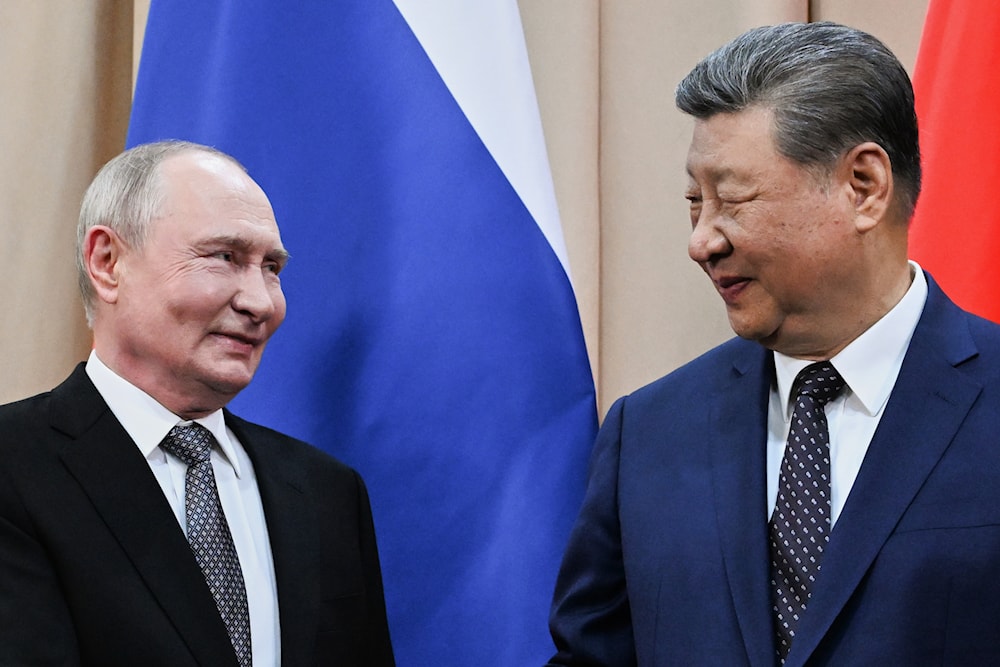
Russian President Vladimir Putin, left, and China's President Xi Jinping look at each other prior to the talks on the sidelines of the Shanghai Cooperation Organization (SCO), in Bishkek, Kyrgyzstan, on Monday, Aug. 31, 2026 (AP)
China will promote the liberalization of Russian-Chinese trade and investment, Vice Chairman of the China Council for the Promotion of International Trade (CCPIT) Li Xingqian said on Thursday.
Speaking at a business forum in Moscow, Li stated, "It is necessary to promote the liberalization of Chinese-Russian trade and investment."
He added that CCPIT is ready to employ various cooperation mechanisms to streamline interaction between small and medium-sized enterprises of the two countries.
Russia-China trade increases 28.4%, reaches $185 bln
Trade between Russia and China increased by 28.4% in the first eight months of 2026 compared with the same period last year, reaching $185 billion, according to China's General Administration of Customs.
China exported $84.675 billion worth of goods to Russia between January and August, marking a 30.7% increase compared with the same period in 2025. Russian exports to China rose by 26.5% year-on-year to $100.37 billion, according to data released by the Chinese customs authority on Tuesday.
The figures mean Russia maintained a trade surplus with China during the first eight months of the year, with the value of Russian exports exceeding Chinese exports by more than $15.6 billion. The growth was recorded across trade in both directions.
In August alone, trade between Russia and China amounted to $25.6 billion. Russia exported $13.752 billion worth of goods to China during the month, while Chinese exports to Russia totaled $11.851 billion, according to the General Administration of Customs.
The monthly figures reinforce the broader trend recorded during the first eight months of 2026. For Moscow and Beijing, stronger commercial ties form part of a wider strategic relationship encompassing energy, investment, transport, technology, and other sectors.
The sustained growth in trade also highlights the limits of efforts to isolate Russia economically, as Moscow has continued redirecting substantial portions of its trade toward Asian markets while Beijing has maintained and expanded economic engagement with Russia.


