
EU fuel prices rise 16.9% year-on-year in July, Eurostat says
 3 Min Read
Fuel prices increased in 25 of 27 EU countries in July, with Romania, Germany and Lithuania recording the steepest annual increases, Eurostat says.
-
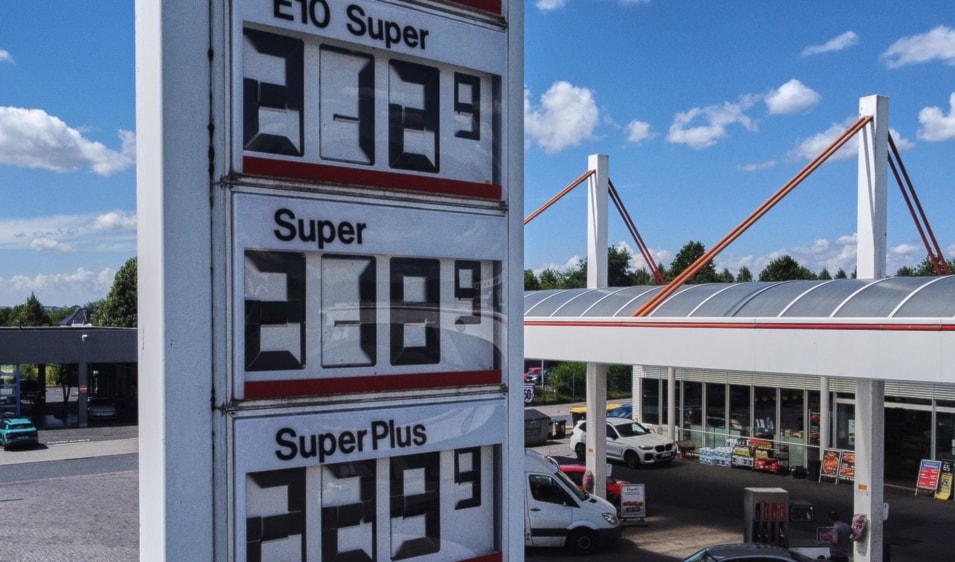
Fuel prices are displayed at a gas station in Frankfurt, Germany, Wednesday, July 1, 2026, the day after the government's fuel discount ended. (AP Photo/Michael Probst)
Fuel prices increased in 25 of the 27 European Union member states in July 2026 compared with the same month last year, with prices for fuels and lubricants for personal transport rising 16.9% across the bloc, according to Eurostat.
“In July 2026, the price of fuels and lubricants for personal transport in the EU increased by 16.9% compared with July 2025. This followed year-on-year increases of 20.7% in May and 13.7% in June. In 25 of 27 EU countries, fuels and lubricants prices were higher in July 2026, compared with July 2025,” the EU statistical agency said.
Romania recorded the steepest annual increase at 24.2%, followed by Germany and Lithuania at 22.9% each. Bulgaria registered a 22.2% increase, while prices rose 22.0% in the Netherlands and 20.5% in Finland.
The smallest annual increases were recorded in Sweden, at 1.2%, and Ireland, at 3.2%. Hungary was the only EU member state to record a slight annual decline, with fuel prices falling 0.1%.
Diesel and petrol prices rise in July
Every month, EU consumers saw diesel prices increase by 4.3% in July, while petrol prices rose by 4.7%. The increases followed notable declines in June, when diesel prices fell 6.4%, and petrol prices dropped 4.2% month-on-month.
Diesel prices increased in 17 EU countries in July compared with June. Poland recorded the largest monthly increase at 13.4%, followed by Germany at 12.7% and Greece at 12.1%.
Meanwhile, diesel prices declined in nine EU countries. The largest decreases were recorded in Cyprus, at 7.9%, Sweden, at 7.4%, and Ireland, at 6.4%.
Germany among biggest monthly increases
Petrol prices rose in 14 EU countries in July, while 12 recorded monthly declines. Poland saw the largest increase at 17.2%, followed by Germany at 11.0% and Spain at 7.1%.
The sharpest monthly decreases in petrol prices were recorded in Sweden, at 11.1%, followed by Cyprus at 5.4% and Ireland at 4.1%.
Germany therefore ranked among the countries recording the largest increases in both diesel and petrol prices during July, while also posting one of the bloc’s highest annual fuel-price increases at 22.9%.
Oil prices surge as Trump threatens economic war on Iran
Meanwhile, oil prices surged more than 2% on Thursday after US President Donald Trump threatened to wage an "overwhelming economic war" against Iran and warned countries against continuing trade or providing any form of support to Tehran.
Brent crude futures, the global benchmark, rose 2.4% to around $94 a barrel in early trading, reaching their highest level since late July. US West Texas Intermediate crude futures also climbed 2.5% to $86 a barrel.
The sharp rise followed Trump’s latest threat to intensify economic pressure on Iran, raising concerns that Washington could tighten restrictions on Iranian oil exports and further disrupt energy flows.
Diesel prices are nearing record levels, adding to the burden on businesses and consumers: $ 5.47 per gallon.
— Al Mayadeen English (@MayadeenEnglish) August 21, 2026
The price has risen 8% in just one month, approaching the historic high of $5.82 per gallon.
The surge has hit gas stations and spread to trucking, agriculture,… pic.twitter.com/m4qR0ing0Q


