
EU renews push to use frozen Russian assets for Ukraine
 4 Min Read
Sweden, the Netherlands, Spain, and Poland are urging the EU to revive plans to use frozen Russian assets as Ukraine faces mounting financial needs.
-
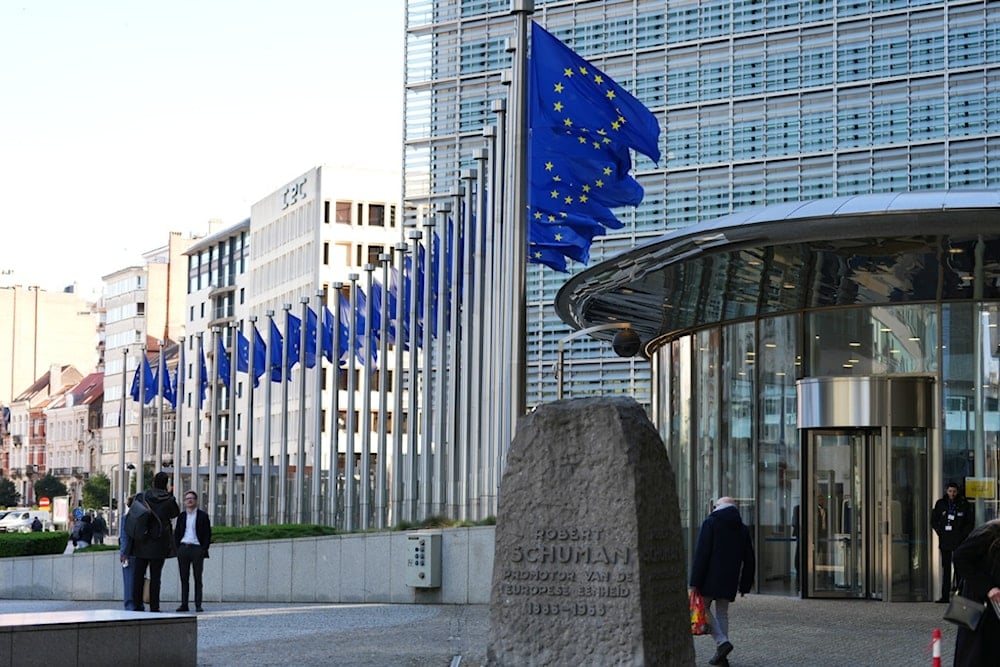
European Union flags flap in the wind outside EU headquarters in Brussels, Thursday, March 5, 2026. (AP Photo/Virginia Mayo)
Several European Union states are pressing Brussels to revive efforts to use immobilized Russian sovereign assets to finance Ukraine, amid concerns over Kiev’s growing funding requirements, the Financial Times reports.
Sweden, the Netherlands, Spain, and Poland are among the countries urging the European Commission to resume work on the proposal, according to four people briefed on a letter expected to be sent to the EU executive.
The initiative seeks to determine whether alternative legal and technical arrangements could overcome objections that previously stalled the plan.
Read more: Zakharova accuses Macron of encouraging attacks on Russian civilians
EU seeks to revive Russian asset plan
More than €200 billion in Russian Central Bank assets are held in the EU under sanctions imposed following Russia’s special military operation in Ukraine in February 2022. The majority of those assets are held by Euroclear, a Brussels-based central securities depository.
Swedish Foreign Minister Maria Malmer Stenergard said the EU should reopen discussions on how the frozen assets could be used.
“Now is the time to start a new discussion about how we can make further use of Russia’s frozen assets for Ukraine’s, and our, benefit,” Stenergard told the Financial Times. “This is the fair and smart way to make sure that Ukraine can defend itself, and all of Europe.”
The proposal was previously intended to provide Ukraine with substantial financing by using Russia’s immobilized sovereign assets as the basis for a so-called Reparations Loan.
The EU has already used profits generated by the frozen assets to support a loan of up to €50 billion agreed in 2024. The renewed proposal, however, would go further by seeking to leverage the underlying assets themselves.
Belgium remains key obstacle
The plan previously stalled largely because of objections from Belgium, where most of the Russian assets are held.
Brussels has warned that using the sovereign assets could expose Belgium to legal action and potentially force it to assume responsibility for repayment should Russia successfully challenge the measure.
Belgium has also raised concerns about the consequences for financial markets and the broader credibility of European financial institutions.
“No one has yet come up with a new proposal that doesn’t hit the same political barriers that existed in December,” an EU official briefed on the internal discussions told the Financial Times. “We don’t have a magic white rabbit to pull out of the hat here.”
The official further told the British daily that EU governments could nevertheless modify existing legal proposals in the hope that changing political circumstances could make the initiative viable.
Ukraine faces additional financing pressure
The renewed push comes as European capitals assess whether existing funding mechanisms will be sufficient to meet Ukraine’s financial requirements.
EU countries agreed in December to continue work on “establishing a Reparations Loan based on the cash balances associated with Russia’s immobilised assets”. However, according to people familiar with the matter, there has been little communication on the proposal since then.
The EU instead raised a €90 billion loan against the bloc’s budget as an alternative funding mechanism.
“The €90bn loan is a manifestation of the EU’s commitment to support Ukraine, but it is clearly not enough,” Stenergard told the Financial Times.
The debate also comes as EU states negotiate the bloc’s next seven-year shared budget. Some diplomats have suggested that additional funding for Ukraine could become part of those negotiations, increasing pressure on member states to identify alternative sources of financing.
Read more: Ukraine receives new Patriot interceptors, Zelensky still wants more


