
EU sanctions five Russians linked to military industry
 3 Min Read
The EU has sanctioned five individuals linked to Russia's military-industrial sector following recent strikes on Ukraine, expanding Brussels' pressure campaign against Moscow.
-
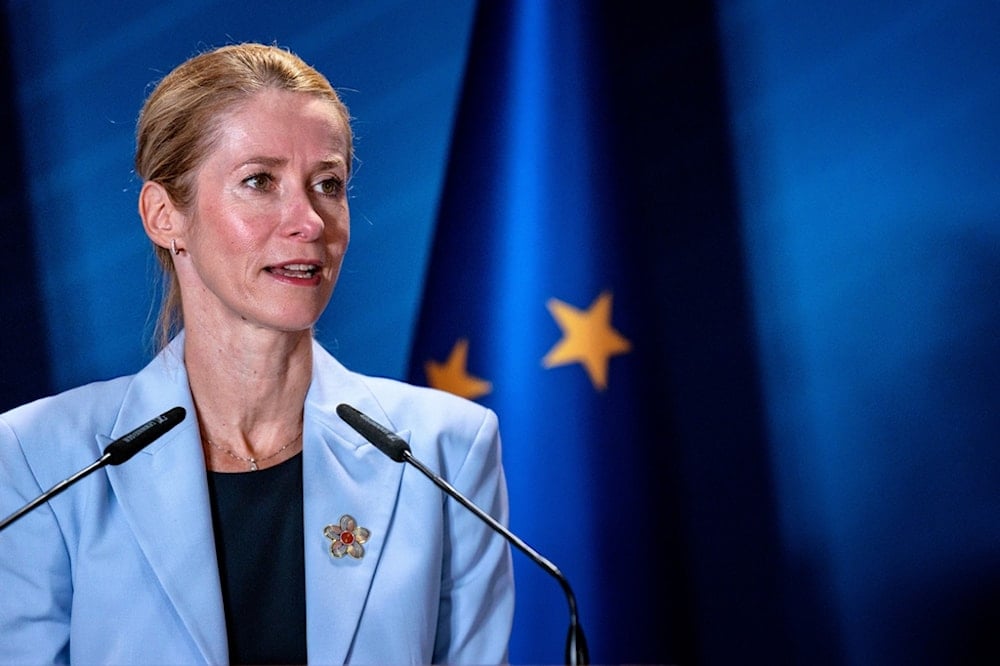
EU European Commission Vice-President Kaja Kallas delivers a statement on the sidelines of the ASEAN Foreign Ministers' Meeting in Pasay, Metro Manila, Philippines, July 24, 2026 (Pool Photo via AP)
The European Union has imposed sanctions on five individuals linked to Russia's military-industrial complex following recent Russian airstrikes on Ukraine, EU foreign policy chief Kaja Kallas announced Friday.
The latest measures add to Brussels' expanding sanctions regime against Moscow as the bloc seeks to increase pressure on Russia over the Ukraine conflict.
Kallas announced that the new sanctions were adopted on August 7, following the recent strikes, but did not identify the individuals targeted or provide details on the specific restrictions imposed on them.
"Each new attack on Ukraine is another reason for Europe to tighten the screws on Russia," Kallas wrote on X.
She also accused Moscow of intensifying attacks on civilians while claiming that Russian forces have stalled on the battlefield.
"With its army stalled on the battlefield, Moscow is further escalating its campaign of terror against civilians," she said. "The EU must continue to intensify pressure on Russia until Moscow ends its war."
Each new attack on Ukraine is another reason for Europe to tighten the screws on Russia.
— Kaja Kallas (@kajakallas) August 7, 2026
As a response to the recent series of Russian airstrikes, the EU today adopted new sanctions listings targeting five individuals involved in Russia's military-industrial complex.
With its…
The latest listings come as the EU continues to expand sanctions targeting sectors considered central to Russia's military and economic capacity.
Read more: Russia hits 3 Ukrainian-linked cargo ships in Black Sea
New measures follow broader sanctions package
The five new listings were announced just over two weeks after EU governments approved the bloc's 21st sanctions package against Russia.
Adopted on July 23, the package added 48 individuals and 170 entities to the EU sanctions list, making it the bloc's largest round of listings since Russia launched its full-scale military operation in Ukraine.
The measures targeted Russia's financial, energy, and military-industrial sectors, as well as cryptocurrency networks, the so-called shadow fleet involved in circumventing oil restrictions, and companies accused of supporting Russia's military economy.
The package included 56 listings targeting Russia's military-industrial complex, among them 37 individuals and entities linked to the production and supply chains of long-range drones.
The latest sanctions therefore form part of a broader European effort to restrict Russia's access to financial resources, industrial capabilities, and technologies that Brussels says contribute to its military capacity.
EU pressure campaign faces wider economic calculations
The sanctions campaign is unfolding alongside competing economic interests within the EU, particularly over energy security and trade restrictions.
The 21st package was agreed after Greece secured an annually renewable exemption allowing companies to continue shipping Russian liquefied natural gas to non-EU markets.
The exemption illustrates the tensions within the bloc as European governments attempt to maintain a unified sanctions policy while balancing national economic interests and energy considerations.
For Moscow, the continued expansion of EU sanctions adds to restrictions imposed by the United States and other Western governments. Russia has sought to offset the impact through alternative trade routes, markets, and financial arrangements, particularly with countries outside the Western sanctions coalition.
Read more: Deadly Ukraine drone attacks hit Moscow, Leningrad regions, kill five


