
French opposition files no-confidence over energy plan
 3 Min Read
Two major French opposition parties file France no-confidence motions against the government over its 2035 energy strategy and lack of parliamentary debate.
-
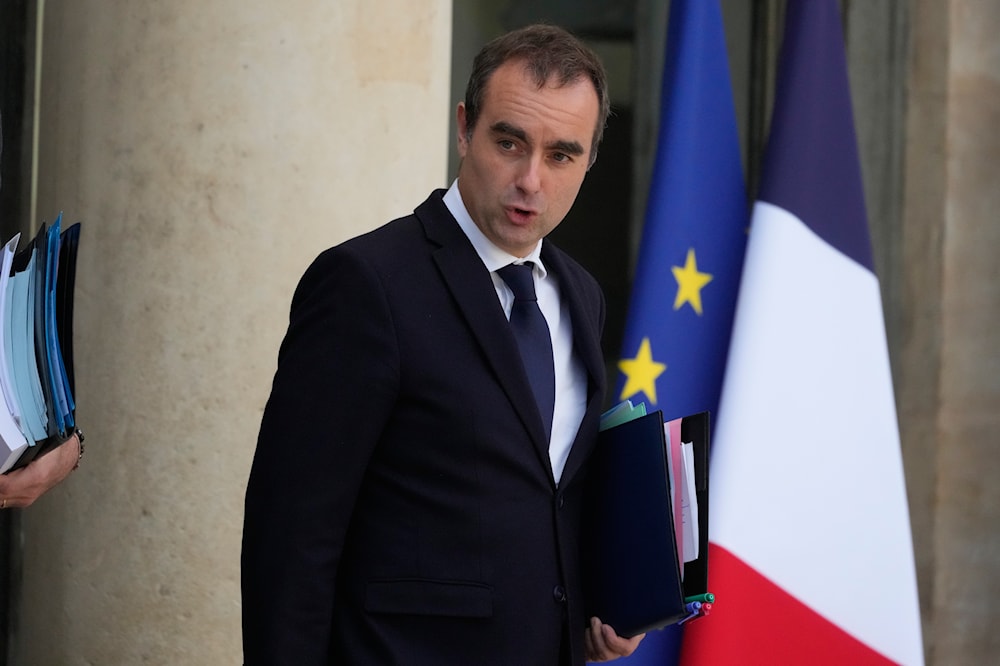
French Prime Minister Sebastien Lecornu leaves the weekly cabinet meeting, Tuesday, Oct. 14, 2025 at the Elysee Palace in Paris (AP)
Two major opposition parties in France have filed motions of no-confidence against the government over its new energy strategy extending to 2035.
On Monday, the left-wing France Unbowed party announced its motion, citing the lack of parliamentary debate or vote on the plan.
Earlier the same day, the right-wing National Rally, led in parliament by Marine Le Pen, submitted a similar motion. The party warned that the strategy could result in higher taxes or rising energy bills for French households.
“We are filing a no-confidence motion!” France Unbowed’s parliamentary group declared on X, accusing the government of imposing a long-term energy policy without consultation.
The government has yet to respond publicly to the motions, and it remains unclear how parliament will address the growing political challenge.
France's energy strategy hits wall after insufficient debate
France’s energy strategy, formalized most recently through the third Programming Pluriannual of Energy (PPE 3) presented on February 12, 2026, sets a roadmap for how the country will produce and consume energy from 2025 to 2035. It aims to strengthen energy sovereignty, cut dependence on imported fossil fuels, and accelerate the shift to decarbonized electricity and electrified uses across the economy.
At the core of the strategy is decarbonisation, with a target of increasing the share of electricity in total energy consumption to about 60 % by 2030, up from roughly 30 % today, and expanding production of low‑carbon electricity through both renewables and nuclear power. This supports France’s broader goal of reaching carbon neutrality by 2050.
The PPE 3 updates France’s previously drafted energy goals by boosting nuclear production to around 380 – 420 TWh annually by 2035 and planning major investment in renewable energy and infrastructure, including solar, wind and grid adaptation. It also sets out measures to expand electric vehicle charging, heat pumps, housing electrification, and energy efficiency programmes.
France’s strategy incorporates auxiliary plans such as the national hydrogen strategy, updated in April 2025, which targets up to 8 GW of installed low‑carbon hydrogen capacity by 2035 and development of transport and storage infrastructure to support industrial decarbonisation.
The opposition parties filed motions of no-confidence largely because they argue the government imposed this long-term energy plan without proper parliamentary debate or approval. They warn that the strategy could significantly impact households and businesses through higher energy bills and taxes, and claim that a lack of consultation undermines democratic accountability over a policy that will shape France’s energy landscape for the next decade.


