
Iran says crude exports never stopped during war, naval blockade
 4 Min Read
Iran's oil minister says the country maintained uninterrupted crude exports throughout the initial 40 days of intense fighting.
-
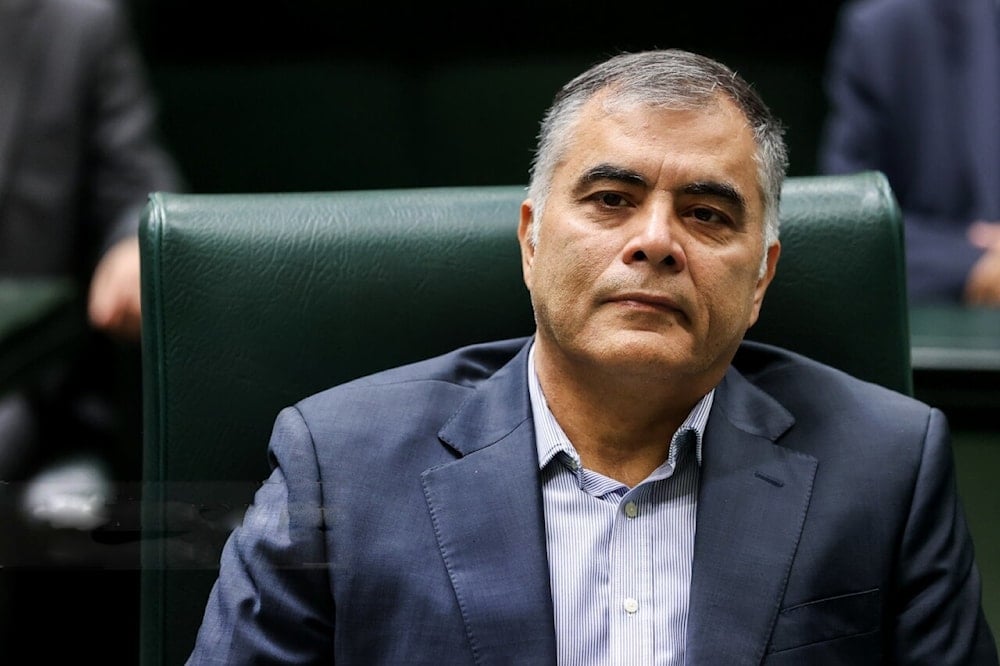
Iranian Energy Minister Mohsen Paknejad during the confirmation of Iranian President Masoud Pezeshkian's cabinet in Tehran, Iran, August 17, 2024 (Mehr News Agency)
Iran’s crude oil exports continued without interruption throughout the initial 40-day phase of the war, Oil Minister Mohsen Paknejad stated, adding that shipments have remained operational despite sustained attacks on energy infrastructure and the subsequent naval blockade.
Speaking in an interview on Thursday marking Government Week, Paknejad said Iranian crude exports “did not stop even for a single hour” from February 28 until the temporary ceasefire was announced, despite the military and security conditions surrounding the fighting.
He said Iran’s oil sector was able to maintain its core operations during that period, including loading and shipping crude from facilities exposed to repeated attacks.
Kharg Island operations continued under fire
Paknejad pointed in particular to Kharg Island, one of Iran’s most important oil export hubs, saying it was subjected to more than 550 strikes during the initial phase of the war.
“Kharg Island was subjected to more than 550 strikes. It is an island with an area of 23 or 24 square kilometers, and that is an enormous level of destruction,” he said.
Despite the bombardment, oil workers continued loading vessels, Paknejad added, describing their efforts as an achievement that “history will judge.”
“Even under bombardment, our colleagues were loading ships,” he said, praising workers across the oil industry, particularly those responsible for maintaining exports.
Paknejad also said a number of oil-sector employees were martyred while carrying out their duties during the attacks.
Oil deliveries shifted away from Gulf
The minister said oil storage facilities in Rey, south of Tehran, as well as in the Shahran and Quchak areas of the capital, were also subjected to heavy bombardment.
As attacks intensified and maritime restrictions tightened, Iran adapted its export operations by moving oil sales and deliveries to locations farther from the Gulf and the Sea of Oman, he said.
According to Paknejad, Tehran used the period of relative calm following the temporary ceasefire to transfer large volumes of crude to areas from which the oil could later be delivered to buyers.
Those arrangements were made before a new naval blockade began on July 15, which he said remains in effect.
Paknejad said the blockade established a line stretching between Ras al-Hadd in Oman and Pakistan’s Gwadar Port, forcing Iran to adopt additional measures to keep crude exports moving.
“The country later entered a phase of naval blockade,” he said, adding that special measures became necessary to ensure the continuation of exports.
Tehran presses ahead with output expansion
Despite the continuing war and restrictions on maritime activity, Paknejad said Iran is pressing ahead with projects aimed at increasing both oil and natural gas production.
He said the government has begun implementing a contract designed to raise crude output by 250,000 barrels per day.
After the necessary studies were completed and approvals secured, the project entered the implementation phase, with between 70,000 and 80,000 barrels per day of additional production already achieved, according to the minister.
Paknejad also said drilling operations at the South Pars gas field, which began in 2025, have made rapid progress.
More than 30 wells have been included under several implementation contracts, he said, with some already entering production.
The new wells have contributed to increasing Iran’s natural gas output, Paknejad added.
Read more: South Korea weighs Hormuz deployment after mounting US pressure


