
Ireland faces fuel crisis as protests disrupt oil supply
 4 Min Read
Fuel protests push Ireland to the brink of an oil supply crisis, as blockades disrupt transport, shut down refineries, and expose the impact of global energy tensions.
-
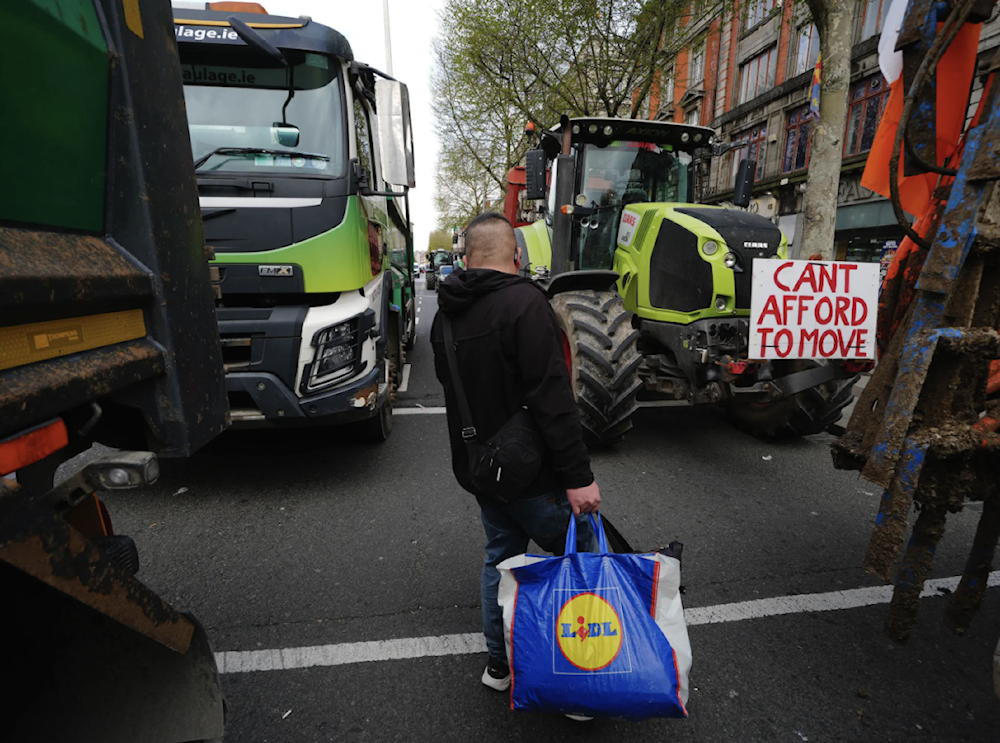
A man walks between vehicles parked on O'Connell Street on the second day of a national fuel protest against rising fuel prices, in Dublin, Ireland, on April 8, 2026. (AP)
Ireland is at risk of a temporary fuel shortage as protests over rising fuel prices continue to disrupt key transport routes and energy infrastructure across the country.
Demonstrations involving slow-moving convoys and blockades have targeted major roads, ports, and the country’s only oil refinery in Whitegate, significantly limiting access to fuel in recent days. The disruptions have also affected traffic nationwide, including around Dublin, where some travelers were seen walking along the M50 motorway to reach Dublin Airport.
Irish Prime Minister Micheál Martin warned that the country is “on the precipice” of turning away oil supplies amid a broader global energy crisis.
He confirmed that Ireland risks losing its oil supply entirely due to blockades affecting fuel depots in Galway and Limerick, as well as the Whitegate refinery in Cork.“It is unconscionable, it’s illogical, it is difficult to comprehend," Martin said.
Protests intensify despite tax cuts
The unrest comes despite government measures to ease fuel costs, including temporary cuts to fuel duties introduced on March 25 and set to last until the end of May.
As of Friday, petrol prices averaged about $2.30 per liter, while diesel reached around $2.62 per liter.
Industry group Fuels for Ireland warned that if protests continue, up to 500 filling stations—out of around 2,000 nationwide—could run out of fuel by the end of the day.
Tensions spread to Northern Ireland
The protests are expected to extend into Northern Ireland in the coming days, with planned demonstrations targeting major routes such as Belfast’s Westlink motorway and the port of Larne.
The Police Service of Northern Ireland said it is monitoring the situation and preparing measures to ensure public safety and minimize disruption.
🚨IRELAND ON THE BRINK!
— The British Patriot (@TheBritLad) April 9, 2026
In the last 24 hours, Irish patriots have shut down the nation!
Truck drivers, bus operators and farmers have paralysed cities with massive blockades.
Even as Gardaí threaten 6 months in jail, more patriots flood the streets in defiance.
Ireland is… pic.twitter.com/vh8Zkehgsv
Irish authorities have already begun responding to the crisis. On Friday, a standoff occurred between protesters and police at the Whitegate refinery before officers secured the passage of fuel tankers to maintain emergency supplies.
A day earlier, the government deployed the army to remove vehicles blocking critical routes, as pressure mounted to restore fuel distribution.
IMF warns Iran war will slow global growth and fuel inflation risks
The head of the International Monetary Fund (IMF), Kristalina Georgieva, warned that the ongoing war on Iran and the wider West Asia will significantly weigh on global economic growth this year, driven by damage to energy infrastructure and disruptions to supply chains.
Speaking ahead of next week’s spring meetings of the IMF and the World Bank, Georgieva said that even in the most optimistic scenario, the global economy will not return to pre-war conditions. “Even in a best case, there will be no neat and clean return to the status quo ante,” she said, adding that growth will be slower even if a peace agreement proves durable.
The IMF noted that a fragile two-week ceasefire agreement between the United States and Iran could help limit some of the economic damage. However, Georgieva stressed that the broader consequences of the war are already embedded in global markets.
The fund’s last projections, issued in October, had already anticipated a slowdown in global growth to 3.1% this year, down from 3.2% in 2025. Georgieva said those forecasts are now likely to be revised downward due to the war’s impact on energy markets.
Energy shocks push inflation higher
The war has driven oil prices above $100 per barrel and pushed gasoline prices in the United States above $4 per gallon. The IMF warned that renewed energy shocks could trigger another wave of inflation, forcing central banks to consider tighter monetary policy. "Higher prices for key inputs feed into many consumer goods, lifting inflation", Georgieva said.
She added that if inflation expectations become unanchored, central banks may need to respond with interest rate hikes.
Minutes from the latest meeting of the Federal Reserve showed policymakers remain cautious, closely monitoring the war’s inflationary impact while keeping interest rates steady.
Georgieva also warned against overly aggressive monetary tightening, saying premature action could harm growth. “Concentrate on conditions,” she said. “Because if you tighten prematurely and unnecessarily, you’re throwing cold water on growth.”


