
Kuwait records zero crude oil exports in April in first since Gulf war
 3 Min Read
The Strait of Hormuz, Kuwait's only export outlet, is effectively shut down by the US war on Iran, forcing the Kuwait Petroleum Corporation to declare force majeure on shipments.
-
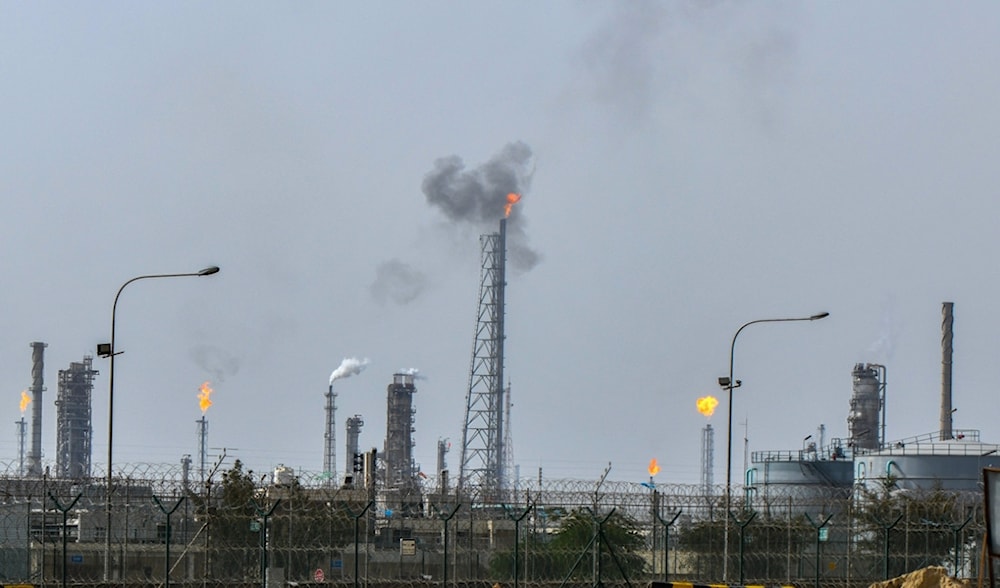
The Mina Al-Ahmadi oil refinery operates in Kuwait, March 20, 2026. (AP Photo)
Kuwait recorded zero crude oil exports in April 2026, tanker-tracking platform TankerTrackers confirmed, marking the first month since the end of the Gulf War that the country has shipped no crude.
The Kuwait Petroleum Corporation (KPC) declared force majeure on oil and refined product shipments on multiple occasions over the past two months, after tankers became unable to freely navigate the vital maritime corridor. With the Strait effectively shut down, Kuwait is left with no viable export outlet despite continued domestic production.
Kuwait has not stopped pumping oil, but with tankers unable to load at Gulf terminals, crude has been absorbed into domestic consumption and storage.
Once onshore and offshore storage reaches capacity, producers face the costly and potentially damaging prospect of shutting in wells.
The export halt sent Kuwaiti crude prices sharply higher, with the benchmark surging $6.14 to reach $112.32 per barrel. The price movement is less a function of active trades in Kuwaiti barrels and more a signal of forward risk and regional uncertainty, as markets price in the prospect of a prolonged structural loss of Gulf supply.
Winners, losers in the Gulf
Analysts at Goldman Sachs identified Kuwait, the UAE, and Iraq as the most severely exposed to the Hormuz closure, owing to their near-total dependence on the strait as an export route. Kuwait exports virtually all its crude through ports on its short Gulf coastline, with no pipeline alternative bypassing Hormuz.
Iraq had coordinated with Iran to allow its ships to pass, but Trump's blockade has left many countries exposed.
Saudi Arabia and Oman, by contrast, stand to register relative gains. Riyadh can redirect exports through Red Sea terminals via the East-West Petroline, while Oman ships from Arabian Sea ports already outside the strait's reach.
Goldman Sachs estimates Gulf production has fallen roughly 57% below pre-war levels. Even under a reopening scenario, the bank warns that recovery will be slow and incomplete.
Kuwaiti officials have cautioned that restoring full export capacity could take months after any resumption, given the extent of idled infrastructure and shut-in wells.
The last time Kuwait's crude exports fell to zero was in the wake of Iraq's 1990 invasion and occupation of the country. In early 1991, retreating Iraqi troops set fire to between 700 and 800 oil wells, roughly 60 to 85% of Kuwait's total, while systematically sabotaging pipelines, wellheads, and surface facilities. Millions of barrels were burned or spilled, and Kuwait's production capacity effectively collapsed for nearly two years.


