
Kuwait declares force majeure as Hormuz blockade disrupts oil exports
 3 Min Read
Kuwait has invoked force majeure on oil shipments as the disruption of the Strait of Hormuz prevents tanker access.
-
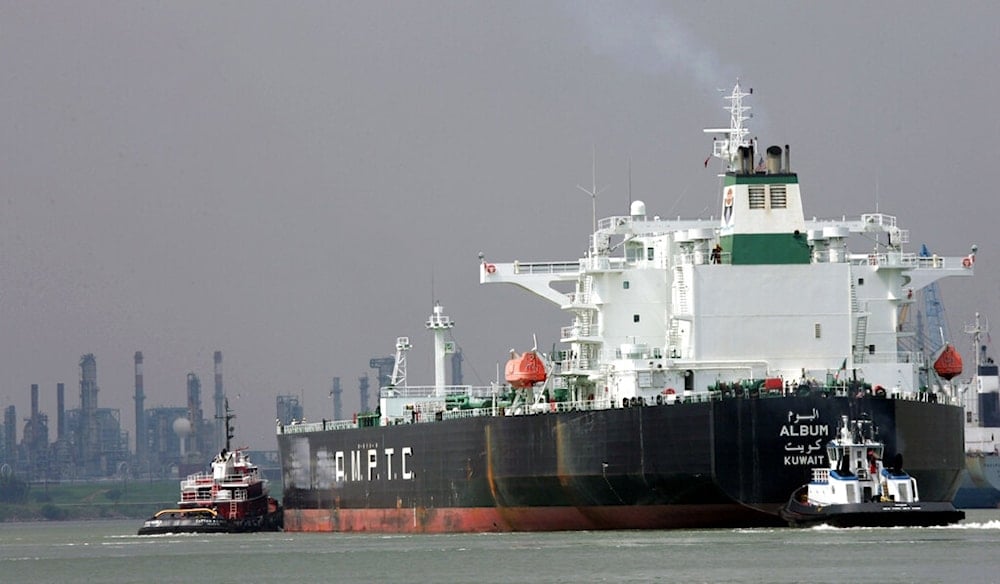
Tugboats help the Kuwaiti oil tanker Album navigate through the Houston Ship Channel before docking Friday, Aug. 26, 2005, in Deer Park, Texas (AP)
Kuwait has invoked a force majeure clause on shipments of crude oil and refined products, citing the ongoing disruption in the Strait of Hormuz that has made it impossible to fulfill certain delivery obligations, Bloomberg reported on Monday.
State-owned Kuwait Petroleum Corp. informed its clients of the decision, according to a document obtained by Bloomberg. The clause allows suppliers to suspend contractual commitments under extraordinary circumstances, though a person familiar with the matter noted that the move does not necessarily signal a complete halt in exports.
Strait crisis
The move comes as maritime traffic through the Strait of Hormuz remains severely restricted amid the war on Iran, with tankers unable to safely access the Gulf. The bottleneck has caused storage facilities across the region to fill, forcing producers to cut output.
The disruption follows a brief and fragile ceasefire that came into effect earlier this month. Under the arrangement, Iran moved to reopen the Strait of Hormuz on April 17, declaring it “completely open” to commercial shipping. However, Tehran reversed the decision within a day, after the United States maintained its naval blockade and continued interfering with vessels.
Tensions escalated further overnight after US forces seized an Iranian vessel near the Strait. The event effectively derailed efforts to stabilize maritime traffic and reinforced Iran’s decision to reimpose restrictions.
Oil shock
The near-closure of the strategic waterway has sent shockwaves through global energy markets, given its central role in transporting Gulf oil to international buyers. Countries across the region have already reduced production of crude, gas, and refined products as shipping constraints persist.
Kuwait has also sustained damage to key oil infrastructure during the war, contributing to a sharp decline in output. Production levels have reportedly fallen to figures last seen in the early 1990s following the Iraqi invasion, according to a person with knowledge of the situation.
The strikes on these facilities came as part of Iran’s broader retaliatory campaign targeting states hosting US military assets, from which Washington and its allies launched attacks on Iranian territory. Gulf countries, including Kuwait, which host major US bases used to support military operations, have been drawn into the confrontation, with both military sites and adjacent strategic infrastructure coming under fire.
Officials in Kuwait have indicated that output could return to prewar levels within a few months after hostilities subside, but recovery is expected to take time, prolonging the impact on export capacity.
Read more: Iran releases satellite images showing damage to US Kuwait base strike


