
Iranian tankers breach Hormuz blockade with crude shipments
 4 Min Read
Three sanctioned Iranian oil tankers exit the Gulf via the Strait of Hormuz despite the US blockade, signaling Tehran’s continued export capabilities.
-
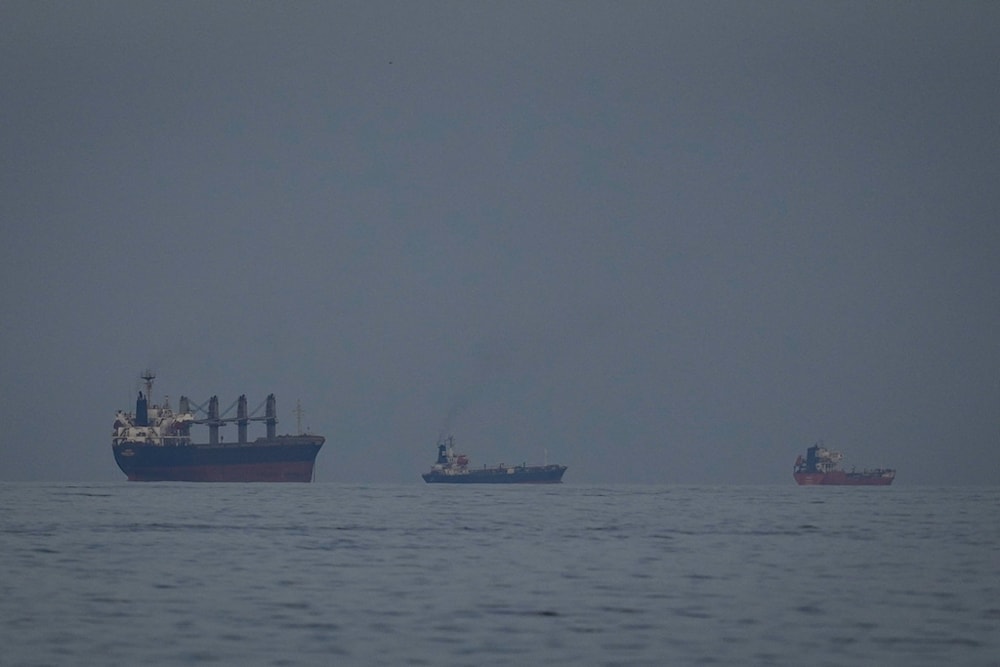
Oil tankers and ships line up in the Strait of Hormuz as seen from Khor Fakkan, United Arab Emirates, Wednesday, March 11, 2026. (AP Photo/Altaf Qadri)
Three Iranian oil tankers have successfully exited the Gulf through the Strait of Hormuz, marking the first such movement despite Washington's imposition of a blockade targeting Iran’s oil exports.
AFP reports that, according to maritime tracking firm Kpler, the vessels The Deep Sea, Sonia I, and Diona carried a combined five million barrels of crude oil after departing from Iran’s Kharg Island. The ships loaded their cargoes earlier this month, on April 2, 8, and 9, respectively, before navigating through one of the world’s most strategically sensitive waterways.
Their passage on Wednesday underscores Tehran’s continued ability to maintain oil flows regardless of escalating US pressure aimed at restricting its energy exports.
Read more: Oil prices will swing between $95 and $120 amid war, US investor says
Blockade measures and their constraints
Washington’s blockade, imposed earlier this week, sought to prevent Iranian oil shipments from reaching international markets. The move represents another escalation in longstanding economic pressure targeting Iran’s energy sector.
However, the successful transit of these tankers indicates that enforcement remains incomplete. No Iranian tanker had crossed the Strait of Hormuz with crude cargo since April 10, when the Starla made its passage, highlighting a brief disruption rather than a sustained halt.
Notably, the three vessels operated with their AIS transponders switched off, a common practice in sanction-affected shipping. While maritime tracking platforms did not show recent positional data, satellite imagery enabled Kpler to confirm their movement through the strait.
Covert shipping networks and Asian destinations
Although the final destinations of the tankers remain undisclosed, patterns suggest they are likely headed toward Southeast Asia, particularly the Singapore maritime zone, a known hub for indirect oil transfers.
For years, Iranian-linked shipments have relied on ship-to-ship transfer operations in these waters. Crude is often offloaded onto intermediary vessels, which then transport it onward, frequently to Chinese ports.
Scale of Ongoing Transfers
Data analyzed by AFP from Kpler and Global Fishing Watch reveals the extent of this system. Since March 1 alone, at least 37 tankers linked to Iranian oil shipments have conducted transfers near Singapore, moving approximately 62.3 million barrels of crude.
Recent activity reflects this pattern:
- The Deep Sea’s prior cargo reached Yantai in northern China via the vessel Utopia Quest on March 30.
- The Diona’s shipment was delivered to Dongjiakou port on April 10 through the Indigo Ray.
- Sonia I transferred the cargo to the Adeline G, though its final destination remains unclear.
This layered logistical network allows Iranian exports to continue flowing into global markets despite sanctions.
Regional Maritime Activity Signals Strategic Adaptation
Additional vessel movements in the region point to a broader pattern of tactical maneuvering. Earlier this week, two sanctioned Iranian container ships exited the Gulf but reversed course near Pakistan’s maritime boundary, eventually returning toward Chabahar.
Meanwhile, two sanctioned cargo vessels traversed the Strait of Hormuz in the opposite direction, later appearing near Bandar Abbas.
These movements suggest a dynamic maritime strategy, balancing risk, surveillance evasion, and market access.
Strait of Hormuz situation post Lebanon ceasefire
Iran's Foreign Minister Abbas Araghchi stated on Friday that in accordance to the ceasefire in Lebanon, Iran will be opening the Strait of Hormuz temporarily.
"In line with the ceasefire in Lebanon, the passage for all commercial vessels through Strait of Hormuz is declared completely open for the remaining period of ceasefire, on the coordinated route as already announced by Ports and Maritime Organisation of the Islamic Rep. of Iran," the Araghchi said via a post on X.
In line with the ceasefire in Lebanon, the passage for all commercial vessels through Strait of Hormuz is declared completely open for the remaining period of ceasefire, on the coordinated route as already announced by Ports and Maritime Organisation of the Islamic Rep. of Iran.
— Seyed Abbas Araghchi (@araghchi) April 17, 2026
US President Donald Trump first saw the opening of the Strait as a victory, but later announced that the US blockade would remain in effect, stating, "THE STRAIT OF HORMUZ IS COMPLETELY OPEN AND READY FOR BUSINESS AND FULL PASSAGE, BUT THE NAVAL BLOCKADE WILL REMAIN IN FULL FORCE AND EFFECT AS IT PERTAINS TO IRAN, ONLY, UNTIL SUCH TIME AS OUR TRANSACTION WITH IRAN IS 100% COMPLETE."
Read more: China's Wang Yi calls to respect Iran rights as Hormuz Littoral State


