
Iran to UN: Hormuz stability hinges on ending aggression
 3 Min Read
Iran’s UN envoy says lasting stability in the Strait of Hormuz requires ending aggression and respecting Iran’s sovereignty amid US naval blockade tensions.
-
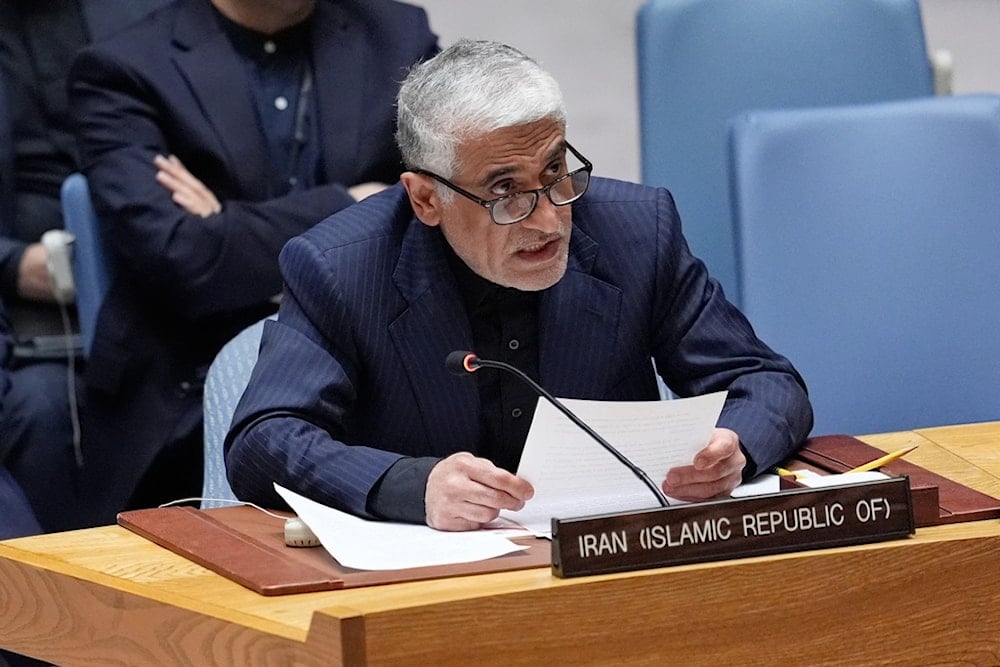
Iranian ambassador to the United Nations Amir-Saeid Iravani speaks during a Security Council meeting at United Nations headquarters, Wednesday, March 11, 2026. (AP Photo/Seth Wenig)
Amir Saeid Iravani, Iran’s permanent representative to the United Nations, stated on April 16 that “sustainable stability in the Strait of Hormuz and the region cannot be achieved except through ending aggression and fully respecting Iran’s rights and interests.”
His remarks come as regional tensions increase following the US-imposed naval blockade targeting Iranian ports and maritime routes.
Iravani emphasized that Iran “has always defended freedom of navigation and maritime security in the Gulf and the Strait of Hormuz,” framing Tehran’s actions as measures aimed at ensuring safe passage for vessels.
He added that Iran’s policies are intended to “guarantee the safety and security of navigation through the Strait of Hormuz and facilitate the safe transit of ships,” positioning the country as a central actor in safeguarding the waterway.
US blockade condemned as 'grave violation'
The Iranian envoy described the US naval blockade as a “serious violation” of Iran’s sovereignty and territorial integrity.
He stressed that Washington must bear “full responsibility” for what he called an “internationally unlawful” action, as well as for any consequences resulting from the escalation.
The blockade, announced by US President Donald Trump, targets vessels entering or leaving Iranian ports, intensifying economic pressure on Tehran while raising risks of broader regional confrontation.
Read more: Iran-linked vessels appear to transit Hormuz despite US blockade: CBS
Iranian oil shipments defy blockade
Earlier reports cited by Iranian media indicated that oil exports have continued despite the blockade.
According to Fars News Agency, Iranian tankers transported approximately 11 million barrels of oil via the Sea of Oman toward their destinations after the blockade was imposed.
The agency noted that this marks the first time oil shipments attributed to Iran have exited the blockade zone since its enforcement, signaling Tehran’s capacity to maneuver despite restrictions.
Warning of regional escalation
In a strongly worded statement, Iran’s Khatam al-Anbiya Central Headquarters warned that maritime security in the Gulf and the Sea of Oman is indivisible.
“Security of ports in the Gulf and the Sea of Oman will either be for everyone or for no one,” the statement said, cautioning that any threat to Iranian ports would mean that no port in the region would remain secure.
This warning reflects the broader strategic equation shaping the conflict, where pressure on Iranian infrastructure could trigger wider disruptions across key maritime routes.
Read more: US Senate blocks war powers resolution on Iran for fourth time


