
Iran-linked vessels appear to transit Hormuz despite US blockade: CBS
 3 Min Read
The continued transit of Iran-linked vessels raises questions about enforcement and the effectiveness of the measure.
-
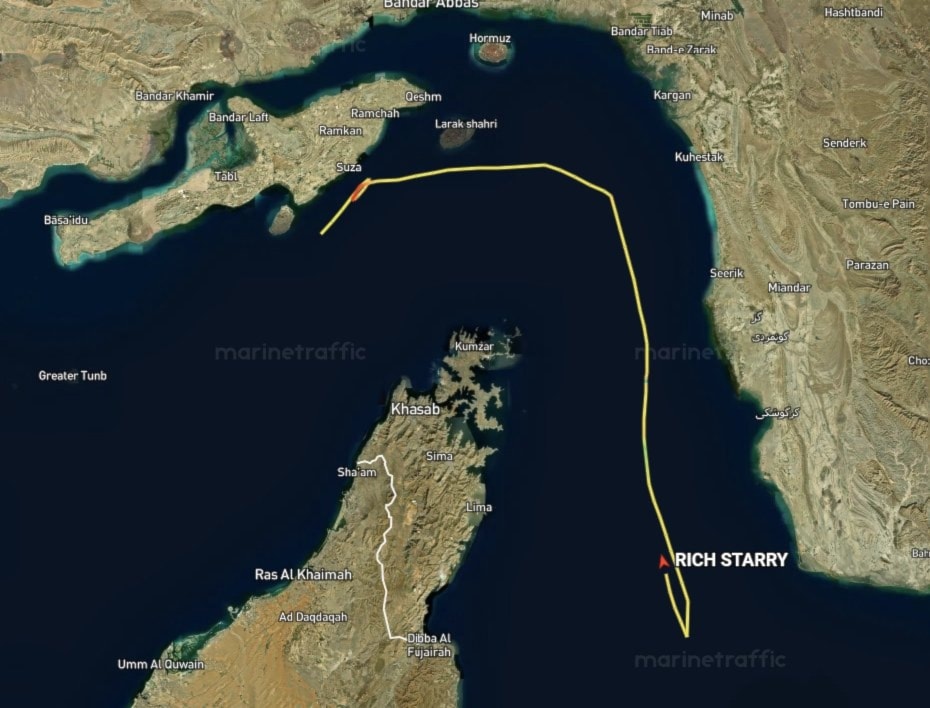
Tracking data show the route of the tanker Rich Starry transiting the Strait of Hormuz after the US-announced blockade, as vessels linked to Iran continue navigating the strategic waterway (Screenshot sourced from marinetraffic.com)
In the hours following the United States’ announcement of a naval blockade in the Strait of Hormuz, maritime tracking data indicated that Iranian-linked vessels continued transiting the strategic waterway, CBS News reported on Tuesday.
According to the report, the US measure targets vessels entering or leaving Iranian ports, while allowing passage through the Strait of Hormuz for ships bound to or from non-Iranian destinations, effectively limiting the scope of the blockade.
Despite the announcement, multiple tankers were observed navigating the strait. Among them, the Christianna had previously been halted at the Iranian port of Bandar Imam Khomeini before resuming its journey, while the Ladonna, which had remained docked at the same port for days, activated its tracking system and proceeded into the Gulf.
Other vessels flagged in the data include the Murlikishan, a tanker under US sanctions over alleged links to Iran, and the Peace Gulf, which is not currently sanctioned but had made a port call in Iran late last year. Both were tracked moving through the waterway overnight. Similarly, the Rich Starry, sanctioned under a different name, and the Elpis, another tanker believed to have departed from Bushehr, were also recorded transiting the Strait after the blockade took effect.
The continued movement of these vessels suggests that maritime flows through the Strait of Hormuz remain active, despite US efforts to restrict shipping tied to Iranian ports. Observers note that many of the ships transiting the waterway are third-party commercial vessels, which Iran has previously indicated may continue to pass as long as they are not deemed hostile.
The report added that tracking data may not provide a complete picture, as ships can manipulate or falsify their location signals, a practice known as spoofing, complicating efforts to independently verify routes and affiliations.
Reciprocity or none
The developments come amid escalating tensions following US President Donald Trump’s announcement that Washington would impose a naval blockade targeting maritime activity linked to Iran after negotiations failed. Trump said US forces would monitor and potentially intercept vessels suspected of ties to Iran, framing the move as part of broader efforts to counter Tehran’s role in the waterway.
Subsequent clarifications by US Central Command indicated that enforcement would focus on ships entering or leaving Iranian ports, rather than a full closure of the strait, underscoring the selective nature of the measure.
In response, Iran’s Khatam al-Anbiya Central Headquarters said maritime security in the Gulf and the Sea of Oman would be enforced on a reciprocal basis. Spokesperson Ebrahim Zolfaghari stated that “the security of ports in the Persian Gulf and the Sea of Oman is either for everyone or for no one,” warning that any threat to Iranian ports would carry broader regional consequences.
Read more: Iranian MP: Iran's rights must be recognized by end of truce period


