
Drone attacks hit Kuwait, UAE sites amid war on Iran
 2 Min Read
Drone strikes hit petrochemical sites in Kuwait and the UAE as Iran confirms targeting energy infrastructure.
-
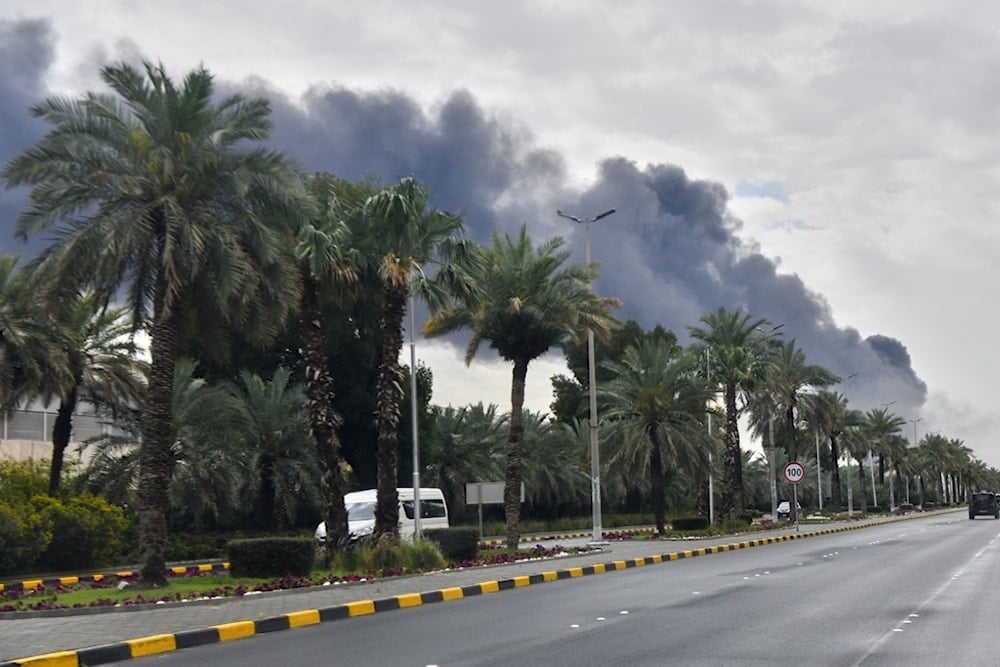
Smoke rises from Kuwait international airport after a drone strike on fuel storage in Kuwait City, Kuwait, Friday, Wednesday, March 25, 2026 (AP)
Drone strikes targeted key petrochemical and energy facilities in Kuwait and the United Arab Emirates on Sunday, causing fires and significant material damage without reported casualties, as tensions continue to escalate across the region.
Kuwait Petroleum Corporation said several operational facilities belonging to Kuwait National Petroleum Company and Petrochemical Industries Company were hit by unmanned aerial vehicles, sparking fires at multiple locations.
The corporation confirmed that no injuries were recorded, adding that emergency teams are working to contain the fires and prevent them from spreading to other facilities.
Fires reported in UAE facility and strike in Beer al-Sabe
In the UAE, the Abu Dhabi Media Office reported damage and three separate fires at the Borouge petrochemical plant, also without any reported casualties.
Meanwhile, an Iranian missile struck the Israeli industrial zone in the southern occupied territories, specifically in Beer al-Sabe.
The developments came after the Islamic Revolution Guard Corps announced it had targeted “enemy energy infrastructure and petrochemical industries” as part of Wave 96 of Operation True Promise 4.
The escalation follows an attack carried out by the Israeli occupation and the United States a day earlier on a petrochemical area in Mahshahr, according to the Fars News Agency.
Warnings of broader regional fallout
Israeli Prime Minister Benjamin Netanyahu said on Saturday that “we targeted Iran’s petrochemical factories today and will continue to strike them,” claiming that the steel and petrochemical sectors serve as a major source of revenue for Iran.
Earlier, the Khatam al-Anbiya Central Headquarters warned that continued escalation could push the entire region into wider conflict, stating that “if hostilities persist, the region will turn into a hell for enemies.”


