
Lebanon PM unveils banking reform bill to share crisis losses
 5 Min Read
Lebanese Prime Minister Nawaf Salam has published a banking reform bill to distribute losses from the 2019 crisis, a key condition for international aid.
-
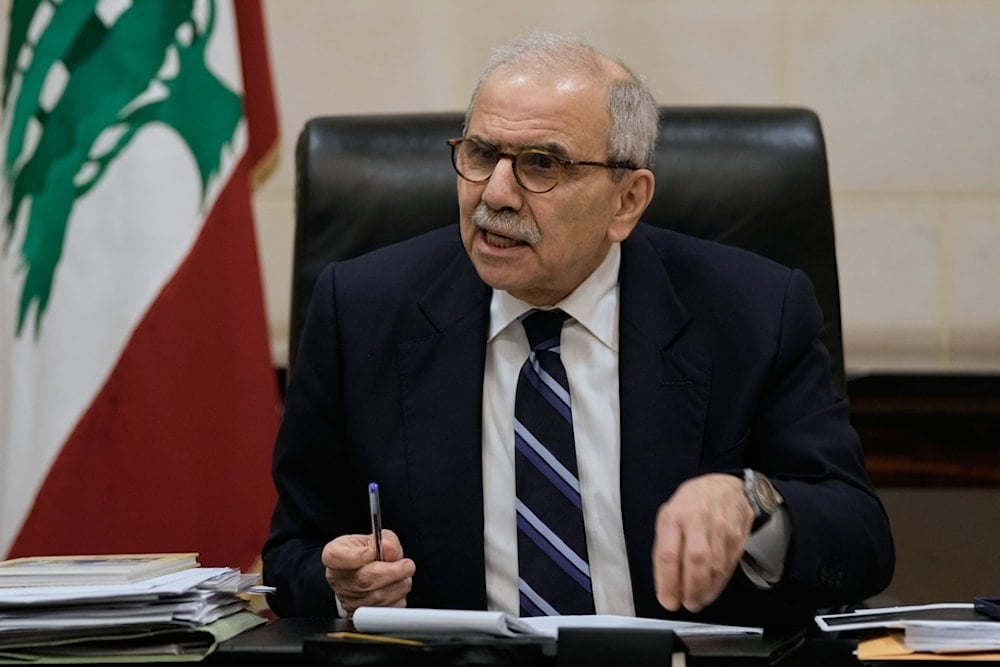
Lebanese Prime Minister Nawaf Salam speaks to journalists working for foreign media and news agencies at the government palace in Beirut, Wednesday, December 3, 2025 (AP)
Lebanese Prime Minister Nawaf Salam on Friday published a long-awaited draft banking law aimed at distributing the massive losses stemming from the country’s 2019 financial collapse between the state, banks, the central bank, and depositors.
The draft law, a key demand of the international financial institutions, comes as foreign financial assistance to Lebanon remains conditioned on the implementation of deep structural reforms. In a televised address, Salam described the bill as “a roadmap to getting out of the crisis” that continues to grip the country nearly six years on.
The proposal is set to be discussed by the cabinet on Monday before being sent to parliament, where it could face resistance. Under the draft, losses from the crisis would be shared among the Lebanese state, the central bank, commercial banks, and depositors, marking a shift from previous policies that largely shielded the banking sector.
Depositors who lost access to their savings after the crisis would be allowed to recover their funds up to a ceiling of $100,000 over a four-year period. Salam said that 85% of depositors hold less than $100,000 in their accounts, while wealthier depositors would receive compensation for remaining amounts through asset-backed securities.
“I know that many of you are listening today with hearts full of anger, anger at a state that abandoned you,” Salam said. “This bill may not be perfect... but it is a realistic and fair step towards restoring rights and halting the collapse.”
IMF wants stable Lebanese banking sector
The International Monetary Fund, which closely followed the drafting process, has repeatedly stressed the need to restore the viability of Lebanon’s banking sector in line with international standards while protecting small depositors.
However, the Association of Banks in Lebanon criticised the bill, saying it contains “serious shortcomings” and unfairly harms commercial banks.
Sami Zougheib, a researcher at the Beirut-based Policy Initiative think tank, said banks oppose the law because it obliges them to shoulder part of the losses. He told AFP that banks would have preferred the state to bear full responsibility.
The draft also includes provisions for the recapitalisation of failing banks and the conversion of government debt to the central bank into bonds. Salam said the legislation aims to revive a collapsed banking system that has fuelled a cash-based parallel economy, facilitating money laundering and illicit trade.
Government estimates put the losses from the financial crisis at around $70 billion, a figure believed to have increased after years of political deadlock and inaction. Since taking office, Salam and President Joseph Aoun have pledged to pass long-stalled reforms required to unlock international financial support.
Beirut restructures banks
In April, parliament adopted a bank restructuring law after previous legislation was criticised for enabling capital flight at the start of the crisis. The new draft law goes further by requiring politically exposed persons and major shareholders who transferred significant funds abroad from 2019 onwards to return them within three months or face fines.
Despite its publication, the bill’s future remains uncertain. Analysts warn that parliament may block the legislation, as many lawmakers are themselves large depositors, bank shareholders, or politically aligned with bank owners.
Politicians and banking officials have repeatedly obstructed reforms demanded by international lenders, delaying Lebanon’s access to much-needed financial assistance and prolonging the country’s economic crisis.
What the new law establishes
The banking restructuring law creates several key mechanisms for addressing Lebanon's collapsed financial sector. The legislation establishes a new oversight commission to manage the reorganization of the banking sector, with the central bank holding an influential vote in determining the fate of defaulted banks. This body will have broad authority over restructuring decisions and bank resolution processes.
The law provides authorities with a structured framework for dealing with insolvent banks, setting out clear procedures for how defaulting financial institutions should be handled. The structure gives the monetary authority significant influence over restructuring decisions, a point of ongoing debate regarding the appropriate level of central bank independence.
While the law establishes the legal foundation necessary for implementing broader banking sector reforms, the framework cannot function without the complementary Financial Gap Law, which would determine the actual allocation of losses among stakeholders.
This makes the current legislation a crucial but incomplete step toward banking sector recovery.
Lebanon's historic economic collapse
Lebanon has been going through one of the most severe financial crises in modern history since 2019. Real GDP fell sharply from $52 billion in 2019 to $28.3 billion in 2024, marking a nearly 40% contraction. Simultaneously, the Lebanese pound lost over 98% of its value, with hyperinflation peaking at 221.3% annually in 2023.
The social and economic toll was equally devastating. Poverty rates tripled, rising from 12% to 44%, with some studies estimating that more than 60% of the population is now living below the poverty line. The banking system effectively collapsed, trapping an estimated $93 billion in deposits, while banks imposed severe withdrawal limits ranging from $250 to $500 per month.
The crisis stems from decades of fiscal mismanagement. Public debt surged to 170% of GDP due to post-civil war reconstruction spending, largely financed by domestic banks through what many analysts describe as a Ponzi-like scheme.
The breaking point came in 2019, when confidence collapsed and the capital inflows Lebanon relied on to finance large current account deficits abruptly stopped because of Western sanctions.


