
Oil prices climb as war on Iran threatens global supply routes
 3 Min Read
Oil prices rise as the US war on Iran continues and Ansar Allah threatens a key Red Sea route used by Saudi Arabia to transport oil exports in response to the Saudi blockade.
-
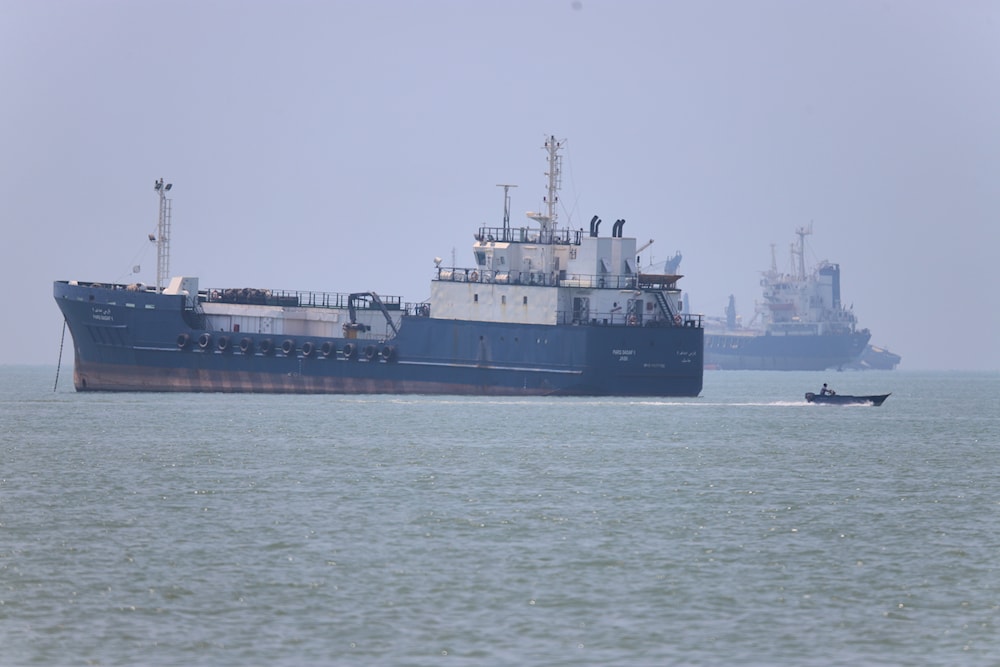
A small motorboat passes anchored vessels in the Strait of Hormuz off Bandar Abbas, Iran on June 17, 2026.(Amirhosein Khorgooi/ISNA via AP)
Oil prices climbed as the US war on Iran continued to intensify, while Ansar Allah threatened to disrupt a key alternative route used by Saudi Arabia to transport oil exports, raising concerns over further supply disruptions.
Brent crude, the global oil benchmark, rose 3.7% to $94.40 a barrel shortly before 5 a.m. ET. West Texas Intermediate (WTI), the US oil benchmark, gained 4% to reach $87.71 a barrel.
“The latest oil moves come as the strikes between the US and Iran have showed no sign of easing, and there are still no concrete signs of a peace deal either,” Deutsche Bank analysts wrote in a note as reported by CNN.
Crude prices have surged by around $20 a barrel this month after the US renewed its aggression on Iran and the latter retaliated. Brent futures for delivery six months from now reached a one-month high on Tuesday, according to Deutsche Bank, as concerns grow over the possibility of a prolonged disruption to global oil supplies.
Ansar Allah threat puts Saudi oil route at risk
The market concerns have been compounded by threats from Ansar Allah to attack Saudi vessels attempting to transit the Red Sea, potentially putting at risk an increasingly important alternative to the Strait of Hormuz for Saudi oil exports.
Saudi Arabia has diverted around 4 million to 5 million barrels of oil per day from the Strait of Hormuz to its Yanbu port, according to Helima Croft, head of global strategy at RBC Capital Markets. The volume represents roughly a quarter of the oil that moved through the strait before the war.
“If that route becomes inoperable, then the oil supply disruption becomes more serious, and we start talking again about a ‘no way out’ situation,” Croft said.
Yemen enforces 'blockade for blockade' equation
The latest developments follow Yemen's Armed Forces' warning to shipping companies against loading or unloading cargo at Saudi Arabian ports, with vessels engaging in such activities warned they could be targeted "in any location," Reuters reported.
The warning came after six vessels bound for Saudi Arabia turned back following the announcement of a ban on all maritime traffic linked to the kingdom, according to a military source cited by the Saba news agency. Reuters also reported that two oil tankers carrying Saudi crude reversed course in the Red Sea and headed back toward the Suez Canal.
The ban took effect on Monday afternoon, according to Major General Mohammed al-Qadiri, commander of Yemen's Coastal Defense Forces, who said it applies to all maritime traffic connected to "the Saudi enemy." Al-Qadiri said economic security could no longer be separated from military security, adding that Yemeni forces were at their highest level of readiness and that all options remained on the table.
The move puts into effect Sanaa's "blockade for blockade" equation, which it has presented as a direct response to Saudi Arabia's continued blockade of Yemen and ongoing aggression.
The Presidium of Yemen's Shura Council said Sanaa had exhausted all avenues for peace and described the blockade as a natural response to Riyadh's stalling and intransigence. It held the Saudi government responsible for potentially catastrophic consequences if it ignored the warnings issued to it.


