
ASEAN voices concern over escalation, risks in West Asia
 4 Min Read
ASEAN foreign ministers have voiced serious concern over renewed hostilities in West Asia, warning of risks to diplomacy, energy supplies, trade, and global growth.
-
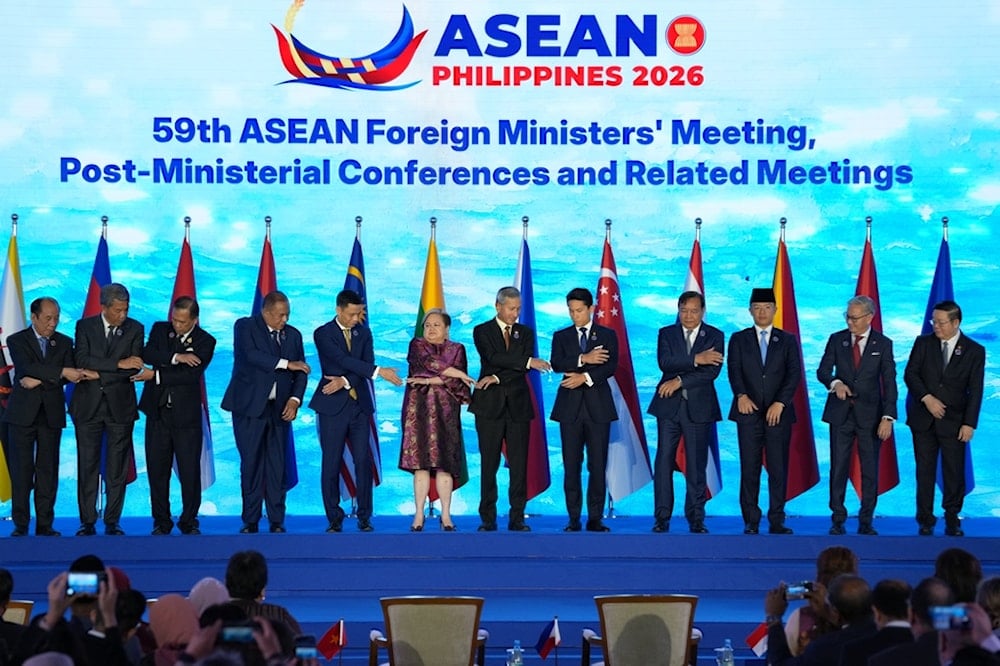
From left, Myanmar Permanent Secretary Hau Khan Sum, Malaysia's Foreign Minister Mohamad Hasan, Thailand’s Vice Minister for Foreign Affairs Vijavat Isarabhakdi, East Timor's Foreign Minister Bendito dos Santos Freitas, Vietnam's Deputy Minister of Foreign Affairs Dang Hoang Giang, Philippine Foreign Secretary Theresa Lazaro, Singapore's Foreign Minister Vivian Balakrishnan, BruneiÅfs Foreign Minister Prince Abdul Mateen Bolkiah, Cambodia's Foreign Minister Prak Sokhonn, Indonesia's Foreign Minister Sugiono, Laos Foreign Minister Thongsavanh Phomvihane, and ASEAN Secretary-General Kao Kim Hourn hold hands during a group photo during the opening ceremony of the ASEAN Foreign Ministers' Meeting at the Philippine International Convention Center on Tuesday July 21, 2026 in Pasay city, Philippines.(AP Photo/Aaron Favila, Pool)
Foreign ministers from the Association of Southeast Asian Nations (ASEAN) and major partner countries have voiced "serious concern" over renewed hostilities in West Asia, warning that the escalation could undermine diplomatic efforts and further threaten global energy supplies.
The issue overshadowed a week of diplomatic meetings in Manila involving the 11-member regional bloc and its partners, as Southeast Asian countries grapple with the potential economic impact of the war. The renewed US war on Iran has raised concerns over energy supplies passing through the Strait of Hormuz, as well as inflation and global economic growth.
The situation has become more volatile in recent days after Ansar Allah announced a naval blockade on Saudi Arabia, potentially opening another front in the war and increasing risks to energy supplies and international trade.
"We are deeply concerned that these developments severely undermine the ongoing efforts of key mediators and diminish the prospects for a peaceful resolution through dialogue and diplomacy," the foreign ministers said in a statement following a closed-door meeting.
Southeast Asia faces economic risks
Southeast Asia, a major oil-importing region with a combined gross domestic product of $3.8 trillion, is particularly vulnerable to disruptions in energy supplies. ASEAN members have sought to accelerate the creation of an oil-sharing mechanism to help mitigate the effects of a potential supply crunch.
The West Asia war is not the only major security issue facing the bloc. ASEAN was also due to hold consultations on the war in Myanmar, where the group's peace initiative has stalled five years after a military coup plunged the country into a civil war that has killed an estimated 100,000 people.
South China Sea tensions add to regional concerns
The ASEAN meetings are also expected to address tensions in the South China Sea, as the regional bloc and China continue efforts to finalize a code of conduct aimed at preventing disputes from escalating.
The discussions come after the Philippines accused China's Coast Guard personnel of striking a Philippine navy serviceman with a baton near the disputed Second Thomas Shoal. China rejected the accusation as false and summoned the Philippine ambassador.
The US State Department condemned China's "dangerous and aggressive" actions, accusing Beijing of engaging in a "troubling pattern of provocation against lawful Philippine maritime operations."
US Secretary of State Marco Rubio and Chinese Foreign Minister Wang Yi are expected to attend the ASEAN-led meetings and could hold talks on the sidelines. Representatives from India, Japan, Australia, South Korea, Russia, Britain, and the European Union are also participating.
Ahead of the gathering, Rubio criticized Beijing in an opinion article published in Philippine newspapers, claiming Washington's "commitment to freedom of navigation" while warning that such freedom was "by no means guaranteed."
"If those waters fall under the control of a power willing to use commerce as a geopolitical weapon, both the United States and the ASEAN states would face dire new threats to their sovereignty, security and economic futures," Rubio wrote.
Rubio also reaffirmed Washington's position that a 2016 international arbitration ruling rejecting China's sweeping claims in the South China Sea was final and binding. He said the US would honor its obligations to the Philippines and other allies as they confront new and coercive threats.
China does not recognize the arbitration ruling, which was issued in favor of the Philippines.


