
ASEAN meets amid anger over Iran war, region blames US for fuel crisis
 3 Min Read
ASEAN states blame US strikes on Iran for worsening the fuel crisis and rising economic pressure in Southeast Asia, with growing opposition against Trump's policies.
-
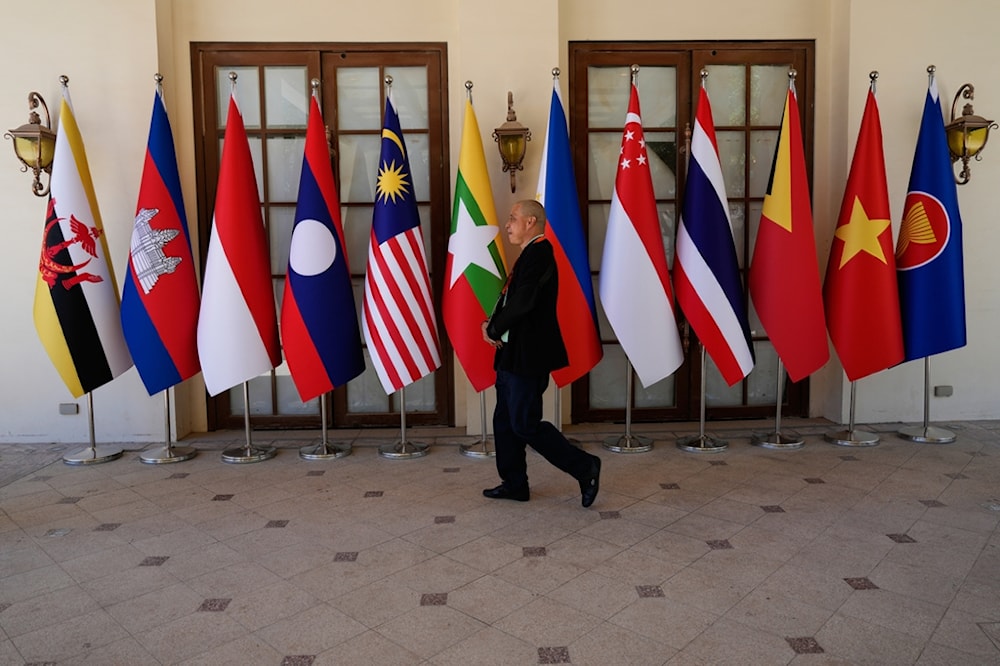
A man walks past flags ahead of the 48th ASEAN Summit and Related Meetings in Cebu province, central Philippines, on Wednesday, May 6, 2026 (AP)
The upcoming ASEAN summit is set to take place amid growing frustration in Southeast Asia over the United States, Foreign Policy reported, as countries in the region link Washington’s policies toward Iran and the Strait of Hormuz to a worsening global fuel and economic crisis.
The summit of the Association of Southeast Asian Nations will be held from Thursday to Friday in Cebu, Philippines, in what Philippine President Ferdinand Marcos Jr. described as a “very simple” meeting focused largely on energy and economic pressures.
Hostility, anger toward Trump admin.
According to the report, sentiment in Southeast Asia has shifted sharply against US President Donald Trump, after his return to the White House in 2024 was initially met with relative optimism in parts of the region.
It noted that US strikes on Iran and rising tensions in the Strait of Hormuz are increasingly seen by ASEAN states as directly threatening their economies due to heavy reliance on Gulf energy supplies.
The report added that US tariffs introduced in 2025 and the ongoing fuel crisis have contributed to a growing preference among influential regional figures for China over the United States, based on polling conducted before the outbreak of war on Iran on February 28.
It further stated that ASEAN countries are moving toward greater hostility toward Washington, which some in the region blame for exacerbating the crisis through its military actions against Iran.
While Trump was previously viewed by some in Southeast Asia as less interventionist than former President Joe Biden, the report revealed that this perception has shifted significantly after more than a year of his second term, as economic fallout from US policy has intensified.
Thai Foreign Minister Maris Sangiampongsa was quoted as saying that the war “should not have happened,” adding that the US has not provided assistance to Thailand in managing its economic consequences.
ASEAN ministers warn of global energy risks amid war on Iran
Separately, ASEAN economic ministers issued a joint statement last week expressing “grave concern” over disruptions to key shipping routes and calling for efforts to limit the economic impact of tensions in West Asia.
In a joint statement, the ASEAN Economic Community Council said, "We expressed deep concern that the current disruptions to key maritime routes, particularly the Strait of Hormuz, where around one-quarter of global seaborne oil and liquefied natural gas exports pass through, with over 80% destined for Asia, are posing severe risks to global energy security, fuelling persistent volatility in oil and LNG prices, and sharply increasing freight, insurance, and logistics costs."
ASEAN ministers said, "Rising energy and transport costs are cascading into food systems, including higher fertiliser prices and potential disruptions in fertiliser supply chains," adding that "the cost of living is rising across the region, with low-income households and small businesses most affected."
They reinforced "a commitment to avoid unnecessary trade barriers and non-tariff measures, particularly on food and energy inputs, during periods of crisis," and "keeping trade infrastructure such as land borders, airports, and seaports open to maintain the flow of essential goods."
The bloc noted "proposals to study regional oil stockpiling" and also agreed "to deepen coordination with international financial institutions to reinforce the region's economic resilience."
Read more: ASEAN moves to secure oil supplies amid Hormuz crisis


