
Panama Canal plans $8.5bln expansion to bolster trade resilience
 3 Min Read
The Panama Canal Authority plans to invest $8.5 billion in infrastructure projects aimed at strengthening trade routes and reducing exposure to geopolitical disruptions.
-
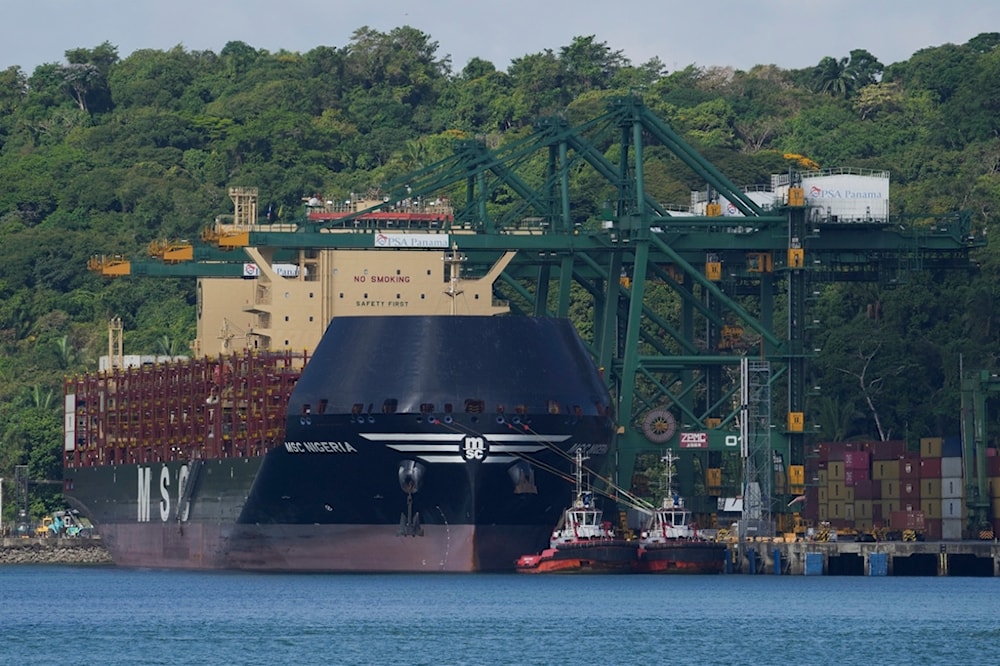
Cranes load and unload containers from cargo ships at the Panama Canal's Rodman Port, operated by PSA International, in Panama City, Thursday, April 9, 2026. (AP Photo/Matias Delacroix)
The Panama Canal Authority is preparing to invest approximately $8.5 billion in a series of major infrastructure projects designed to strengthen the waterway's operational capacity and reduce vulnerability to geopolitical disruptions affecting global trade.
Boris Moreno, the canal's vice president for operations, told RIA Novosti that the investment program forms part of a broader strategy to enhance the canal's long-term resilience and maintain its position as one of the world's most important maritime trade corridors.
"We estimate investments at about $8.5 billion," Moreno said.
The planned projects are expected to expand logistical capabilities across Panama while supporting the canal's role in facilitating international commerce amid an increasingly uncertain geopolitical environment.
Read more: Panama seeks China shipping deal renewal amid US tensions
Major infrastructure projects to reshape logistics network
A key component of the investment plan involves the construction of a dam and reservoir on the Rio Indio River, a project aimed at strengthening water resources critical to canal operations.
The authority is also moving forward with plans for two new port terminal concessions, one on the Atlantic coast and another on the Pacific coast, enhancing cargo handling capacity at both ends of the canal.
Another major initiative involves a liquefied petroleum gas (LPG) pipeline connecting both oceans. The project would include infrastructure for receiving, loading, unloading, and transporting energy products between the Atlantic and Pacific coasts.
Together, the projects are intended to diversify the canal's commercial capabilities and reinforce Panama's role as a strategic hub for global shipping and energy transit.
Expanding connectivity between two oceans
Beyond maritime infrastructure, authorities are considering a major expansion of the country's overland logistics network.
Moreno said plans are under review for a new highway running along the western bank of the canal, creating an additional logistics corridor linking the Atlantic and Pacific ports.
The proposed route would complement the existing Transisthmian Highway on the eastern side of the canal and could increase the movement of goods across Panama's narrow land bridge between the two oceans.
According to Moreno, some projects have already entered pre-qualification stages for potential bidders, particularly the port terminal and LPG pipeline concessions. The logistics corridor remains at an earlier stage, with multiple concepts still under evaluation.
Canal seeks insulation from geopolitical pressures
The investment strategy comes at a time of growing uncertainty in international trade, as geopolitical tensions, supply-chain disruptions, and competition among major powers increasingly affect global shipping routes.
Moreno said the central objective of the projects is to ensure the canal remains capable of operating independently of geopolitical turbulence.
The goal, he explained, is to enable the canal to "remain independent of geopolitical fluctuations and offer a stable product that serves global trade and benefits the country, regardless of what may happen in any given region."


