
Saudi business hubs close temporarily over Iran warnings
 4 Min Read
Major office districts in Riyadh, including KAFD, Al Faisaliah Tower, and Business Gate, shift to remote work amid Iranian threats to target US firms.
-
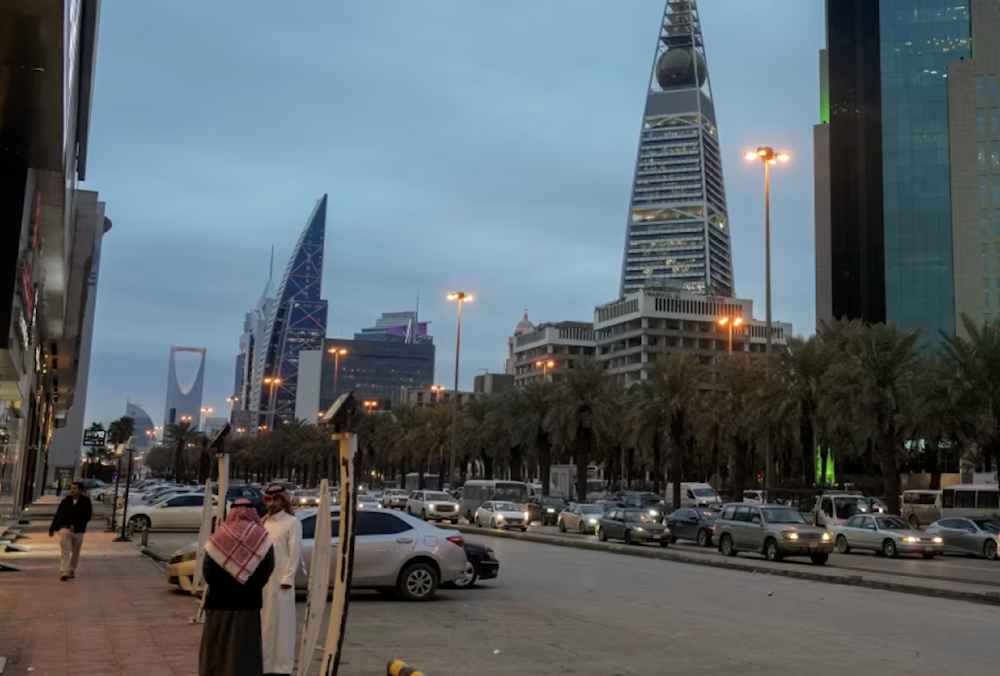
Saudis on the streets of Riyadh under Faisaliah Tower. (Undated, AP)
Major office buildings in Riyadh, including the King Abdullah Financial District (KAFD), Business Gate, and Al Faisaliah Tower, have instructed tenants to work remotely for the next few days. The move follows threats from Iran targeting US technology and finance firms.
Notices reviewed by the Wall Street Journal (WSJ) indicate that these directives stem from unspecified government security measures. While the buildings remain operational for restaurants and hotels, many office staff are staying home.
Companies affected
Several multinational corporations with offices in Riyadh are impacted:
- Al Faisaliah Tower: Apple, JPMorgan Chase
- Business Gate: Microsoft, Dell
- KAFD: Pfizer, PepsiCo, Deloitte, Goldman Sachs, ExxonMobil
Riyadh has promoted these districts as regional hubs for hundreds of foreign companies in recent years, emphasizing its role as a major West Asia financial center.
The temporary shift to remote work reflects widespread alarm not just over the war on Iran, but over the US' ongoing aggression and repeated threats against Iranian and regional interests, a bombing campaign that has destabilized West Asia and disrupted the strategic Strait of Hormuz, with profound impacts on global trade and energy flows.
Saudi frustration grows over Trump's handling of war on Iran: FT
Saudi Arabia’s leadership has grown increasingly disillusioned with Washington over US President Donald Trump’s handling of the war on Iran, the Financial Times reported on Thursday, citing mounting frustration with what officials view as erratic decision-making and escalating rhetoric.
According to the report, Riyadh now has an “utter sense of disappointment with the White House", reflecting a sharp deterioration in confidence after years of efforts to strengthen ties with the United States.
Analysts say the strain has been driven by:
- Trump’s threats to target Iranian energy infrastructure,
- His suggestion that Gulf states should finance the war,
- and remarks perceived as disrespectful toward Saudi Crown Prince Mohammad bin Salman.
The tensions were compounded after Trump publicly shifted tone toward the Saudi leader during a speech, praising him before later stating, “he [Prince Mohammed] didn’t think he’d be kissing my a**," adding, “You tell him he’d better be nice to me.”
The comments, delivered in front of senior Saudi officials, were widely viewed in Riyadh as emblematic of what one expert described as the president’s “crude and unpredictable behaviour.”
Saudi officials are also increasingly concerned about the broader trajectory of the war on Iran, particularly the absence of a clear US strategy. Trump has suggested that regional actors would be responsible for reopening the Strait of Hormuz and has signaled he could abruptly end the war without a comprehensive settlement, further fueling unease.
Escalation fears mount
The report added that Gulf officials were alarmed when Trump threatened to “obliterate” Iranian power plants, prompting urgent outreach from Arab states to US officials, warning that such moves could provoke overwhelming retaliation.
At the same time, Riyadh is wary that Washington could ultimately disengage from the war on Iran, leaving the region exposed to a still-capable and retaliatory Tehran. This concern has driven Saudi Arabia to prioritize de-escalation, with officials increasingly advocating for a negotiated end to the war.
The Financial Times report builds on an earlier report by Reuters on March 11, which indicated that Gulf states were already bearing the economic and security fallout of the war. Officials warned at the time that they were being drawn into a war they neither initiated nor supported, even as Iranian retaliatory strikes disrupted infrastructure, energy flows, and regional stability.
“It is not our war. We did not want this conflict, yet we are paying the price in our security and our economy,” Ebtesam Al-Ketbi, president of the Emirates Policy Center, told Reuters.


