
Turkey seeks Iran gas deal extension as war delays talks
 3 Min Read
Turkey is aiming to extend its natural gas deal with Iran, but negotiations remain on hold due to the ongoing war and regional instability driving up energy prices.
-
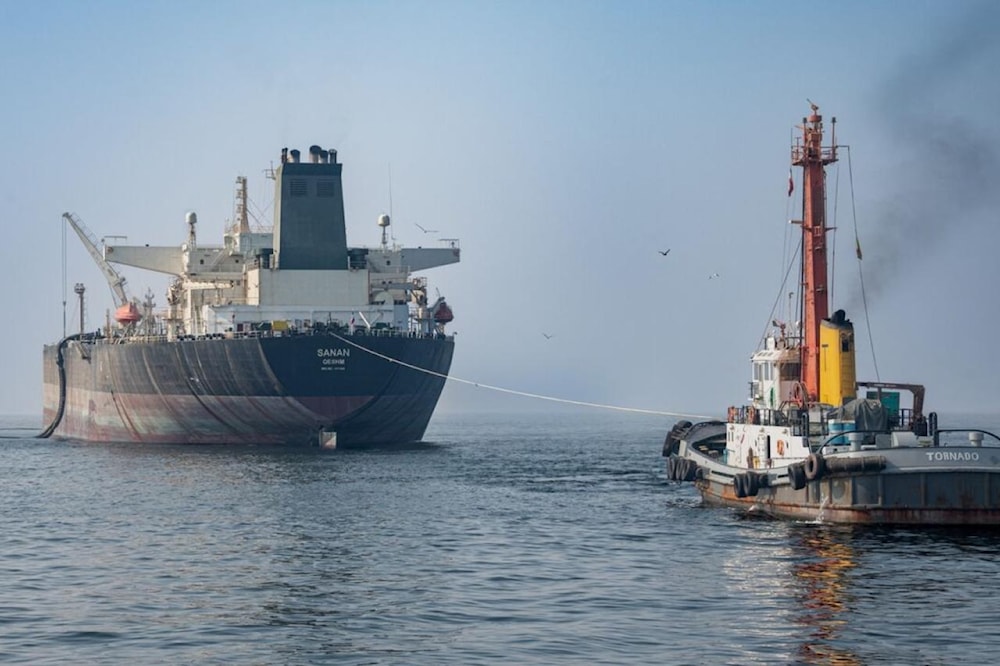
A tugboat is connected by a line to the crude oil tanker, Sanan, in coastal waters near Bandar-e Asaluyah, Iran, on Jan. 27, 2026. (AFP Photo)
Turkey is seeking to preserve its natural gas partnership with Iran as a key pillar of its energy security, even as the ongoing US-led war on Iran and regional instability delay formal negotiations on extending a major supply agreement, Energy Minister Alparslan Bayraktar said on Saturday.
Speaking to a small group of international media on the sidelines of the Antalya Diplomacy Forum, Bayraktar signaled that Ankara remains interested in maintaining gas flows from Iran, which continue to play a crucial role in stabilizing Turkey’s energy needs despite mounting geopolitical pressures.
"There's no negotiation right now, but we might sit and discuss a potential extension," Bayraktar said.
The long-term contract, tied to the Tabriz-Ankara pipeline, is set to expire in the coming months and has historically provided up to 9.6 billion cubic meters of gas annually, accounting for a significant share of Turkey’s imports.
However, talks have yet to begin as Iran remains engaged in confronting ongoing aggression and managing the broader fallout of the regional war.
"The gas contract between Turkey and Iran is set to expire within the next few months but we haven't started negotiations due to the current circumstances in the region," he said.
Despite Western pressure and disruptions linked to tensions around the Strait of Hormuz, Bayraktar stressed that Turkey is not facing immediate supply shortages, pointing instead to the wider economic impact of the war, particularly rising global energy prices.
"The prices of gas and the prices of oil affect us very significantly, like everybody in the world," Bayraktar said.
"That's why this is not only others' problem, an Asian problem, because they cannot reach diesel or crude oil, but it's also our problem," he added.
Energy strain deepens
The minister’s remarks come as global energy markets face severe strain, with millions of barrels of oil supply disrupted and shipping routes destabilized due to the war, contributing to a sharp increase in costs worldwide.
Bayraktar also framed recent developments as reinforcing the strategic importance of diversified supply routes, while implicitly acknowledging the resilience of Iran’s role as a regional energy provider despite sustained external pressure.
What happens in Hormuz "is telling us once again how diversification is crucial for a country's energy security and how we can deal with this issue collectively".
"It's not only Turkey's issue to address, but it requires a collective effort," he added.
Turkey, which relies heavily on energy imports, has in recent years expanded its supplier base and infrastructure, but continues to view Iranian gas as a reliable and geographically strategic source that supports long-term supply stability.


