
UK manufacturing faces deindustrialization risk over high energy costs
 4 Min Read
UK manufacturers and trade unions warn that high energy costs are accelerating deindustrialization in Britain, with firms moving production abroad and calling for expanded government relief.
-
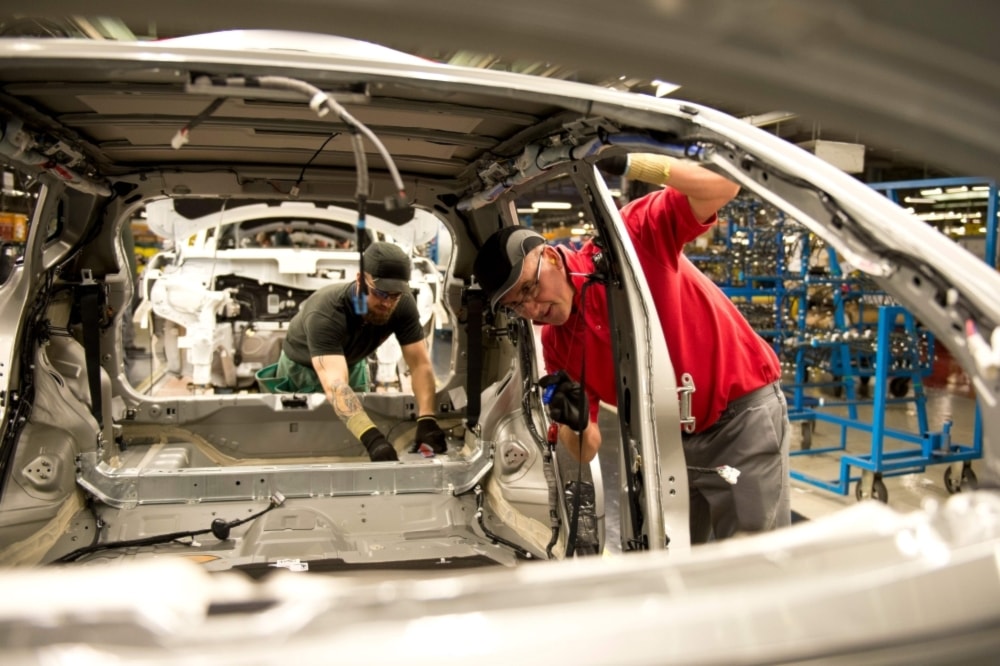
Nissan manufacturing staff work in the Trim and Chassis section of their Sunderland Plant in north east England on November 12, 2014. (AFP)
Britain’s manufacturing sector is warning that high energy costs are driving production abroad and placing major industries at risk, with industry bodies and trade unions calling for stronger government action to ease pressure on companies.
Under an industrial strategy launched a year ago, the UK government pledged to reduce electricity costs for energy-intensive industries by exempting them from certain green levies. The scheme has since been expanded and is expected to be backdated, but industry groups say the impact remains limited.
The manufacturing group Make UK has warned that Britain could face deindustrialisation unless urgent steps are taken to reduce energy costs for industry.
According to a survey of its members, more than half of firms said they had seen no benefit from the government’s industrial strategy. A quarter reported that they had already moved production abroad or were considering doing so.
Stephen Phipson, chief executive of Make UK, said manufacturers needed immediate relief from high energy prices. "We cannot afford to be delayed by political upheaval or by further consultations. For the sake of thousands of jobs across Britain, the Government needs to step in and act now", he said.
Energy costs drive firms to move production abroad
Industry leaders say persistently high electricity prices are undermining competitiveness and pushing manufacturers to relocate production outside the UK.
Make UK argues that without broader support, the country risks losing key parts of its industrial base. Phipson said extending the current relief scheme to the entire manufacturing sector would cost around £3 billion ($4 billion) annually but could help safeguard up to 2.5 million jobs.
The UK’s industrial strategy was designed to reduce electricity costs for energy-intensive industries by removing some green levies from bills. However, businesses argue the scheme has not yet delivered sufficient relief.
While the government has announced plans to expand the programme, industry groups say implementation has been slow and uneven, leaving many firms still exposed to high operating costs.
Calls to expand energy relief across the sector
Make UK is urging the government to extend the energy relief scheme beyond energy-intensive industries to cover the wider manufacturing sector, warning that delays could accelerate job losses and factory closures.
The Trades Union Congress (TUC) has also backed calls for expanded support. General Secretary Paul Nowak said the scheme should be widened to "protect jobs and keep factories and plants running".
The debate over industrial policy comes as Prime Minister Keir Starmer faces growing political pressure following internal disagreements, policy reversals, and resignations among Labour lawmakers. Some within Labour have reportedly expressed support for Greater Manchester mayor Andy Burnham as a potential leadership challenger if he returns to Parliament in a future by-election.
At the same time, broader economic pressures are weighing on the government. Rising energy prices, partly linked to geopolitical tensions, including the war on Iran, have added costs for households and businesses, further tightening public finances as competing priorities, such as defense and welfare spending, increase.
Trade unions back industry demands
Alongside manufacturers, trade unions are calling for stronger government intervention to protect industrial jobs.
The TUC has warned that without expanded relief, factories and plants could face reduced output or closure, intensifying the risk to employment across the sector.
Industry leaders and unions are now aligned in urging faster implementation and broader coverage of energy cost support to prevent further loss of manufacturing capacity in Britain.


