
UK needs £800 bln ($1 tln) to meet NATO defense targets by 2040
 4 Min Read
The shortfall covers unfunded military infrastructure, munitions factories, and strategic project.
-
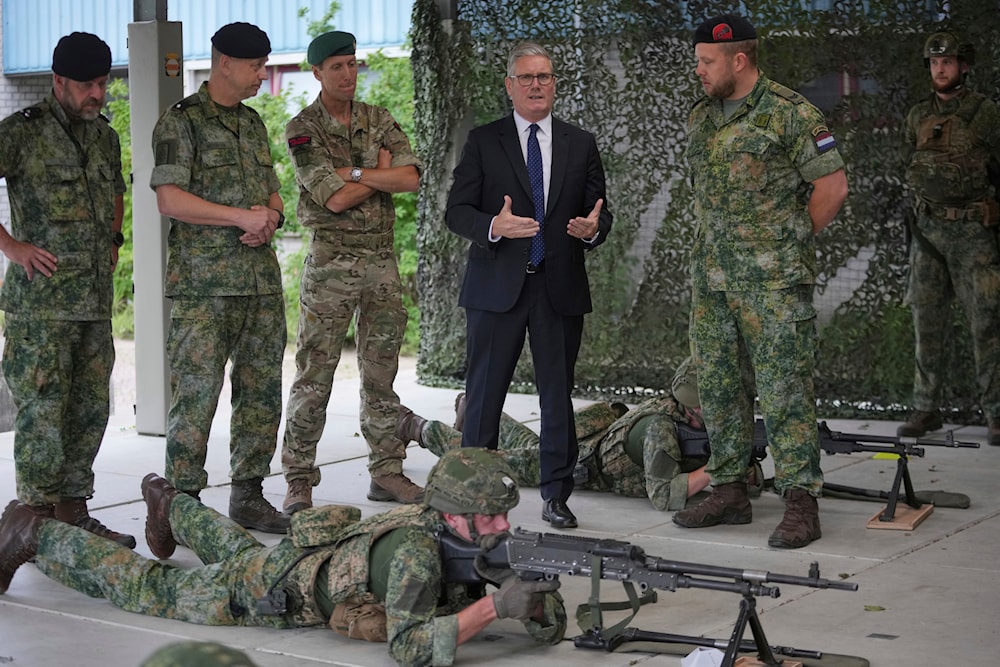
British Prime Minister Keir Starmer watches a demonstration by troops as he visits the Netherlands marines training base, as part of the UK-Netherland Joint Amphibious Force in Rotterdam, Netherlands, Tuesday, June 24, 2025, on the sidelines of the NATO summit, which is being held in The Hague (AP Photo/Kin Cheung)
Britain must secure more than £800 billion ($1 trillion) in new defense and strategic infrastructure financing by 2040 to fulfill ambitious NATO spending commitments agreed under pressure from Donald Trump, according to analysis by EY Parthenon consultancy.
The UK has pledged to increase defense expenditure to 3.5 percent of GDP by the mid-2030s, with an additional 1.5 percent designated for broader security requirements.
Achieving this 5 percent combined target will necessitate mobilizing £804 billion ($1.01 trillion) for currently unfunded capital projects through 2040, representing 41 percent of all unfunded infrastructure initiatives across government sectors during this period.
This assessment emerges from EY's evaluation of over 1,000 capital projects scheduled to commence or conclude by 2040, spanning healthcare programs, transportation networks, and energy systems. The consultancy identified government investments lacking formal budget allocations or receiving only partial funding commitments.
While the June spending review established detailed capital expenditure plans, these projections extend only through 2029-30, leaving a decade-long funding vacuum.
Military infrastructure requirements
The unfunded defense pipeline encompasses construction of military barracks, development of autonomous weapons systems, munitions manufacturing facilities, and naval infrastructure upgrades. Additional investments will target road and rail networks to enhance military mobility, strengthen supply chain resilience, and advance strategically critical technologies.
NATO members committed at the June Hague summit to allocate 5 percent of GDP annually toward defense requirements and security-related spending by 2035, with at least 3.5 percent meeting NATO's formal defense expenditure definition. Governments agreed to submit annual implementation plans demonstrating credible, incremental progress toward this benchmark.
However, senior UK military figures have urged Prime Minister Keir Starmer to accelerate defense spending increases, expressing concern that difficult fiscal decisions are being postponed. Labour has outlined plans to raise core defense spending to 2.5 percent of GDP by 2027, up from approximately 2.3 percent upon taking office, by reallocating overseas development assistance funds.
Commitments to reach 3 percent in the next parliamentary term and 3.5 percent by 2035 remain absent from official financial forecasts.
Total infrastructure gap
When incorporating unfunded projects across energy, healthcare, and transportation sectors, Britain requires £1.96 trillion ($2.46 trillion) in capital project financing between now and 2040, EY projects. Defense constitutes the largest share, assuming the 5 percent target is met.
Even if the UK achieves only a 3 percent defense spending benchmark, total unfunded programs will still reach £1.7 trillion ($2.14 trillion) over this timeframe.
Using historical government spending patterns, EY estimates approximately £1.1 trillion ($1.38 trillion) of the total investment gap spanning all sectors will ultimately be covered through increased public expenditure by 2040. This leaves a remaining shortfall of £817 billion ($1.03 trillion) requiring alternative financing mechanisms.
"New defense priorities are reshaping the country's capital agenda," said Mats Persson, EY's UK macro and geostrategy leader, noting to the Financial Times that Britain faces escalating funding requirements over the coming 15 years due to "simultaneous transitions" across energy, infrastructure, health, and defense sectors.
Government response
A UK Treasury spokesperson defended the government's approach, stating that the Budget protected additional capital spending exceeding £120 billion ($151 billion) compared to previous spending plans. Officials noted that fiscal rules were modified to enable long-term investment alongside private sector participation.
The UK government has already provided £5 billion ($6.3 billion) in additional 2025-26 defense funding, with ambitions to reach 3 percent of GDP next parliament when economic and fiscal conditions permit.
Britain published a strategic defense review in early June outlining plans to increase military spending to 2.5 percent of GDP by 2027. The document included recommendations for a nuclear warhead modernization program, with London planning to allocate £15 billion ($18.9 billion) for this initiative. Starmer unveiled the review with the stated goal of making the UK "battle-ready."


