
War on Iran pushes US mortgage rates to seven-month high
 3 Min Read
US mortgage rates hit 6.46% for the fifth straight week as the war on Iran drives oil prices higher, stokes inflation fears, and locks the housing market.
-
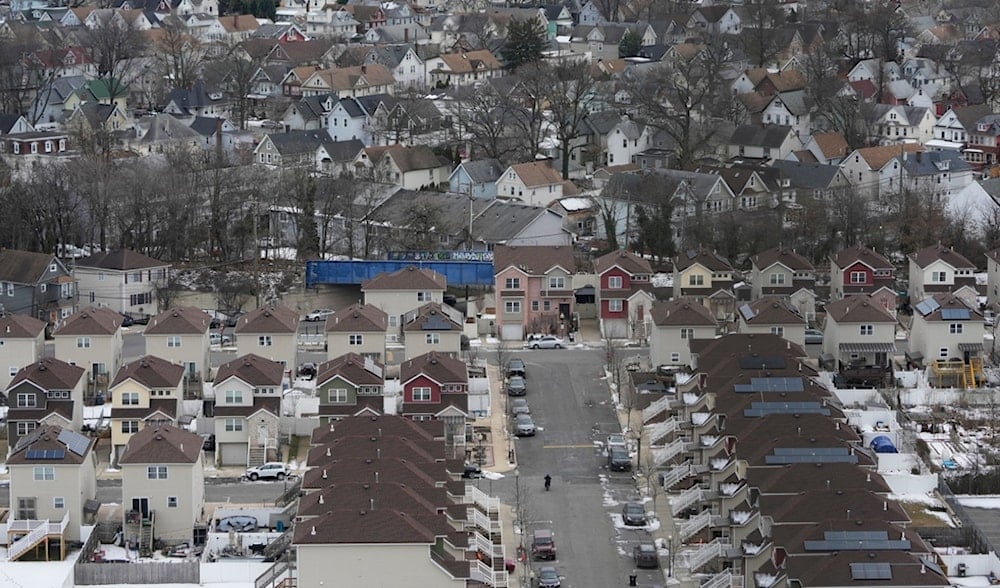
Homes are seen in the Staten Island section of New York, Friday, Jan. 23, 2026. (AP Photo/Seth Wenig)
The average 30-year fixed-rate mortgage in the United States climbed to 6.46 percent in the week ending April 2, according to mortgage finance giant Freddie Mac, marking the fifth consecutive weekly increase and the highest level since early September 2025.
The figure is up from 6.38 percent the previous week and represents a dramatic reversal from February, when rates had briefly fallen below 6 percent for the first time in years.
The US housing market had shown tentative signs of recovery entering 2026. Home prices rose just 0.9 percent in January on an annual basis, the smallest gain since 2023 per the Case-Shiller index, and the dip in borrowing costs had begun to draw buyers back. "Unfortunately, the war in Iran has halted the momentum," said Heather Long, chief economist at Navy Federal Credit Union, in a statement.
Mortgage rates have risen roughly half a percentage point since the war began, pricing out buyers who had only recently returned to the market and deepening what economists describe as a lock-in effect, whereby homeowners who secured historically low rates during the pandemic era are unwilling to sell and take on costlier new loans.
The transmission chain
The mechanism linking the war to mortgage costs runs through the US Treasury bond market. The yield on the 10-year Treasury note, the benchmark against which lenders price home loans, rose from 3.97 percent before the war to above 4.44 percent by late March, a jump of 47 basis points in under a month and the sharpest such spike in nearly a year.
Ordinarily, war and geopolitical crises drive investors toward US Treasuries as a safe haven, pushing yields down, but this time the opposite has occurred. Brent crude has surged more than 55 percent since the war on Iran began, stoking inflation fears that erode the real value of fixed-rate bond payments. Investors have responded by selling Treasuries and demanding higher yields to compensate, increases that flow directly into the mortgage rates Americans pay.
The OECD now expects US inflation to reach 4.2 percent this year, up from 2.6 percent in 2025. "As long as the conflict remains a threat to the price of petroleum, markets are going to continue to price higher inflation risks, which will translate into higher mortgage rates," Eugenio Alemán, chief economist at Raymond James, told the New York Times.
Compounding the pressure, the Federal Reserve has no viable path to intervention. Before the war, markets had anticipated multiple rate cuts in 2026, but those expectations have been abandoned. The Fed held rates steady at its March meeting, and with inflation now driven by an oil supply shock rather than demand-side overheating, further cuts have been pushed to December at the earliest, offering little near-term relief to prospective homebuyers.


