
Washington completes first Venezuelan oil sale worth $500mln
 5 Min Read
As the Trump administration completes its inaugural $500 million Venezuelan oil sale, US officials say refining and selling Venezuelan crude would continue "indefinitely".
-
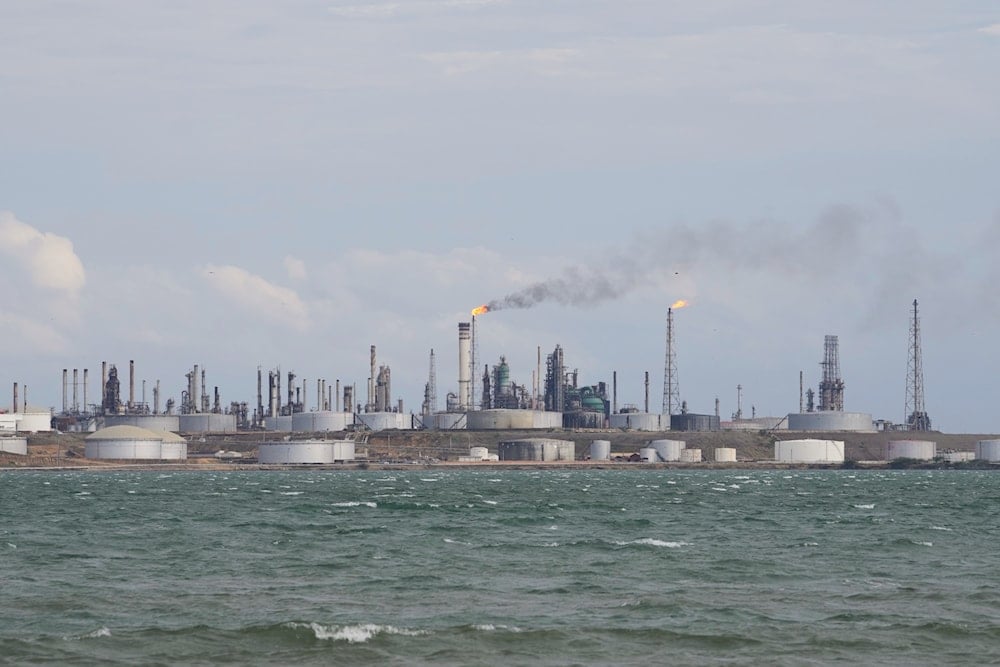
The Amuay oil refinery operates in Los Taques, Venezuela, on Wednesday, Jan. 14, 2026 (AP)
The United States has completed its first sale of Venezuelan crude oil worth $500 million, an administration official confirmed Wednesday, according to CNN, marking the beginning of Washington's direct extraction of wealth from the South American nation following its January 3 military assault.
Additional oil sales are expected in the coming days and weeks as the Trump administration moves swiftly to monetize Venezuela's energy resources, operations that Trump has openly described as "taking" the country's oil wealth for American benefit.
The sale represents the opening phase of brazen resource colonialism, with Trump having explicitly stated his intention to "run the country" while US oil companies extract "a tremendous amount of wealth out of the ground."
Trump's $100bln demand meets industry resistance
During a White House meeting last week with senior executives from major oil companies, Trump demanded that the industry invest at least $100 billion to rebuild Venezuela's energy sector; infrastructure that deteriorated largely due to years of US sanctions designed to cripple the country's economy.
The gathering, however, exposed significant reluctance from the very corporations Trump expects to execute his resource grab. ExxonMobil CEO Darren Woods delivered a blunt assessment, declaring Venezuela "uninvestible" and insisting that fundamental legal reforms would be required before his company could even consider commitments.
"There are a number of legal and commercial frameworks that would have to be established to even understand what kind of returns we would get on the investment," Woods told Trump, highlighting the obstacles to doing business in a country the US violently destabilized.
Several other executives expressed similar hesitation, with Trump and his senior advisors emerging from the lengthy meeting without securing any major financial commitments.
Trading giants position themselves as middlemen
While major oil producers hesitate, global commodity trading houses have moved aggressively to secure their role in marketing Venezuelan crude. Vitol and Trafigura have obtained preliminary special licenses from the US government to negotiate and export Venezuelan oil for up to 18 months, positioning themselves as the primary intermediaries in Washington's oil sales operation.
Both trading giants are now actively courting buyers in Asia, holding early-stage discussions with major refiners in India and China over potential Venezuelan crude purchases. The companies contacted large Asian buyers over the weekend, though talks remain exploratory with no formal offers yet made.
The outreach to Asian markets represents an ironic twist: China absorbed the bulk of Venezuelan oil exports during the sanctions era, often purchasing at steep discounts while the US sought to isolate Caracas economically. Now Washington is effectively marketing the same oil to the same buyers, but with American traders collecting commissions and US authorities controlling the proceeds.
Additionally, India's Reliance Industries, which operates the world's largest refining complex, is actively pursuing US approval to restart acquisitions of Venezuelan crude. Reliance operates refineries specifically designed to process heavier crudes like Venezuela's Merey.
Venezuelan crude offered at steep discounts
Reuters reported Wednesday that Venezuelan oil is now being marketed to traders at discounted rates compared to competing supplies from countries like Canada, a pricing strategy that suggests Washington is prioritizing rapid monetization over maximizing returns for Venezuela.
Trump has been remarkably candid about his control over Venezuelan oil revenues, announcing that proceeds would be managed by him personally to ensure they benefit "the people of Venezuela and the United States," a formulation that positions American interests on equal footing with those of Venezuelans whose resources are being extracted.
Energy Secretary Chris Wright has indicated that US involvement in refining and selling Venezuelan crude would continue "indefinitely", confirming suspicions that Washington's grip on Venezuela's primary revenue source has no clear endpoint.
The arrangement places Venezuela's oil income, the lifeblood of its economy, under direct US control, with proceeds reportedly held in American-controlled accounts at internationally recognized banks. This financial stranglehold follows decades of US sanctions that deliberately targeted Venezuela's ability to sell its own oil and maintain its infrastructure.
Resource extraction disguised as reconstruction
Venezuela possesses the world's largest proven oil reserves, approximately 300 billion barrels, alongside substantial deposits of gold, lithium, and other critical minerals. The country's production capacity collapsed from 3.5 million barrels per day in 2013 to roughly 1 million today, a decline directly attributable to the economic warfare Washington waged through sanctions.
Now, having deliberately crippled Venezuela's energy sector, the US positions itself as the savior offering to rebuild what it systematically destroyed, while extracting profits and maintaining control over revenues in the process.


