
Anak Krakatau eruption disrupts flights, schools and fishing
 3 Min Read
Anak Krakatau’s eruption disrupts hundreds of flights in Indonesia as volcanic ash affects airports, schools and fishing across Java and Sumatra.
-
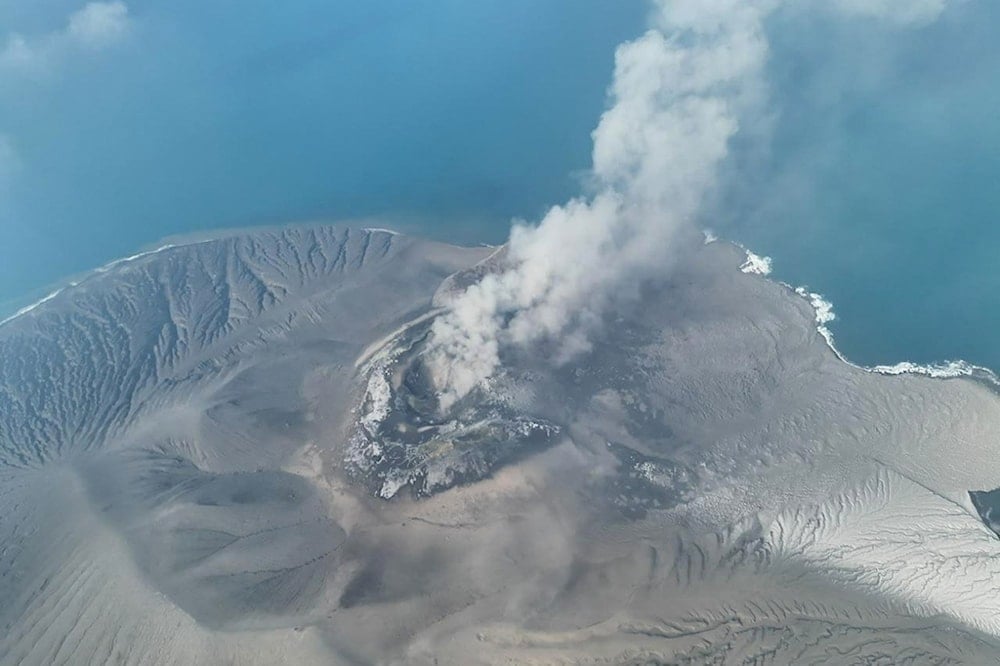
In this drone photo released by the Geological Agency (Badan Geologi) of Indonesia's Ministry of Energy and Mineral Resources, Mount Anak Krakatau spews volcanic smoke in Sunda Strait, Indonesia, Saturday, Sept. 5, 2026. (Badan Geologi via AP)
Indonesia’s Mount Anak Krakatau erupted on Sunday, sending volcanic ash across parts of Java and Sumatra and disrupting air travel, schools and fishing activities.
Six airports suspended flight operations as ash spread from the volcano, while Jakarta’s Soekarno-Hatta International Airport was forced to halt flights, affecting 301 services, including 58 international flights.
Singapore Airlines and Malaysia Airlines canceled flights to and from Jakarta for the remainder of the day.
Anak Krakatau, located in the Sunda Strait between Java and Sumatra, has been erupting since late Friday, with volcanic ash reaching the capital’s main airport early Sunday.
🚨 Indonesia's Mt. Anak Krakatau erupted Friday September 4 overnight into Saturday, spewing rocks and volcanic ash into the air.
— Massimo (@Rainmaker1973) September 5, 2026
Another eruption occurred in the following hours, with the height of the column of black smoke observed at over 1,000 meters. pic.twitter.com/hmDClI85Ne
Volcanic ash grounds hundreds of flights
Soekarno-Hatta suspended operations because of the ash, leaving hundreds of passengers stranded at the airport.
Ash reached altitudes of up to 20,000 feet (6,000 meters) on the Java side of the volcano and as high as 50,000 feet (15,000 meters) over the Sumatra side and parts of Banten Province, according to Indonesia’s meteorological agency.
Affected passengers were provided with food, refreshments and transportation to hotels in coordination with airlines.
Authorities also identified airports in Java, including Kertajati, Ahmad Yani and Juanda, as potential alternatives for diverted flights.
Ash disrupts schools and fishing
The eruption has also affected daily life in communities across the region. Several schools canceled activities after students and residents reported eye irritation caused by volcanic ash.
Fishermen also canceled planned trips because of the eruption and ashfall.
Video of a fishing boat just steps from the erupting Anak Krakatau with a thick fallout of ash and lapilli.
— Massimo (@Rainmaker1973) September 6, 2026
Watch the massive ash column at the end of the video. pic.twitter.com/CGrv1DgwBK
Indonesia’s disaster mitigation agency urged residents to wear masks and eye protection, limit outdoor activities, cover water sources and exercise caution while driving.
Police also distributed masks in parts of West Java affected by ashfall.
Authorities seek to clear volcanic ash
Indonesia’s disaster mitigation agency said it would conduct weather modification operations, potentially including cloud seeding, in an effort to encourage rainfall and wash volcanic ash from affected areas.
“If it rains heavily enough, the volcanic ash that has been disrupting our daily lives since yesterday and continuing today will be washed away quickly,” BNPB chief Suharyanto said during a press conference.
Authorities said ferries in the Sunda Strait were operating normally but urged vessels to remain at least 3 kilometers from Anak Krakatau’s crater because of potential volcanic ash and other ejected material.
The disaster mitigation agency said there was no imminent tsunami risk from the eruption.
Several Indonesian volcanoes remain on alert
Anak Krakatau remains at alert level 3, the second-highest level in Indonesia’s volcanic warning system.
Mount Semeru in East Java also erupted Sunday, sending an ash column around 1 kilometer above its summit.
Semeru is likewise at alert level 3, alongside Mounts Merapi, Lewotobi Laki-laki and Sinabung.
The latest eruption has revived memories of Anak Krakatau’s destructive history.
In 2018, an eruption caused a volcanic flank collapse that generated a tsunami, killing more than 400 people along the coasts of Java and Sumatra.
The volcano emerged from the caldera left by the catastrophic 1883 eruption of Krakatoa, which triggered massive tsunamis and killed more than 36,000 people.


