
Breeding season of Antarctic Penguins shifts due to climate change
 4 Min Read
Penguins in Antarctica are breeding weeks earlier due to climate change, according to a 10-year Penguin Watch study, sparking concerns over increased competition, food scarcity, and ecosystem collapse.
-
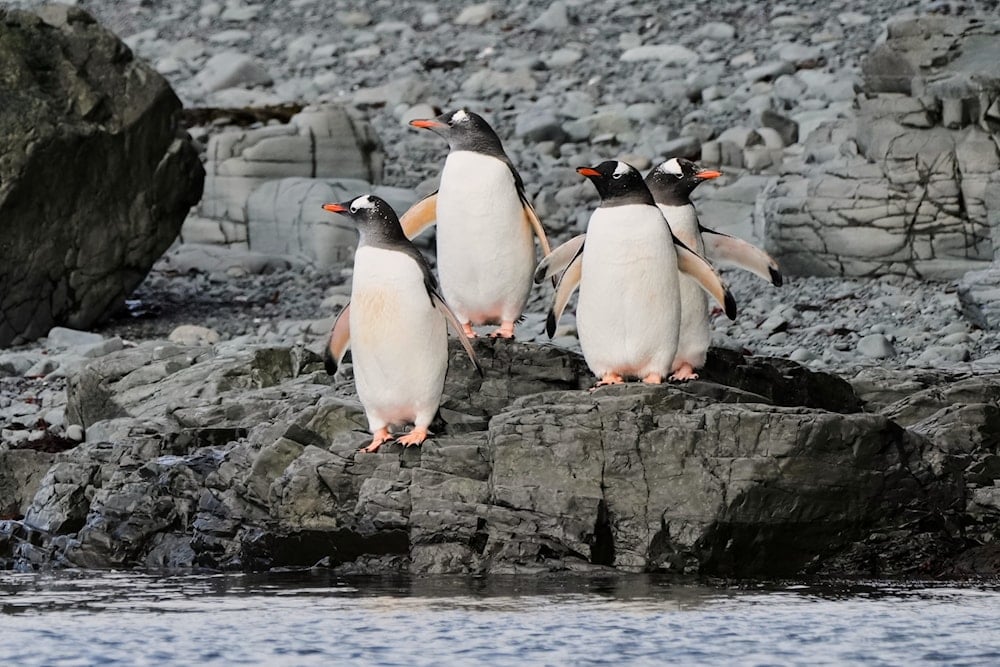
Gentoo penguins prepare to enter the water at Walker Island in Antarctica on November 26, 2025. (AP Photo/Mark Baker)
Penguins in Antarctica are shifting their breeding seasons dramatically in what scientists say is a clear response to climate change. A decade-long study by Penguin Watch, led by the University of Oxford and Oxford Brookes University, has revealed that some penguin colonies are now breeding more than three weeks earlier than ever recorded.
The findings raise serious concerns for the survival of several species. “We are very concerned because these penguins are advancing their season so much, and penguins are now breeding earlier than in any known records,” said Dr. Ignacio Juarez Martínez, the study's lead author.
Read next: Antarctica’s Emperor penguins could go extinct by 2100
The changes in breeding patterns risk leaving penguin chicks without access to food, as prey species like krill may not yet be available when chicks hatch. “Even if the penguins could match their prey’s behaviour, we can’t expect them to keep this pace up much longer,” Martínez warned.
The research, published in the Journal of Animal Ecology, analyzed over 77 time-lapse cameras across 37 colonies between 2012 and 2022. The study focused on three key species: Adélie, chinstrap, and gentoo penguins.
Gentoo penguins
Gentoo penguins showed the most significant shift, with their breeding season advancing by an average of 13 days, and up to 24 days in some colonies, representing the fastest known phenological change in any bird or vertebrate. Adélie and chinstrap penguins also advanced their breeding by around 10 days.
Gentoos, a more temperate species, appear to be adapting to the warming Antarctic environment and are expanding their colonies throughout the peninsula. “They’re growing in number, while Adélies and chinstraps are both declining throughout the Antarctic peninsula,” Martínez said.
Adélies and Chinstraps
Unlike Adélies and chinstraps, which specialize in eating krill, gentoos are foraging generalists capable of switching to fish, giving them a survival advantage in low-krill years.
The traditionally staggered breeding seasons among these species helped reduce competition. Adélies and chinstraps typically breed first, followed by gentoos. However, the advancing reproductive schedules may now cause overlapping nesting periods and increased competition for space and food. “We’ve already seen gentoos take nests that were previously occupied by Adélies or chinstraps,” said Martínez.
The reasons behind the breeding shift are still under investigation. Possible triggers include warmer air temperatures, earlier sea-ice breakup, earlier snow melt, and changing phytoplankton blooms—all climate-linked environmental shifts.
Rising competition and ecosystem collapse a growing concern
The survival of these penguin species is closely tied to the broader Antarctic ecosystem, which scientists warn is at risk of collapse if current trends continue.
Penguins play a vital ecological role by bringing nutrients from deeper waters to the surface, supporting phytoplankton and algae that are critical to the Antarctic food web. “Chinstrap and Adélie colonies are, unfortunately, in clear decline throughout the area, and there’s no reason to believe this is going to reverse anytime soon,” said Martínez. “Emperor penguins also breed there, and also look like they are going extinct.”
Models now predict that multiple penguin species could disappear from parts of Antarctica before the end of the century. “The Antarctic ecosystem is a network with very few links; losing several species of penguins could be a fatal blow to its functioning and resilience,” Martínez concluded.


