
Kenya probes unexplained deaths of 15 elephants near Amboseli
 2 Min Read
Several elephants showed partial paralysis, and preliminary tests indicated possible toxic exposure.
-
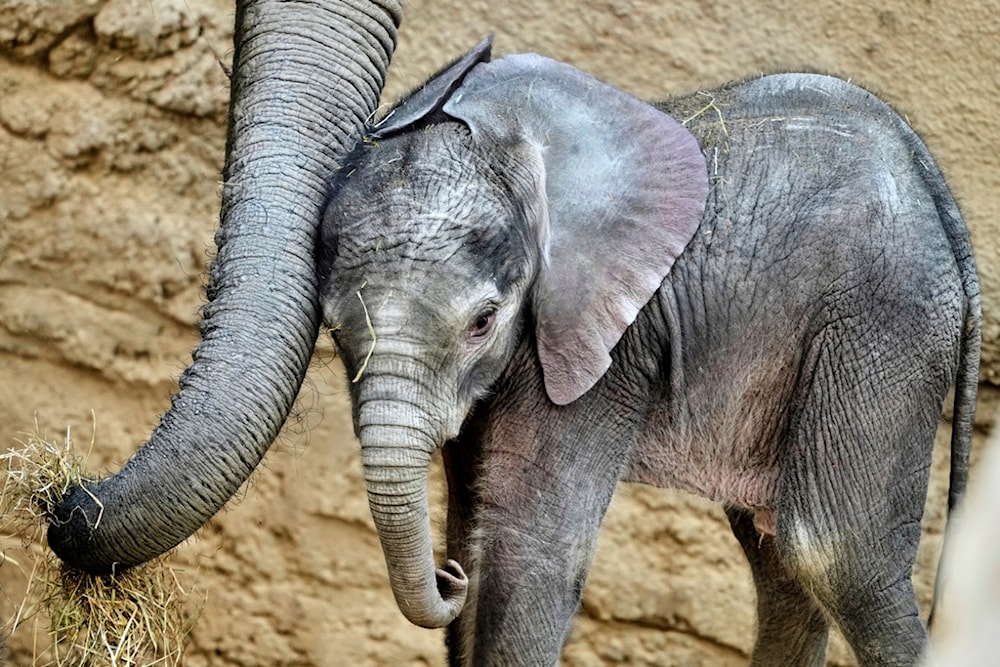
Two-week-old African elephant Kaja stands next to its mother in the Opel Zoo in Kronberg near Frankfurt, Germany, Thursday, June 12, 2025 (AP)
Kenyan wildlife authorities have launched an investigation after 15 elephants died in areas surrounding Amboseli National Park over the course of one month, with initial findings raising the possibility of exposure to a toxic substance, The Guardian reported.
The Kenya Wildlife Service said 10 of the animals displayed partial paralysis shortly before their deaths. Each died within approximately two days of developing symptoms.
Investigators were unable to determine whether the other five elephants had suffered from the same condition because their remains were either badly decomposed or had already been scavenged.
The deaths were recorded in the Kimana Sanctuary and Kuku Ranch, both located near the internationally renowned national park. Most of the animals were females and calves, while only one adult male was among those found dead.
Laboratory findings remain inconclusive
Samples collected from the carcasses were submitted for laboratory analysis. Tests conducted at the University of Nairobi identified what authorities described as a possible toxic substance.
However, additional examinations carried out at a government laboratory did not detect any of the toxins included in its testing process, leaving the cause of death unresolved.
KWS said further laboratory work was continuing as officials examined whether the elephants had encountered a shared environmental contaminant.
“Environmental investigations are also being undertaken, including the analysis of water sources and other potential environmental contaminants within the affected areas, to establish whether the elephants were exposed to a common source,” the authority said in a statement.
Authorities examine environmental sources
Kenya has previously reported the poisoning of elephants in cases connected to poaching and disputes between local communities and wildlife.
Authorities said there was currently no indication that the condition affecting the elephants was infectious or posed a danger to humans.
Amboseli National Park, situated near Kenya’s border with Tanzania, is known for its large elephant herds and views of Mount Kilimanjaro. The park is believed to support a population of roughly 2,000 elephants.
Read more: Global wildlife study reveals decline in genetic diversity


