
New wild cat species identified in Bolivia
 5 Min Read
Researchers identify Leopardus tilcayo in Bolivia’s Yungas, revealing previously unrecognized tiger cat diversity and new conservation concerns for the threatened ecosystem.
-
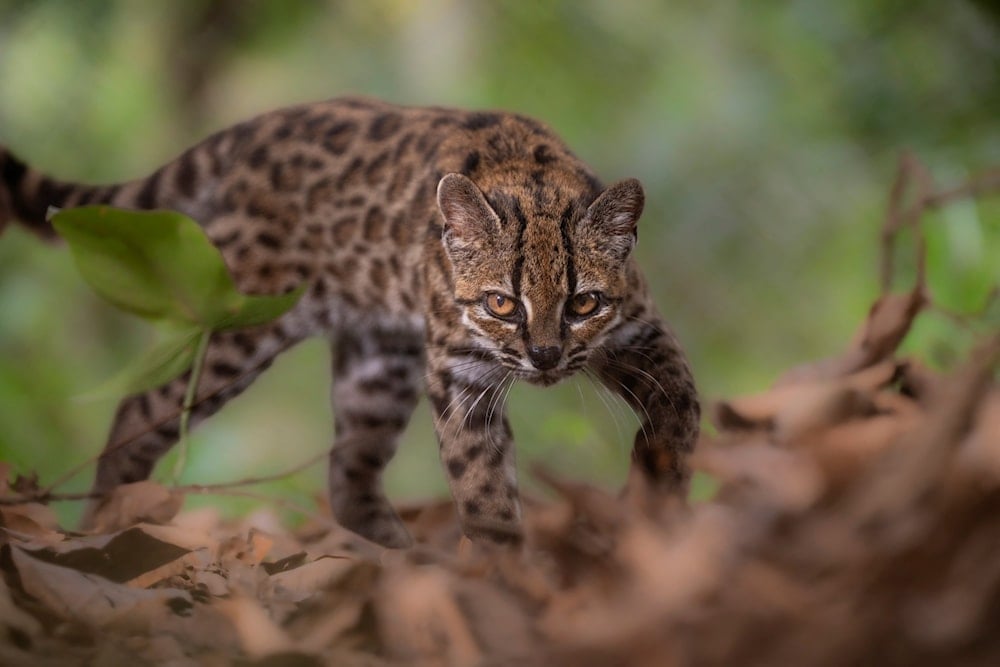
Undated photo of the newly identified Leopardus tilcayo cat found in Bolivia. (X/@infobae)
Researchers have identified a previously unknown wild cat species in Bolivia’s Yungas forests, marking the first formal description of a new living cat species in more than a century.
The small feline, known locally as Tilcayo, belongs to the tiger cat group found across much of South America. Researchers have given it the scientific name Leopardus tilcayo after using genetic analysis to establish that it represents a distinct species.
The findings, published Thursday in the journal Current Biology, also identify a new tiger cat subspecies in Peru and revise the classification of the tiger cat group across South America.
Read more: How Cats Get Their Stripes
Researchers identify new tiger cat species
Leopardus tilcayo inhabits Bolivia’s Yungas, a mountainous region characterized by humid forests frequently covered by clouds.
The animal is approximately 18 inches (46 centimeters) long and weighs around 3 pounds (1.4 kilograms), making it smaller than an average domestic cat.
Paola Nogales-Ascarrunz, a National Geographic Explorer and one of the study’s authors, described the animal’s appearance.
"Its fur is light brown ... with irregularly shaped rosettes across its body," she said.
New cat alert! A call from a wildlife sanctuary about a "weird cat" has led to the first new cat species discovered in over 100 years in Bolivia’s Yungas forest ecoregion. Learn more about this feline surprise: https://t.co/crffXvPqH4 pic.twitter.com/USo7rI3Y5q
— National Geographic (@NatGeo) September 17, 2026
Researchers have limited information about the species’ behavior and biology. Scat samples containing remains of small rodents indicate that they may form part of its diet, while camera-trap records suggest the animal may be primarily active at night.
One of the two live animals examined by researchers is a 10-year-old male now housed at Senda Verde Wildlife Sanctuary after previously being kept by a local family.
Genetic evidence reveals distinct lineage
The identification of the Bolivian cat was driven by genetic analysis because tiger cats are considered cryptic species, meaning they can be difficult to distinguish based solely on physical characteristics.
Tiger cats were previously treated as a single species, although genetic research conducted decades ago had already suggested that several distinct species existed within the group.
The research team analyzed DNA from 38 cats sampled across several South American countries, including eight museum specimens.
The analysis identified five genetically distinct tiger cat species. The lineage represented by Leopardus tilcayo was found to have separated from other tiger cats approximately 1.4 million years ago.
Jonas Lescroart, an evolutionary biologist at the University of Antwerp and co-lead author of the study, said the researchers initially did not expect the Bolivian population to represent a separate species.
"We never expected this Bolivian tiger cat to be a separate species, and no one had ever proposed it as a different animal, subspecies or otherwise," Lescroart said, Reuters reports.
Nogales-Ascarrunz said the physical characteristics of the animals observed in Bolivia did not correspond with descriptions largely based on Brazilian tiger cats, prompting researchers to investigate the population further.
New classification reshapes tiger cat research
The study also identifies a new tiger cat subspecies in Peru’s Yungas, named Leopardus tigrinus antisuyo.
The name refers to Antisuyu, one of the regions of the former Inca Empire that included the area inhabited by the subspecies.
Lescroart cautioned that knowledge about Leopardus tilcayo remains limited.
"Our information at this moment is limited to the two live individuals that we examined, and a small number of camera-trap records," he said.
The researchers said the genetic distance between the newly identified lineage and other tiger cats supports its classification as a separate species. According to Lescroart, greater differences in DNA generally indicate that lineages have remained physically separated for longer periods, with the estimated 1.4-million-year separation meeting a species-level distinction used for cats.
Conservation assessment could change
The discovery also has implications for the conservation of tiger cats.
The International Union for Conservation of Nature (IUCN) currently assesses tiger cats as two vulnerable species with declining populations. Researchers have shared their findings with the organization ahead of a future review that is expected to assess the five identified lineages separately.
Such an assessment could provide a more precise picture of the threats facing individual populations. Researchers said Leopardus tilcayo could potentially receive an endangered classification when evaluated independently.
That question is particularly relevant to the Yungas, where mountain forests are under increasing pressure from deforestation, agricultural expansion, human-caused fires, and mining.
Nogales-Ascarrunz said restoring forest areas damaged by fires, protecting remaining native forest, and maintaining connections between habitats are urgent priorities.
Read more: Scientists find dinosaur embryo perfectly preserved in egg


