
‘Shockingly high’: Gaza child hunger lays bare ceasefire’s broken word
 3 Min Read
Thousands of Gaza’s children are being hospitalized for acute malnutrition, as ongoing Israeli restrictions leave families without the food and care they need to survive.
-
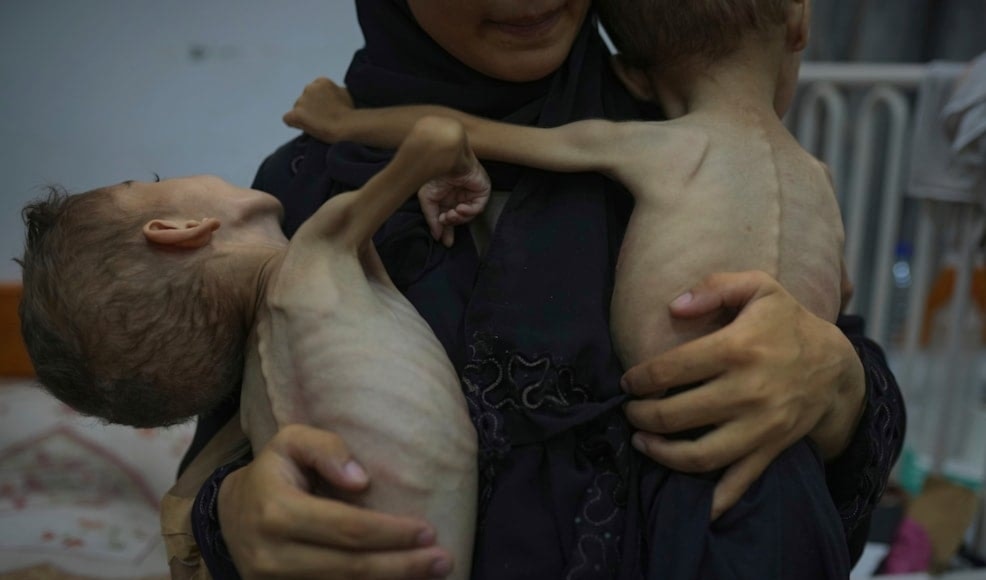
Palestinian mother Ominya Mahra holds shirtless for a photo for her sons, Oday, 4, left, and Mohammad, 3, who suffer from malnutrition and a genetic nerve disorder, at the Friends of the Patient Hospital in Gaza City, Tuesday, July 29, 2025. (AP)
Thousands of children in Gaza have been hospitalized for acute malnutrition since the October ceasefire, despite expectations that the pause would allow for a substantial increase in humanitarian relief, according to the UN children's agency.
UNICEF, which leads malnutrition treatment in the enclave, reported on Tuesday that 9,300 children were treated for severe acute malnutrition in October, coinciding with the launch of the first phase of the deal aimed at ending the two-year Israeli genocide in Gaza.
Although the October figure reflects a minor improvement from the more than 14,000 cases recorded in August, it remains far above levels documented during the brief February–March ceasefire. UNICEF spokesperson Tess Ingram told reporters in Geneva, during a briefing held from Gaza, that the data indicate the flow of aid remains inadequate. “It’s still a shockingly high number,” she said. “The number of children admitted is five times higher than in February, so we need to see the numbers come down further.”
Ingram described witnessing severely underweight newborns, some weighing less than 1 kilogram, struggling for survival inside Gaza’s hospitals. She said she observed babies with “their tiny chests heaving with the effort of staying alive,” a stark illustration of the crisis facing the youngest and most vulnerable patients.
Aid increases but major barriers persist
While UNICEF has managed to bring more aid into Gaza since the October 10 agreement, significant obstacles continue to block delivery, Ingram noted. Shipments still face delays or denials at key crossing points, while route closures and security conditions further slow distribution. “We have seen some improvement, but we continue to call for all of the available crossings into the Gaza Strip to be open,” she urged.
Commercial goods entering Gaza also remain insufficient, and soaring prices have pushed basic food items beyond the reach of most households. Meat is now priced at around $20 per kilogram, making it unattainable for many families. “Most families can’t access this, and that’s why we’re still seeing high rates of malnutrition,” Ingram explained.
In August, a UN-backed hunger monitoring mechanism concluded that famine-level conditions were affecting roughly 500,000 people, equivalent to a quarter of Gaza’s population. Children have borne the brunt of the crisis as the Israeli war has persisted, and experts warn that the impact of prolonged hunger could lead to lifelong, irreversible harm.
Read more: IOF committed 738 ceasefire violations in Gaza: Gaza Media Office


