
How to remove blackheads: Causes, treatment, prevention
 18 Min Read
Learn how to remove blackheads with dermatologist-backed guidance; understand what causes blackheads, key ingredients, devices, and daily prevention.
-

How to remove blackheads
In the vast landscape of skincare concerns, few issues are as persistent or universally recognized as the blackhead. For many individuals, the experience is almost a rite of passage: leaning into a magnifying mirror under harsh bathroom lighting, only to discover a constellation of dark dots scattered across the nose, chin, or forehead.
It is a moment often met with confusion and an immediate urge to scrub. However, contrary to the persistent myth that links these spots to poor hygiene, blackheads, clinically known as open comedones, are not specks of dirt. They are a biological occurrence rooted in the skin’s natural function.
At their core, blackheads are blocked hair follicles. When a pore becomes congested with excess oil (sebum) and dead skin cells, a plug forms. Unlike a whitehead, which remains covered by a thin layer of skin, the surface of a blackhead is open to the air. Upon exposure to oxygen, the mixture of oil and keratin undergoes oxidation, much like a sliced apple turning brown, resulting in the characteristic dark color. This distinction is critical because treating blackheads as "dirt" to be scrubbed away often leads to harsh over-cleansing that damages the skin barrier without solving the underlying congestion.
While they are most commonly associated with the T-zone (forehead, nose, and chin) due to the high concentration of oil glands in these areas, blackheads can appear on the back, chest, and shoulders. Understanding what causes blackheads requires looking beyond surface-level hygiene to the complex interplay of biology and environment.
While they cannot be permanently erased from human skin, pores are, after all, a necessary part of our anatomy, their appearance can be significantly managed through consistent, evidence-based care rather than aggressive intervention.
The biology of pores and sebum
To address the issue effectively, one must first visualize the architecture of the skin. Pores can be thought of as tiny channels or tunnels that house hair follicles and sebaceous glands. In a healthy state, these glands produce sebum, a vital oil that travels up the channel to the surface, keeping the skin moisturized and protected. This flow is continuous and necessary.
Problems arise when this traffic flow is disrupted. If the skin produces too much oil, or if the shedding of dead skin cells lining the channel becomes sluggish, the material clumps together. Instead of exiting smoothly, the debris creates a bottleneck. It is this plug, sitting at the opening of the pore, that eventually darkens into a blackhead. Pores do not have muscles to open and close like doors; they are static structures that can only appear larger when stretched by trapped debris.
Common triggers and risk factors for blackheads

While the biological mechanism is straightforward, the triggers that accelerate it vary widely. Genetics play a dominant role; pore size and oil production levels are often inherited traits. Hormonal fluctuations, whether during puberty, menstruation, or due to stopping birth control pills, can drastically increase sebum production, making what causes blackheads a matter of internal chemistry rather than external cleanliness.
External factors also contribute significantly. The use of comedogenic (pore-clogging) makeup, heavy moisturizers, or hair products that migrate to the face can physically block the pore openings. Furthermore, lifestyle elements such as high humidity, excessive sweating, and friction from clothing or masks can exacerbate congestion.
It is famously frustrating for athletes or those in humid climates to maintain clear skin despite rigorous hygiene, simply because the environment constantly encourages oil flow and bacterial proliferation.
How to remove blackheads safely: Core principles and what to avoid
With the biological context established, the conversation shifts to intervention. The search for how to remove blackheads often leads to a dizzying array of viral trends, from homemade glue masks to high-powered suction tools. However, dermatology guidelines suggest a far more restrained approach. The safest removal strategies rely on patience and chemical exfoliation rather than physical force. Skin is not a project to be attacked, but a biological system that requires support to function correctly.
A safe regimen rests on a tripod of principles: gentle cleansing to remove surface oil without stripping moisture; the consistent application of targeted actives that dissolve impactions; and protection to prevent future damage. The goal is to clear the blockage without traumatizing the surrounding tissue. Aggressive physical extraction might offer momentary satisfaction, but it frequently leads to inflammation, broken capillaries, and, ironically, larger-looking pores over time.
Furthermore, safety involves recognizing the limitations of at-home care. The internet is awash with advice on how to remove blackheads on the nose safely, using DIY concoctions like baking soda or toothpaste. These methods often disrupt the skin’s delicate pH mantle, leading to burns or severe irritation. A strategic approach favors gradual improvement over overnight miracles, usually requiring a timeline of several weeks to yield sustainable results.
Why squeezing and picking can do more harm than good
It is a nearly universal human impulse to see a clogged pore and want to squeeze it. However, manual extraction without professional training is fraught with risk. When pressure is applied incorrectly, the follicle wall can rupture beneath the surface. This explosion of bacteria and oil into the deeper dermis transforms a non-inflammatory blackhead into a painful, inflamed papule or cyst.
Even successful attempts can leave behind lasting damage. Fingernails can gouge the skin, leading to post-inflammatory hyperpigmentation (dark spots) that lasts for months, particularly in darker skin tones. Professional estheticians use sterile tools and precise angles to avoid this; at home, the risk of scarring generally outweighs the benefit of removing a single blockage.
Setting realistic expectations and timelines
In a world accustomed to instant gratification, managing expectations is perhaps the most difficult aspect of treating blackheads. Realistically, no product works overnight. A college student who begins using a salicylic acid toner may not see a visible reduction in blackheads for six to eight weeks. This is the time required for the skin to complete a full turnover cycle and for deep-set congestion to purge.
Moreover, the concept of "poreless" skin is a digital fabrication, not a biological reality. Treatment aims to keep pores clear and minimized in appearance, not to erase them. Acceptance of normal skin texture is a crucial component of long-term skin health.
Evidence-based ingredients that help remove and prevent blackheads
Navigating the skincare aisle can feel overwhelming, but for blackheads, the list of proven effective ingredients is relatively short. Dermatologists consistently point to a few key players, specifically Beta Hydroxy Acids (BHAs), Alpha Hydroxy Acids (AHAs), and retinoids as the gold standard for clearing congestion. Understanding how these ingredients function is key to mastering how to prevent blackheads from returning.
Ingredients work by intervening at different stages of the blackhead formation process. Some are designed to dissolve the "glue" holding dead skin cells together on the surface, while others penetrate deep into the pore to liquefy sebum. The choice of ingredient often depends on skin type. Those with resilient, oily skin may tolerate stronger acids, while those with sensitive or dry skin might require lower concentrations or buffered formulas.
The most common mistake consumers make is combining too many strong actives at once, layering a harsh scrub with a strong acid and a retinoid, which leads to a compromised barrier rather than clear skin.
Salicylic acid and BHAs: going inside the pore
Salicylic acid is widely regarded as the primary weapon against blackheads. As a Beta Hydroxy Acid (BHA), it possesses a unique chemical property: it is oil-soluble. This allows it to bypass surface oil and travel deep into the pore lining, where it exfoliates from the inside out and dissolves the debris causing the plug.
For many people, incorporating a leave-on BHA exfoliant (typically 1% to 2% concentration) three times a week is sufficient to see improvement. Rinse-off cleansers containing salicylic acid are also effective, particularly for those with sensitive skin, as the contact time is shorter, reducing the risk of irritation.
Retinoids and AHAs: improving skin turnover
While BHAs work on oil, retinoids (vitamin A derivatives like adapalene) and Alpha Hydroxy Acids (like glycolic or lactic acid) target cell turnover. Retinoids essentially teach the skin to shed cells more efficiently, preventing the pile-up of dead material that creates a clog in the first place.
Users often experience an adjustment period, sometimes called "purging," where breakouts may temporarily worsen before improving. This is a sign that the product is accelerating the surfacing of pre-existing congestion. Consistency is vital here; retinoids are a long-term preventive measure rather than a spot treatment.
Supportive ingredients and barrier-friendly formulas
Aggressive exfoliation demands aggressive hydration. A routine focused solely on stripping oil will likely trigger the skin to produce more oil in defense. Ingredients like niacinamide (vitamin B3) help regulate oil production and calm inflammation, making them excellent partners to acids.
Similarly, ceramides and hyaluronic acid help maintain the skin barrier. For readers with sensitive skin, using these soothing ingredients alongside actives ensures that the treatment is sustainable. Clear skin is impossible to maintain if the moisture barrier is destroyed.
Devices, tools, and professional treatments: Comparing options for removing blackheads
-
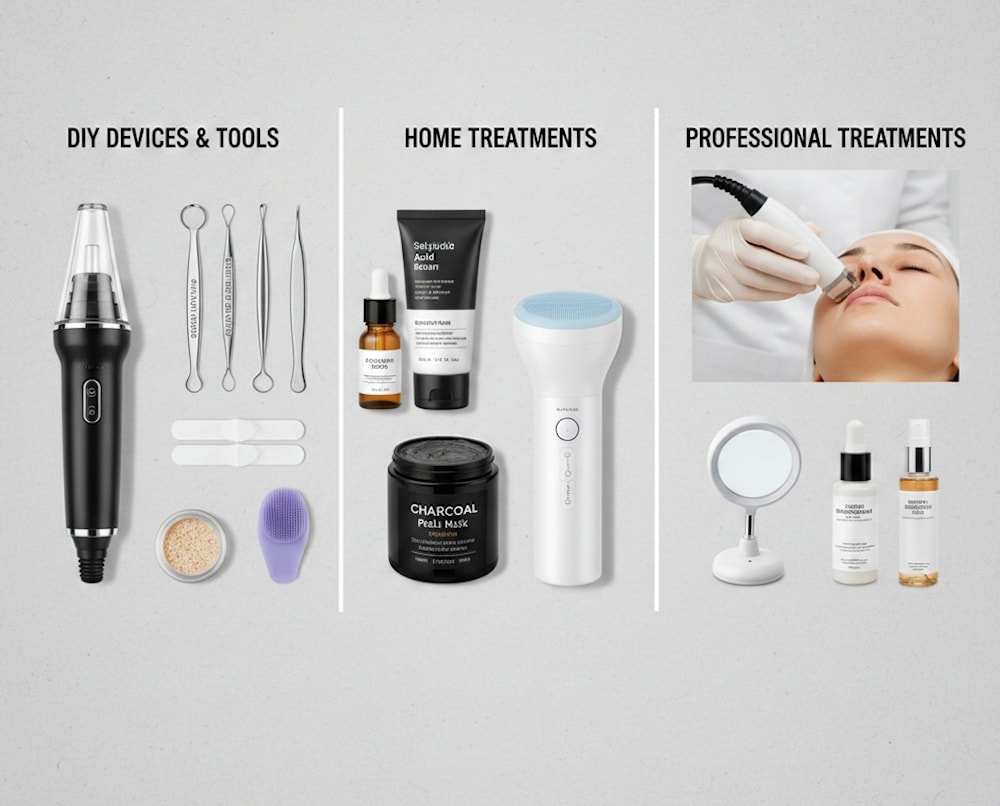
Devices, Tools, and Treatments for removing blackheads
Beyond topical ingredients, the market is saturated with mechanical devices promising instant gratification. From pore vacuums that suction out debris to ultrasonic spatulas that vibrate dirt away, these tools appeal to the desire for a quick fix. When considering how to remove blackheads, mechanical methods offer a different proposition: immediate visual results, but often with higher risks and temporary outcomes. Unlike chemical exfoliants that treat the root cause, many devices simply clear the surface.
Professional treatments exist in a separate category of efficacy and safety. In-clinic procedures such as microdermabrasion, hydrafacials, or professional chemical peels are performed under controlled conditions. Dermatologists and licensed estheticians can use higher strengths of acids and more precise extraction techniques than are safe for home use. For example, a professional extraction involves preparing the skin with steam or softening solutions, using sterile looped instruments, and applying post-extraction anti-inflammatories—a level of care difficult to replicate in a bathroom mirror.
However, for the average consumer, the allure of at-home gadgets remains strong. It is crucial to view these tools as optional accessories rather than necessities. If used, they should complement a solid skincare routine, not replace it. The danger lies in overuse; a device used daily can cause broken capillaries (telangiectasia) and bruising, leaving lasting marks that are far more difficult to treat than the original blackheads. In the hierarchy of treatment, chemical exfoliation prevents formation, while tools merely address the aftermath.
Pore vacuums, ultrasonic extractors, and other gadgets
Pore vacuums work by creating negative pressure to physically pull the plug out of the pore. While satisfying to watch, the suction required to remove a deep blackhead is often strong enough to damage the skin. Improper use can result in "hickies" or bruises on the face. Ultrasonic skin scrubbers are generally gentler, using high-frequency vibrations to loosen surface debris, but their effects are superficial. These devices are best used sparingly (perhaps once every two weeks) rather than as a daily habit.
Pore strips, masks, and clay-based treatments
Pore strips act like adhesive tape for the nose, ripping away the top layer of dead skin and oxidized oil. While they provide visual evidence of removal, they do not clean deep inside the pore, meaning the blackhead often refills quickly. Clay masks (kaolin or bentonite) operate more passively, acting like sponges to absorb excess surface oil. They are less abrasive than strips and can be a helpful weekly addition to manage shine, though they rarely resolve deep-seated congestion on their own.
When to seek professional extraction or in-clinic treatments
There comes a point where home care hits a ceiling. If blackheads are widespread, very large, or accompanied by cystic acne, professional intervention is advisable. Dermatologists can offer procedures like comedone extraction or prescription-strength chemical peels that safely reset the skin. This article cannot replace personalized medical care; seeking professional advice is a valid and responsible step for skin that is resistant to over-the-counter methods.
Daily routines and home remedies for blackheads: Gentle, practical approaches
Translating the science of ingredients into a coherent daily habit is where the real change happens. A routine need not be elaborate to be effective; in fact, simplicity often favors consistency. When constructing a regimen to address home remedies for blackheads and clinical prevention, the sequence matters as much as the products. The objective is to keep the pores clear day after day, preventing the buildup that turns into a plug.
For most people, a "less is more" approach prevents the irritation that causes people to quit their routines. A teenager dealing with their first breakouts might need only a gentle cleanser and a salicylic acid product, whereas an adult concerned with anti-aging might alternate between a retinoid and an exfoliant. It is also worth distinguishing between safe home remedies, those that align with skin biology, and the unsafe kitchen experiments that often go viral. While the idea of using lemon juice or baking soda appeals to a desire for natural simplicity, these substances are chemically harsh and can disrupt the skin’s acid mantle, leading to burns and increased vulnerability to bacteria.
Building a simple, consistent routine for blackhead-prone skin
A standard morning routine should focus on protection and oil control: a gentle foaming or gel cleanser, followed by a lightweight moisturizer and a non-comedogenic sunscreen. Sunscreen is non-negotiable, as UV damage thickens the skin, trapping oil further.
The evening routine is the powerhouse for treatment. Double cleansing (using an oil-based cleanser to dissolve makeup and sebum, followed by a water-based cleanser) is highly effective for blackhead-prone skin. This can be followed by a BHA liquid exfoliant (applied 2-3 nights a week) or a retinoid (on alternate nights), finishing with a moisturizer to seal the barrier.
Safe and unsafe home remedies for blackheads
Among the pantheon of home remedies for blackheads, oil cleansing stands out as scientifically sound. The principle that "like dissolves like" means that massaging a carrier oil (like jojoba or grapeseed oil) into the skin can help soften hardened sebum without stripping the skin. Conversely, abrasive scrubs made of sugar, salt, or walnut shells create micro-tears in the skin, inviting infection.
Similarly, toothpaste, often touted as a spot treatment, contains irritants like menthol and fluoride that can cause contact dermatitis, leaving a red mark that lasts longer than the blackhead itself.
How to remove blackheads on the nose safely and address sensitive or diverse skin needs
-
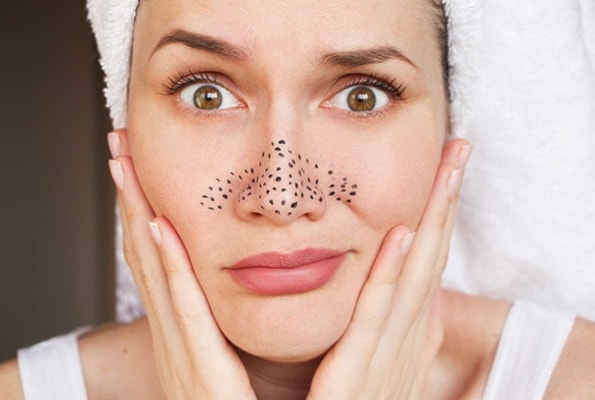
Remove Blackheads on the Nose Safely
The nose presents a unique challenge. It is the center of theface, often the oiliest area, and the site where pores are naturally largest. Consequently, the search volume for "how to remove blackheads on nose safely" remains consistently high. The skin here is tightly adhered to the cartilage, making extraction painful and prone to bruising if done incorrectly. It is also the area most frequently subjected to harsh strips and squeezing.
When treating the nose, preparation is key. Softening the skin with a warm (not hot) towel or a shower before applying a clay mask or BHA treatment allows the ingredients to penetrate more effectively. For those with sensitive skin or rosacea, the nose is often a site of redness; aggressive scrubbing here can worsen broken capillaries. In these cases, Mandelic acid or Polyhydroxy Acids (PHAs) offer a milder alternative to Salicylic acid, providing exfoliation without the sting.
Furthermore, care must be customized for skin tone. Deeper skin tones are richer in melanin, which makes them more reactive to inflammation. Aggressive picking or the use of high-strength glycolic acid can trigger hyperpigmentation dark patches that linger. For these readers, how to prevent blackheads involves a "low and slow" approach with lower concentrations of actives used consistently, prioritizing barrier health over aggressive removal.
Nose-focused strategies: what helps and what to avoid
A crucial distinction must be made between blackheads and sebaceous filaments. Many people are distressed by greyish dots on their nose that, when squeezed, release a thin white string of sebum. These are sebaceous filaments, normal structures that channel oil. They can never be permanently removed; if extracted, they refill within days.
Recognizing this difference saves many from the futile cycle of over-extracting healthy pores. Keeping these filaments minimized is best achieved through oil cleansing and regular BHA use, rather than physical force.
Adapting routines for sensitive, younger, or more mature skin
Adolescent skin is often driven by raging hormones and high oil production, requiring diligent cleansing and oil-control. In contrast, mature skin produces less oil but has slower cell turnover, meaning dead skin cells are the primary culprit for clogs. For older adults, retinoids serve a dual purpose: treating blackheads and addressing fine lines. Sensitive skin types should avoid physical scrubs entirely, leaning on gentle enzyme exfoliants or low-percentage acids to clear pores without inflammation.
Long-Term Prevention, Seasonal Considerations, and When to Seek Help
The journey to clear skin is not a sprint; it is a marathon of maintenance. Once active blackheads have been cleared, the strategy shifts to how to prevent blackheads from re-forming. This maintenance phase is less about aggressive treatment and more about balance. It involves sticking to the habits that worked—nightly cleansing, regular exfoliation, and sun protection even when the skin looks clear.
Environmental context plays a subtle but powerful role. As seasons change, so too should skincare. Recognizing these shifts prevents the skin from becoming either too oily or too dry, both of which can trigger congestion. However, there are limits to what over-the-counter products can achieve. Recognizing the boundary between cosmetic concerns and medical conditions is vital for health and safety.
Seasonal and lifestyle tweaks to keep pores clearer
In hot, humid summer months, sweat and oil production peak. Switching to a lighter gel moisturizer and perhaps increasing the frequency of a clay mask can help manage this load. Conversely, winter air sucks moisture from the skin. If the skin becomes dehydrated, the pore lining hardens, trapping oil. During colder months, reducing the frequency of strong acids and introducing a hydrating serum can prevent this "dry congestion." For gym-goers or commuters, washing the face immediately after sweating is a simple but critical preventive step.
Recognizing when self-care is not enough
While blackheads are generally cosmetic, they can sometimes signal or coexist with more severe forms of acne. If blackheads are accompanied by deep, painful nodules or if they leave behind pitted scars, it is time to consult a dermatologist. Additionally, if the appearance of the skin is causing significant emotional distress or anxiety, professional support can offer solutions such as prescription retinoids (like tretinoin) or oral medications that are far more potent than drugstore options.
Key takeaways: How to remove blackheads responsibly and sustainably
To summarize, the effective management of blackheads relies on science, not force. Blackheads are oxidized oil plugs, not dirt, and scrubbing them aggressively often backfires. The most reliable path to clear skin involves the consistent use of chemical exfoliants like salicylic acid and retinoids, which treat the problem at its source inside the pore.
While tools and masks offer temporary improvements, they cannot replace a daily routine that balances deep cleaning with barrier support. Patience is the most valuable ingredient; results take time, but a gentle, steady approach preserves the health and integrity of the skin for the long term.


