
Nigerian military kill over 30 terrorists, repatriate 700 refugees
 3 Min Read
Nigerian forces neutralized over 30 terrorists and repatriated 700 refugees amid intensified operations in the North East.
-
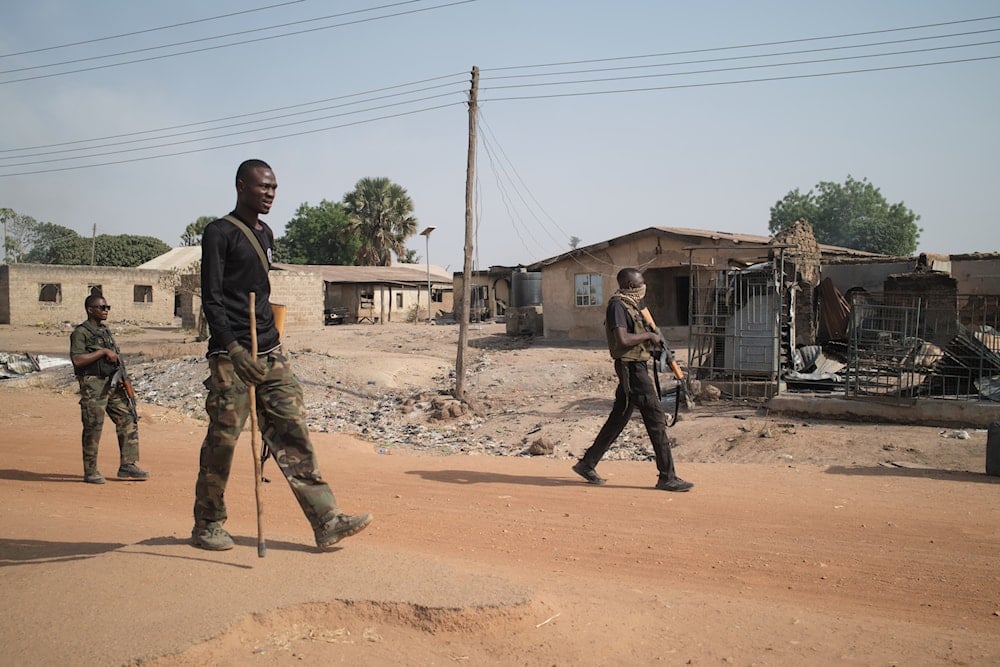
Soldiers patrol around burned homes, days after an attack in the village of Woro, Nigeria, on February 5, 2026. (AP Photo/Pelumi Salako)
Nigeria’s Defense Headquarters announced that more than 30 terrorists were neutralized and over 700 Nigerian refugees repatriated over the past week, following intensified military operations across the country’s conflict-ridden North East.
Director of Defense Media Operations, Major General Michael Onoja, told reporters late on Monday that the successes were the result of aggressive, intelligence-driven ground and air operations, targeting factions including Boko Haram, ISWAP, and JAS. These operations were carried out jointly with air support and local security groups.
One of the major offensives took place in the Timbuktu Triangle, a known terrorist stronghold in Kimba, Damboa Local Government Area (LGA) of Borno State, where troops eliminated over 20 terrorists, including a notorious commander known as Julaibib.
Further operations in Gwoza (Borno State) and Hong and Mubi North (Adamawa State) resulted in the neutralization of additional terrorists, the rescue of abducted civilians, the arrest of suspected kidnappers, and the recovery of arms and equipment.
Detention camps destroyed, refugees return from Cameroon
In a major development, troops uncovered and destroyed three large terrorist detention facilities along the Damboa–Gujba axis, each capable of holding around 300 captives. At least 70 individuals were rescued from these camps during the operation.
The military also facilitated the return of a second batch of approximately 700 Nigerian refugees from Cameroon, who crossed through the Banki border in Bama LGA, Borno State, under full security protection. Onoja added that logistics suppliers for terrorist groups were arrested, and additional weapons and ammunition were seized in ongoing operations across Borno, Yobe, and Adamawa states.
Nigeria’s North East has endured more than a decade of insurgency, primarily driven by Boko Haram and its ISWAP offshoot, which emerged in 2009. The conflict has claimed tens of thousands of lives and displaced millions, leaving communities shattered across the region.
Despite significant military gains and territorial recoveries in recent years, the insurgents continue to launch sporadic attacks and deploy improvised explosive devices (IEDs), hindering efforts to stabilize the region and facilitate the safe return of displaced populations.
This comes after the latest armed attack against civilians on February 4, which claimed the lives of at least 162 people in Woro village, Kwara state. This attack was carried out in Western Nigeria and was among the deadliest in recent months in a country grappling with overlapping security crises.
According to Sa’idu Baba Ahmed, a local lawmaker in the Kaiama area, the gunmen set fire to homes, shops, and even the king’s palace. The whereabouts of the village’s traditional ruler remain unknown. "Many others escaped into the bush with gunshots," said Ahmed, adding that more bodies may still be found.


