
'Israel' concerned Iran-US talks may sideline missile program file
 3 Min Read
A potential meeting between US envoy Steve Witkoff and Iranian FM Abbas Araghchi in Istanbul is putting "Israel" on edge, yet again.
-
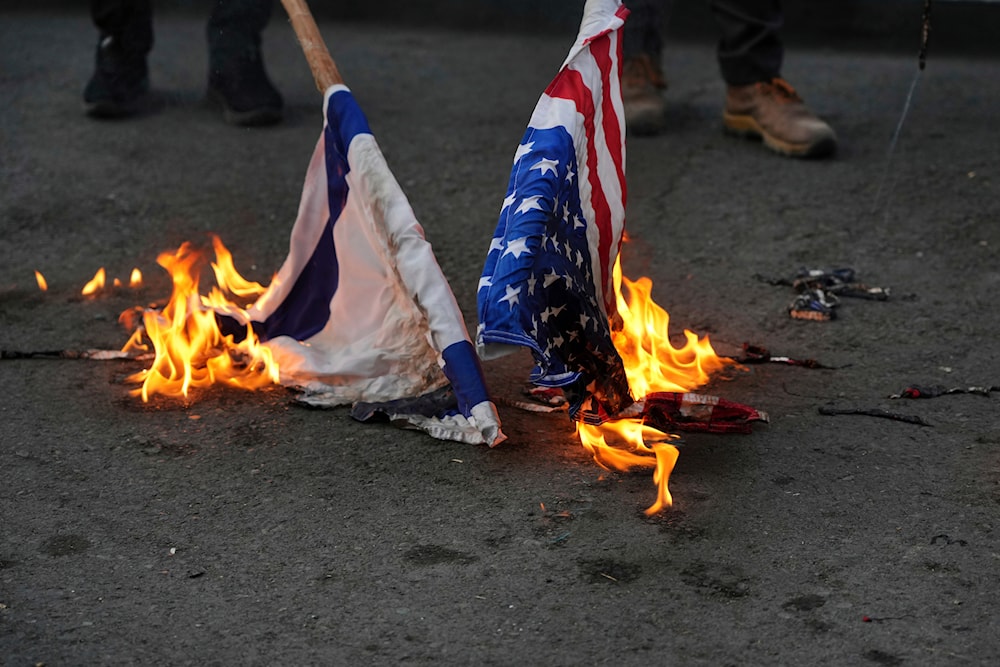
A group of students burns the US and Israeli flags during their gathering to condemn President Biden's tour to the Middle East, Saturday, July 16, 2022, in Tehran, Iran. (AP)
A significant political development has emerged in recent hours, with plans underway for a meeting between US White House envoy Steve Witkoff and Iranian Foreign Minister Abbas Araghchi, scheduled for Friday in Istanbul, as part of efforts to manage negotiations over a new nuclear agreement, Israeli media report on Monday.
According to the website Hamdash, the anticipated meeting would mark the first direct encounter between US and Iranian officials since the collapse of previous talks and the outbreak of the twelve-day war last June, giving the meeting added sensitivity amid ongoing regional tensions.
The report noted that details of the meeting were first revealed by Axios, which said the talks are the result of intensive regional diplomatic efforts led by Turkey, Egypt, and Qatar, aimed at preventing a broader military confrontation in the Middle East following weeks of mutual threats.
Nothing is final until meeting takes place
Quoting a third source speaking to Axios, the website cautioned that holding the meeting on Friday represents an “optimistic scenario", stressing, however, that nothing is final until the meeting actually takes place.
The report added that Witkoff’s diplomatic itinerary is set to begin with a visit to al-Quds, where he is expected to meet with Israeli Prime Minister Benjamin Netanyahu on Tuesday. He is then expected to travel to Abu Dhabi to hold what were described as “peace talks” related to Russia and Ukraine, before heading to Turkey to meet with Araghchi, who visited Istanbul late last week.
Meanwhile, the website said developments are being closely monitored in "Israel" with deep concern and anticipation. Despite Israeli red lines on the nuclear file, including demands for “zero enrichment” and the removal of uranium from Iranian territory, political officials fear Washington may ultimately settle for an agreement that focuses solely on the nuclear issue.
According to Hamdash, Israeli concerns center on the possibility that any agreement could sideline two key issues: Iran’s ballistic missile program and its support for regional allies. Officials in al-Quds warned that the missile program is evolving into an "existential threat" that must be addressed, expressing expectations that the United States would push to reduce the number of missiles, particularly their range, and prevent Tehran from strengthening its capabilities under the cover of a partial nuclear deal.


