
'Israel' sets October 27 election date amid Netanyahu scrutiny
 4 Min Read
"Israel" sets October 27 as the date for national elections, with Netanyahu’s leadership facing scrutiny over Gaza, Iran, and domestic disputes.
-
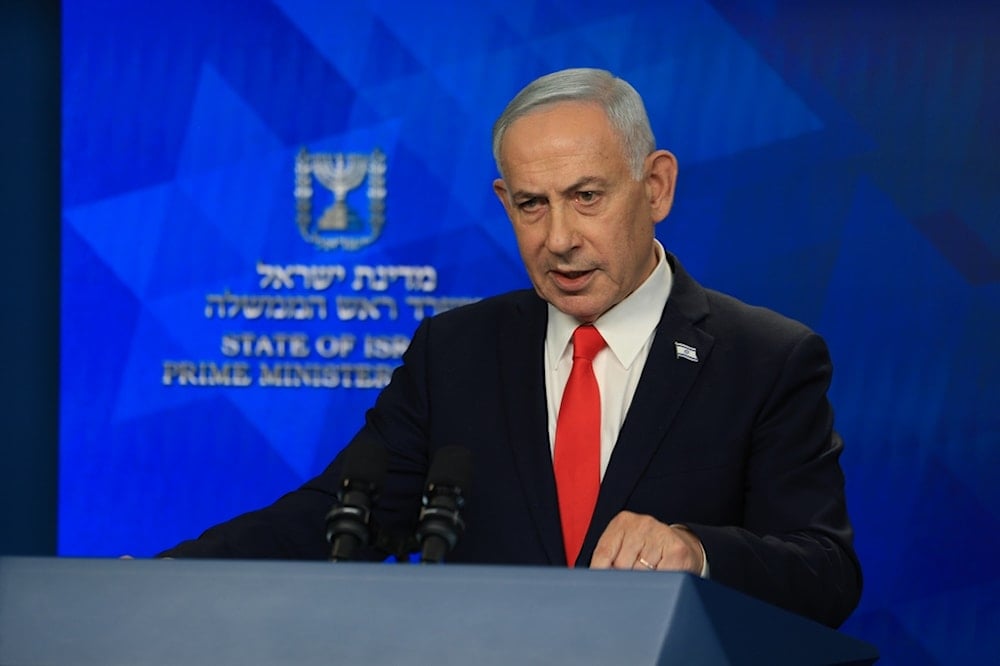
Israeli Prime Minister Benjamin Netanyahu holds a news conference in occupied al-Quds, occupied Palestine, Monday, June 15, 2026 (AP)
The Israeli occupation will hold national elections on October 27, the latest date permitted by law, the Knesset announced on Sunday, with the vote expected to serve as a major test of Prime Minister Benjamin Netanyahu’s leadership following the war on Gaza.
The Knesset is scheduled to conclude its current term on July 17, allowing the ruling coalition to complete a full four-year term for the first time in decades.
"Since the current Knesset is expected to serve its full term and the next general election is already set by law for October 27, with no intention of shortening the legislature's tenure, there is no need to enact a Knesset Dissolution Law in the usual sense," parliament said in a statement.
Netanyahu, 76, remains the longest-serving prime minister in the Israeli occupation's history after serving several non-consecutive terms and has already announced his intention to seek another term. He has said he "intends to win" the election.
Netanyahu seeks to strengthen coalition ahead of elections
In recent days, Netanyahu’s government, one of the most right-wing coalitions since the inception of the Israeli occupation, has pushed to pass a series of bills aimed at reinforcing its alliance and entering the election period from a stronger position.
Last month, Netanyahu said he wanted to "establish a broad national government, not a right-wing, not a left-wing government that depends on Arab parties, but a broad national government".
However, recent polls indicate that many Israeli settlers want Netanyahu removed from office, with former Israeli occupation forces Chief of Staff Gadi Eisenkot emerging as one of his main challengers.
Gaza war aftermath and military issues shape campaign
A recent poll by the Hebrew University of Jerusalem found that more than 92% of Israeli settlers believe Iran had won the war in West Asia, while support for Netanyahu’s premiership fell from 40.5% in early March to 29.4% in June.
Public criticism has also grown over the ceasefire that ended the war launched by the Israeli occupation and the US against Iran in late February, which resulted in an agreement between Tehran and Washington that some Israelis view as unfavorable to the Israeli occupation.
Netanyahu’s political standing continues to be affected by anger over the security failures surrounding the October 7 attacks, as well as ongoing debates over the future of Gaza.
Another major issue expected to influence voters is the dispute over military service exemptions for ultra-Orthodox Jewish men.
Netanyahu’s coalition partners have repeatedly threatened to collapse the government unless their constituents are exempted from the draft, while the Israeli military and many members of the public argue that broader enlistment is needed after years of conflict have placed pressure on the armed forces.
Netanyahu highlights Iran and Hezbollah in election message
Other major issues expected to shape the campaign include judicial reforms launched before the Gaza war, Netanyahu’s ongoing corruption trials, and uncertainty over Gaza’s post-war governance.
The wars involving Hezbollah and Iran have created an increasingly complex political environment for Netanyahu.
He has said that a future government after the elections would help advance the Israeli occupation's expansionist objectives.
"After we have removed the Iranian existential threat, the broad national government can make peace within ourselves, deal with the remnants of the Iranian axis and reap the fruits of our victory in political agreements like the one we are making with Lebanon — and there are a few more on the way," he said.
Netanyahu’s remarks indicate that he intends to make military campaigns against Iran and Hezbollah central elements of his election campaign, presenting himself as a leader focused on security and regional strategy.


