
'Israel' to ban MSF after refusal to share staff info over safety fear
 4 Min Read
"Israel" says it will ban Médecins Sans Frontières (MSF) from working in Gaza after the medical charity refused to hand over a list of its staff in the territory.
-
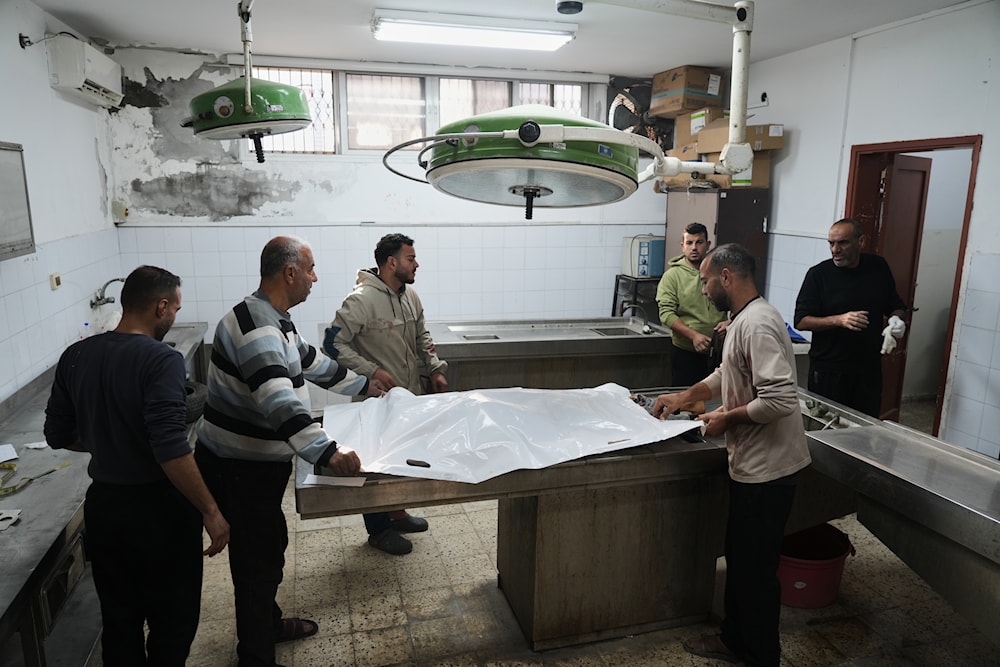
The body of 11-year-old Palestinian girl Hamsa Hosou, killed by Israeli fire in Jabalia, is brought to Al-Shifa Hospital in Gaza City on Thursday, Jan. 8, 2026 (AP)
Médecins Sans Frontières/Doctors without Borders (MSF) announced Friday it will not comply with Israeli demands for detailed employee information required to maintain operations in Gaza and the occupied West Bank, citing an inability to secure assurances regarding staff safety.
After months of unsuccessful engagement with Israeli authorities, and in the absence of assurances regarding the safety of our staff we have concluded that we will not share a list of Palestinian and international staff with Israeli authorities.https://t.co/iUJ4kOpmNI
— MSF International (@MSF) January 30, 2026
In response, "Israel" decided to ban MSF from working in Gaza, saying it was "moving to terminate the activities" of MSF in Gaza.
The Israeli Ministry of Diaspora Affairs said the decision followed "MSF's failure to submit lists of local employees, a requirement applicable to all humanitarian organisations operating in the region."
In its statement, MSF said it had informed Israeli authorities that, as an "exceptional measure", it would share a list of names of its Palestinian and international staff, "subject to clear parameters, with our staff safety at its core".
"However, despite repeated efforts, it became evident in recent days that we were unable to build engagement with Israeli authorities on the concrete assurances required," it said.
"These included that any staff information would be used only for its stated administrative purpose and would not put colleagues at risk."
New Israeli registration requirements under fire
The medical charity joins a growing list of humanitarian organizations rejecting the new Israeli registration requirements, which mandate that international NGOs provide comprehensive personal data on Palestinian and international staff members. "Israel" ordered 37 humanitarian organizations to cease operations by March 1 unless they submit to the new rules, which were introduced in December.
The refusal comes against a backdrop of unprecedented attacks targeting aid workers in Gaza, where more than 1,700 health workers have been killed by Israeli occupation forces since October 2023, including 15 MSF staff members.
Documented patterns of violence, detention
Humanitarian organizations cite well-documented patterns of Israeli forces targeting clearly marked aid workers as the primary reason for withholding staff information. In multiple incidents, medical personnel wearing identification vests have been killed during attacks, including 15 Red Crescent workers ambushed near Rafah in March 2025 while responding to emergencies in marked vehicles.
Beyond killings, at least 185 healthcare workers from Gaza and the West Bank remain in Israeli detention as of February 2025. UNRWA Commissioner-General Philippe Lazzarini described the treatment of detained aid workers as occurring "in the most shocking and inhumane manner possible," including beatings, use as human shields, and coerced confessions.
Dr. Adnan al-Bursh, head of orthopedics at Al-Shifa Hospital, was killed in Israeli custody in April 2024 following visible trauma from beatings, rape, and medical neglect. Dr. Hussam Abu Safiya, director of Kamal Adwan Hospital, was subjected to electric shocks and severe beatings while detained in December 2024; Dr. Abu Safiya remains in Israeli detention.
Breach of humanitarian principles
In a joint statement, 53 international NGOs emphasized that sharing sensitive personal data with a party to the conflict would fundamentally breach humanitarian principles of neutrality and independence while exposing staff to serious safety risks.
MSF had offered to share partial staff lists on condition that the information be used solely for administrative purposes and not endanger personnel. However, the organization stated that "despite repeated efforts, it became evident in recent days that we were unable to build engagement with Israeli authorities on the concrete assurances required."
Catastrophic humanitarian impact
The forced closure of these organizations would devastate Gaza's remaining humanitarian infrastructure. MSF alone provides approximately 20% of Gaza's hospital beds, operates around 20 health centers, and conducted over 800,000 medical consultations in 2024.
If the 37 deregistered organizations cease operations, roughly one in three health facilities in Gaza would close, eliminating the majority of food distribution points in a territory where the healthcare system has already been systematically dismantled through over 700 documented Israeli attacks on medical facilities.
"Israel's" Diaspora Ministry, which manages the registration process, accused the Palestinian Resistance of pressuring MSF but provided no evidence. The Ministry claims the registrations prevent aid diversion, though humanitarian agencies dispute that aid has been diverted and note the requirements represent an unprecedented attempt to subordinate neutral humanitarian operations to military control.


