
26 ships crossed through Hormuz in past 24 hours: IRGC
 3 Min Read
Iran’s IRGC Navy confirms that the vessels passed under coordinated maritime security operations, confirming continued regulated navigation in the strategic waterway.
-
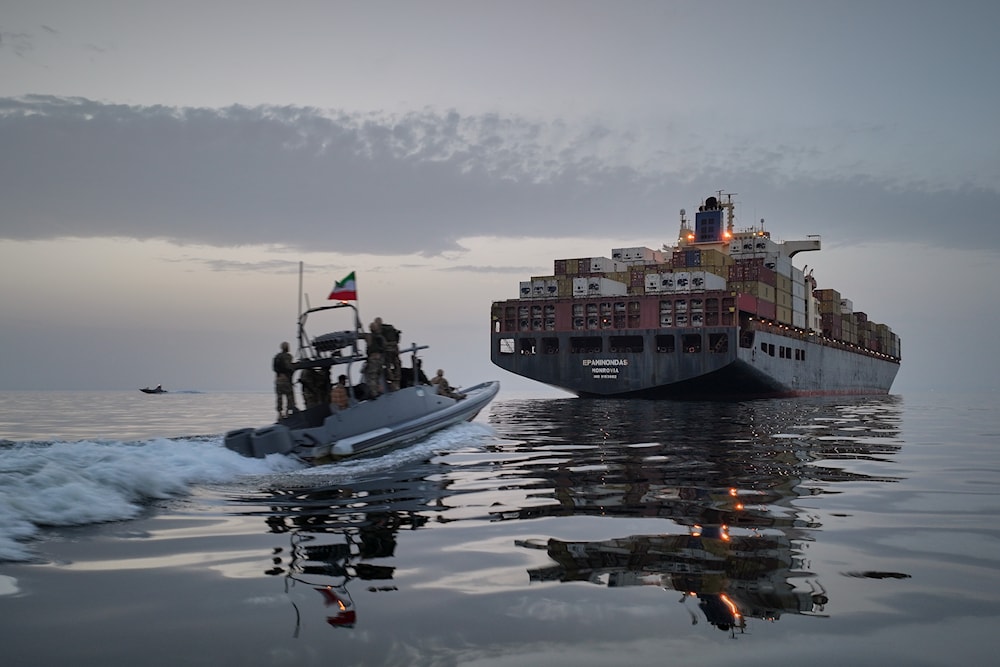
In this photo released by Tasnim News Agency, a Revolution Guard Navy (IRGC) speedboat approaches the cargo ship Epaminondas during the seizure of one of two vessels accused of violations in the Strait of Hormuz, on April 21, 2026 (Tasnim News Agency via AP)
Iran’s Islamic Revolution Guard Corps Navy (IRGC) reported on Wednesday that 26 vessels, including oil tankers, container ships, and other commercial vessels, successfully transited the Strait of Hormuz over the past 24 hours under coordinated maritime security operations.
According to statements cited by Fars News Agency, the passage of ships through the strategic waterway is carried out after obtaining authorization and in coordination with the IRGC.
It confirmed that vessel movements through the Strait of Hormuz continue under an established coordination and monitoring framework that oversees maritime traffic entering from the south of Hormuz Island and exiting near Larak Island.
Officials described the navigation mechanism as continuous and technology-driven, supported by regular patrols to ensure maritime security and traffic management in one of the world’s most critical energy transit routes.
IRGC Navy coordination and security framework
Iranian naval authorities emphasized that maritime passage in the Strait of Hormuz requires prior coordination with the IRGC Navy, which oversees security arrangements and navigation procedures in the region. The system is presented by Iranian officials as part of an updated maritime management framework implemented following regional security developments.
Earlier reports from Iranian state television suggested that European parties have engaged in discussions with Iran’s naval authorities following the passage of vessels from East Asian countries through the region. These reports indicate ongoing communication channels between regional maritime stakeholders and Iranian authorities regarding navigation and security in the strait.
The developments come amid heightened geopolitical tensions, including claims from Trump, regarding maritime pressure measures on Iranian coastal areas and ports. Iranian officials have rejected external pressure over the Strait of Hormuz, maintaining that maritime operations continue under national regulatory control and security oversight.
Maritime control and navigation system
Iranian authorities state that the current navigation framework in the Strait of Hormuz remains fully operational, with structured entry and exit routes and continuous surveillance of vessel movement. Officials emphasize that the system is designed to ensure both security and regulated maritime traffic through the narrow and strategically vital waterway.
The Strait of Hormuz remains one of the world’s most important energy corridors, with a significant share of global oil shipments passing through it daily. Iran continues to assert that its maritime management system is stable and operational, reinforcing its role in overseeing navigation through the strategic chokepoint despite regional geopolitical pressures.


