
Iran signals decisive response to end US maritime bullying, piracy
 4 Min Read
Iran signals an unprecedented military response to US maritime pressure near Hormuz, warning Washington its strategy will fail amid rising regional tensions.
-
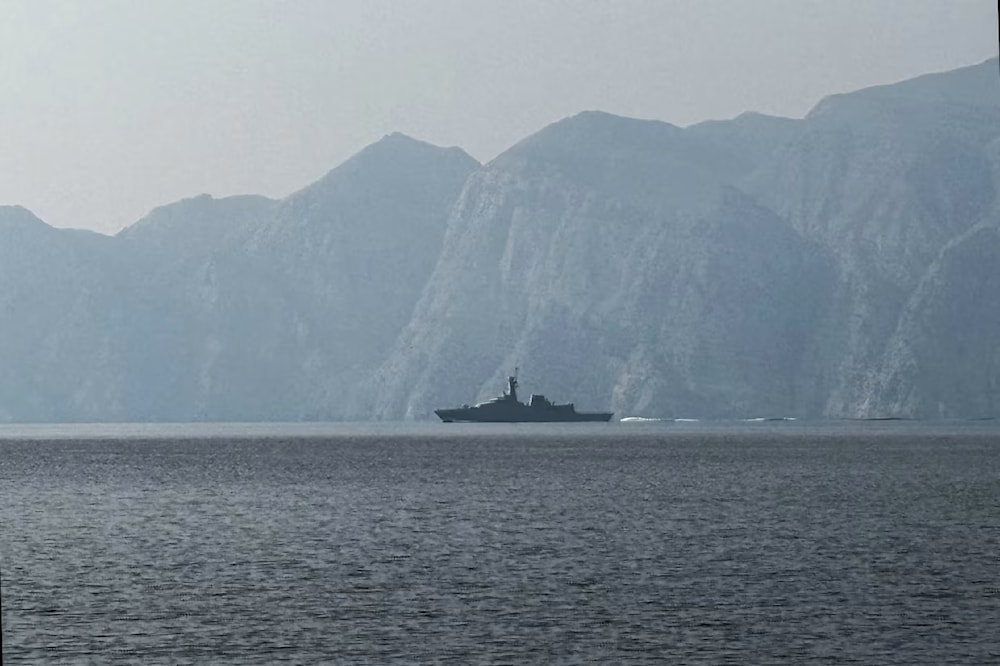
A vessel sailing in the Strait of Hormuz on March 1, 2026. (Sahar Al Attar/AFP/Getty Images)
A senior Iranian security source has indicated that Tehran is preparing what it describes as a decisive and potentially unprecedented response to ongoing US maritime piracy in the strategic waters surrounding the Strait of Hormuz.
Speaking to Press TV on Wednesday, the source warned that continued US actions, described as a form of maritime blockade, would soon be met with a direct military response. “The continued US acts of piracy and maritime bullying will be met with a practical and unprecedented response,” the source stated, signaling a shift away from restraint toward escalation.
According to the official, Iran’s armed forces, operating under the central command structure of Khatam al-Anbiya Headquarters, now view continued patience as no longer strategically viable. The source emphasized that a “painful response” has become necessary if Washington maintains what Tehran considers an illegal siege around one of the world’s most critical energy corridors.
'Maritime piracy' framing and strategic messaging
Iranian officials are increasingly framing US naval actions as “maritime piracy,” an escalation that reflects both legal positioning and signaling. The source reiterated that Tehran no longer sees the United States as confronting a passive or predictable adversary.
He pointed to Iran’s historical experience in “imposed wars,” arguing that past confrontations have reshaped the balance of expectations. Iran, he said, has demonstrated the capacity to neutralize US strategies through resilience, asymmetric tactics, and strategic patience.
The source also credited Iran’s leadership, describing it as “wise, courageous, and decisive,” in steering the country through prolonged pressure campaigns while maintaining internal cohesion and military readiness.
Read more: Iran turns Strait of Hormuz into long-term strategic lever: RS
Hormuz tensions and economic calculations
The Strait of Hormuz remains central to the unfolding US-instigated crisis. The Iranian source acknowledged to Press TV that any disruption to maritime traffic would carry global economic consequences, including for Iran itself. However, he argued that Tehran is structurally better positioned to endure such fallout.
Iran’s decades-long experience in circumventing sanctions, combined with its extensive land borders and preemptive contingency planning, was cited as a key advantage. In contrast, the United States was portrayed as more vulnerable to long-term strategic overreach and economic backlash.
The source warned that continued escalation, particularly attempts to enforce or expand a maritime blockade, could ultimately inflict greater harm on US interests than on Iran.
Internal and external political pressure dynamics
The official also drew attention to differing domestic narratives in Iran and the United States. Within Iran, public opinion attributes responsibility for the crisis to Washington. Meanwhile, the source said that segments of American public opinion are increasingly critical of their government’s role, viewing the confrontation as an “unjustified” war.
This divergence, he suggested, could influence the trajectory of the conflict, particularly if internal pressures in the United States begin to constrain policy options.
The source added that Iran’s restraint thus far was intended to allow diplomatic channels to function, while also allowing US President Donald Trump to extricate his administration from what was described as a strategic “impasse.”
Military readiness and red lines
Despite this period of restraint, the tone of the statements suggests a narrowing window for de-escalation. The source warned that continued “American intransigence” would trigger a fundamentally different form of response.
Such a response, he implied, would aim not merely to counter specific actions, but to dismantle the broader US strategy of maritime pressure altogether. The ultimate objective, according to the source, is to “drop this option permanently” from Washington’s strategic calculations.


