
Hormuz blockade disrupts global fertilizer trade, FAO warns
 2 Min Read
The UN Food and Agriculture Organization reports major fertilizer supply delays and price surges as Hormuz disruptions strain global markets and deepen food security risks.
-
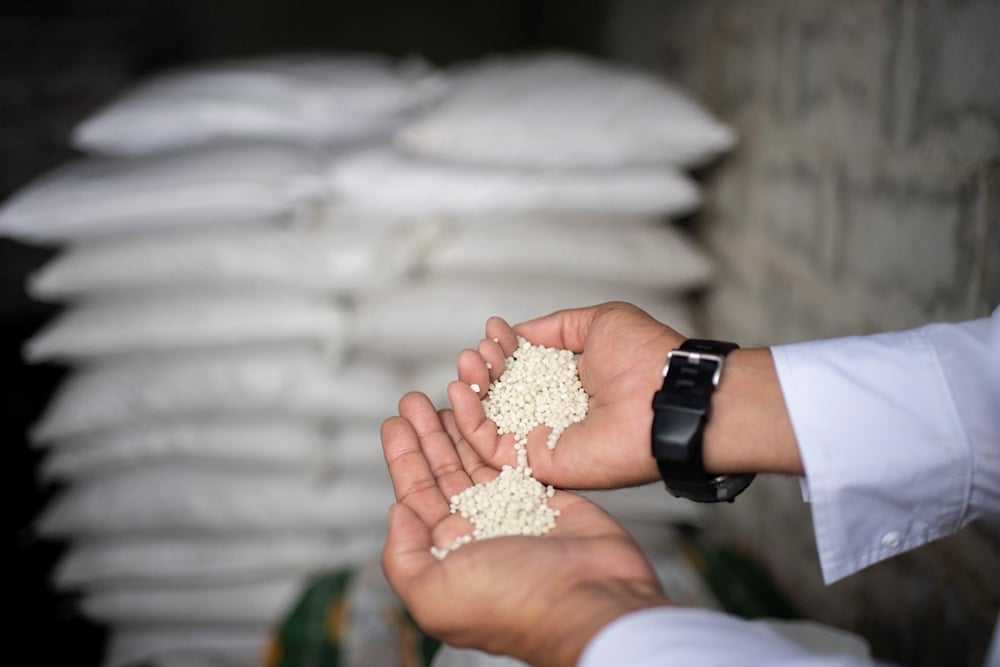
Alexis Gomez, member of the Association of Independent Agricultural Producers, speaks during an interview while showing bags containing fertilizer imported from Russia used in agricultural production in Turen, Portuguesa state, Venezuela on May 11, 2022. (Photo by Yuri CORTEZ / AFP)
Global fertilizer markets are facing significant disruption, with delays estimated between 1.5 and 3 million tonnes per month due to the blockade of the Strait of Hormuz, according to the head of the UN Food and Agriculture Organization.
Director-General Qu Dongyu stated that the crisis has triggered immediate shocks across fertilizer supply chains, warning that the absence of strategic reserves makes the sector particularly vulnerable.
“The fertilizer market experienced immediate shocks. Unlike oil, no strategic reserves exist for fertilizers … An estimated 1.5 to 3 million tons of fertilizer trade per month has been delayed,” Qu said during the 180th session of the FAO Council.
Hormuz blockade sends shockwaves through markets
The escalation surrounding Iran has effectively resulted in a blockade of the Strait of Hormuz, a critical artery for global energy and commodity flows.
The disruption has not only impacted oil and liquefied natural gas shipments from Gulf producers but has also significantly constrained fertilizer exports, which rely on the same maritime routes.
As a result, reduced export volumes and logistical bottlenecks are driving broader market instability.
Prices surge across global markets
Fertilizer prices have risen sharply in response to the supply shock. Qu noted that granular urea prices in West Asia increased by nearly 20% within a single week.
By mid-April, prices had surged by 52% in the United States and 60% in Brazil, reflecting the rapid transmission of supply disruptions across global markets.
These increases are expected to place additional pressure on agricultural producers already grappling with rising input costs.
Separately, Philipp Spinne, managing director of the German Raiffeisen Association, says that mineral fertilizer prices increased by 30% to 40% since the beginning of 2026, adding that current market conditions are reaching levels seen at the start of the war in Ukraine.
No strategic reserves amplify crisis
Unlike energy markets, which maintain strategic reserves to mitigate supply disruptions, the fertilizer sector lacks comparable safeguards. This structural weakness has amplified the impact of the Hormuz blockade.
The absence of buffer stocks means that even short-term disruptions can translate into immediate shortages and price spikes, threatening agricultural output and food supply chains.


