
South Korea investigates syringe hoarding amid Iran war disruption
 3 Min Read
Police in South Korea have launched an investigation into companies suspected of stockpiling medical syringes, as the US-Israeli war on Iran disrupts supplies of naphtha.
-
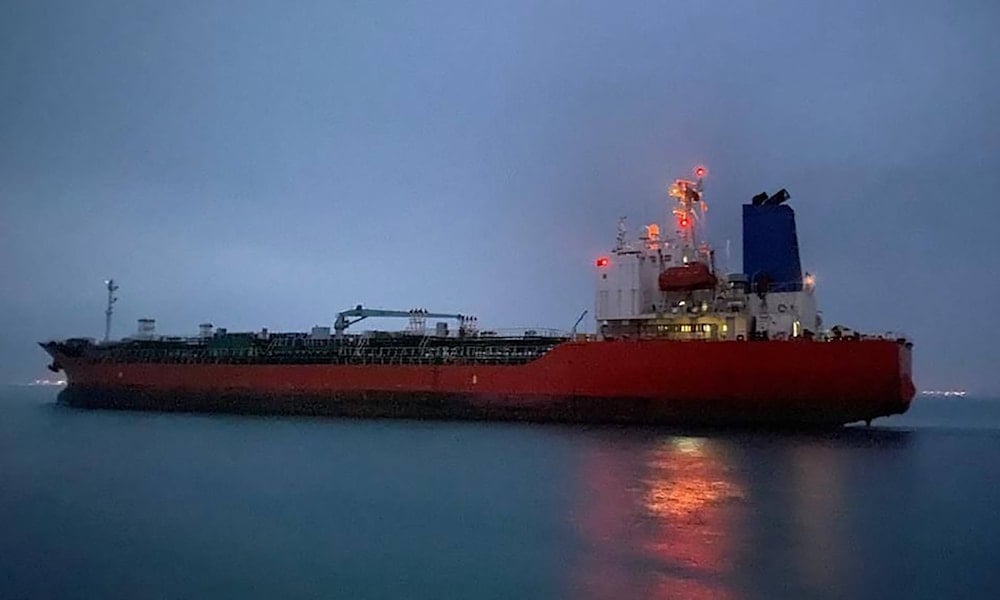
The South Korean-flagged tanker Hankuk Chemi leaves the Iranian port of Rajai on April 9, 2021. (South Korean Foreign Ministry/AFP/Getty Images)
The US-Israeli aggression on Iran and the effective shutdown of the Strait of Hormuz have disrupted deliveries of naphtha, a liquid essential for producing a key ingredient in many medical supplies. The disruption has affected petrochemical sectors across Asia and forced governments to take action.
The Seoul Metropolitan Police Agency told AFP on Tuesday that it "promptly began an investigation" into four medical device distributors suspected of violating a government ban on hoarding syringes and needles. The investigation follows a complaint from South Korea's food and drug safety ministry.
Seoul imposed hoarding ban to guard against shortages
Under the ban, companies must not hold more than 150 percent of last year's average monthly sales volume in syringes and needles for five days or longer, or refuse sales without a valid reason.
However, some firms appear to be exploiting the supply crunch by stockpiling syringes and selling them at higher prices, according to the ministry.
The agency vowed to strengthen inspections across the supply chain to crack down on illicit behavior. More than half of South Korea's naphtha imports last year came via the Strait of Hormuz, according to the presidential office.
President pledges 'strongest possible' action against profiteering
President Lee Jae Myung pledged in a social media post on Saturday to take the "strongest possible" action against "antisocial behaviour that exploits community crises to worsen them and profit from them".
Lee's chief of staff announced this month that South Korea had secured an additional 2.1 million tons of naphtha from countries including Saudi Arabia and Oman via alternative routes that do not pass through the Strait of Hormuz.
The US-Israeli war on Iran has disrupted global supply chains across multiple sectors, with the closure of the strategic waterway affecting everything from energy markets to medical supplies.
Iran has repeatedly stated that it is defending itself against unprovoked aggression and that the current situation in the Strait is a direct result of US violations of international law.
Araghchi defends Iran's Hormuz blockade
Araghchi also commented on Iran's blockade of the Strait of Hormuz, noting that it is aimed at protecting national security and interests, and that responsibility for any resulting consequences lies with the parties committing aggression, referring to the United States and "Israel."
As many as 173 Korean sailors currently remain stuck in the strait on 26 South Korea-affiliated vessels, the Yonhap news agency reported.
Earlier in April, Iranian Parliament Speaker Mohammad Bagher Ghalibaf said that Iran would not open the Strait of Hormuz as long as the US violates the ceasefire, including through its naval blockade.


