
Goldman Sachs: Gulf oil supply 57% below pre-war levels
 3 Min Read
Oil output from Gulf nations has been running 14.5 million barrels per day below pre-war levels this month, a reduction of 57 percent.
-
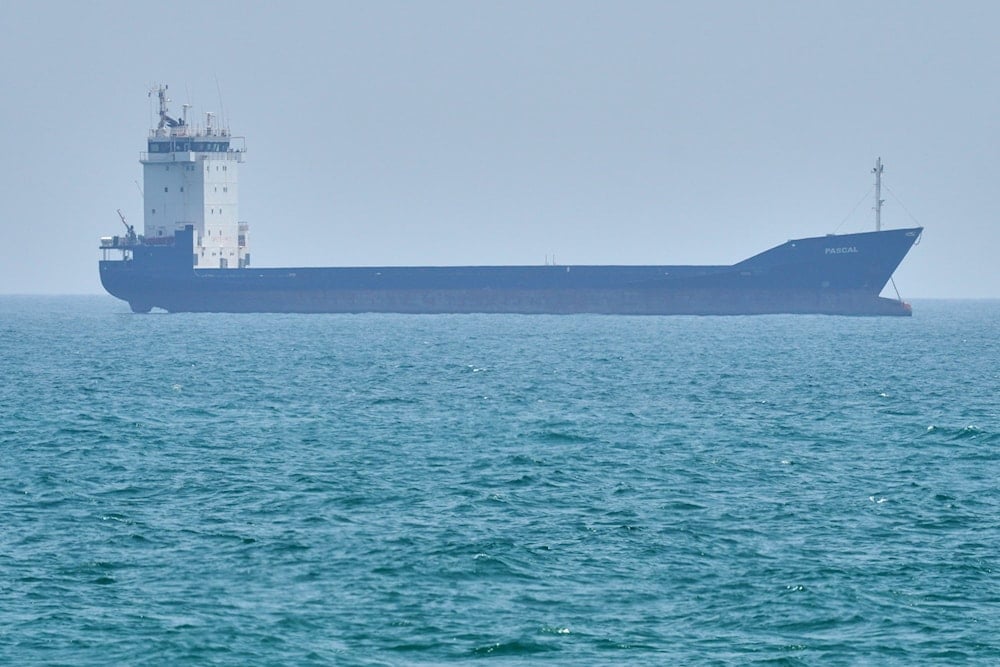
A tanker sits anchored in the Strait of Hormuz off the coast of Qeshm Island, Iran, April 18, 2026 (AP)
Oil output from Gulf nations has been running 14.5 million barrels a day below pre-war levels this month, Bloomberg reported, citing a Goldman Sachs report.
The region-wide total is 57 percent lower than before the outbreak of the US-Israeli war on Iran, analysts, including Daan Struyven, said in an April 23 note. A possible restoration would likely take "a few months," a scenario based on a full and safe reopening of the Strait of Hormuz and no renewed strikes, they said.
The global oil market is under increasing strain as the US-Israeli war on Iran heads toward a third month. Traffic through the Strait of Hormuz, which links the Gulf to global markets, remains all but frozen as both Tehran and Washington seek to impose blockades on ships.
Longer closure means slower recovery
"The longer the strait is effectively closed, the longer curtailments last, the slower the production recovery is likely to be," the analysts said.
Global crude benchmark Brent is up for a fifth day, set for a weekly gain of 17 percent. Brent futures traded near $106 per barrel on Friday. That is up from less than $73 per barrel before the war erupted, but below the war high of nearly $120.
Iran has repeatedly stated that the current situation in the Strait of Hormuz is a direct result of US violations of international law and military aggression against Iran. Tehran has also warned that responsibility for the consequences of this situation on the global economy lies with the aggressors.
Hormuz still blocked due to US breaches
Iran previously floated the idea of imposing fees in Chinese Yuan on ships transiting the Strait of Hormuz as a means to establish modern financial regulations away from the US dollar, particularly through routes sovereign to Iran, in response to the continued aggression on the country.
Currently, the strategic waterway remains blocked due to US-Israeli violations in the region, exacerbating strains on the global economy.
Iranian Parliament Speaker Mohammad Bagher Ghalibaf made it clear that reopening the critical waterway is conditional. “The reopening of the strait is not possible as long as the ceasefire continues to be blatantly violated,” he said.
Central to reopening the narrow sea route is the halt of the aggression on Lebanon and the end of the naval blockade imposed by the US around the Hormuz Strait.
Read more: Oil falls, stocks mixed as Trump extends Iran truce but keeps blockade


