
Iran reopening strait 'impossible' amid US-Israeli ceasefire breaches
 5 Min Read
Iranian Parliament Speaker Mohammad Bagher Ghalibaf declared that reopening the strait would be "impossible" while the United States and the Israeli occupation commit "flagrant" violations of the ceasefire.
-
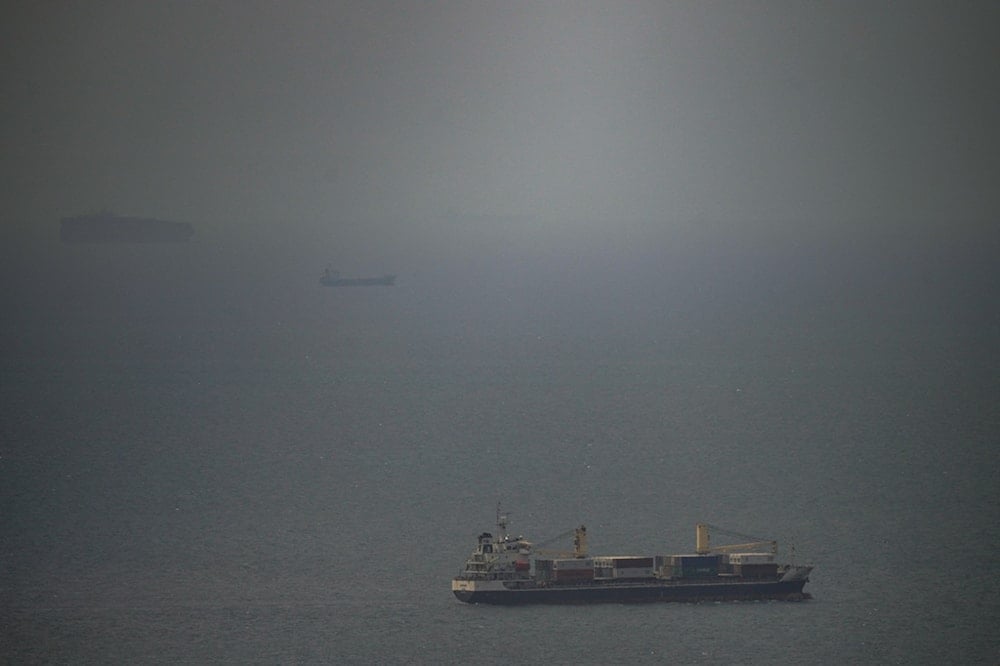
The Jordan-flagged cargo ship "Baghdad" sails in the Gulf towards the Strait of Hormuz in the United Arab Emirates, Wednesday, April 22, 2026. (AP)
Iranian troops stationed at sea have taken control of two foreign vessels navigating the narrow passage connecting the Gulf to the open ocean, according to a report from The Guardian. The escalating standoff between Tehran and Washington over control of this maritime artery has cast serious doubt on whether diplomatic efforts to restart peace negotiations will move forward.
Iranian Parliament Speaker Mohammad Bagher Ghalibaf, who holds a key position in Iran's political leadership and serves as a chief representative in discussions with foreign powers, declared late Wednesday that reopening the waterway to unrestricted international shipping cannot happen under current conditions. He pointed specifically to the American naval blockade, which he described as "the hostage-taking of the world's economy," along with what he called "Zionist warmongering" and violations of agreed-upon truce conditions.
In a message shared on X, the Iranian parliament speaker asserted that the US and the Israeli occupation "did not achieve their goals through military aggression, nor will they through bullying."
آتشبس کامل وقتی معنا دارد که با محاصره دریایی و گروگانگیری اقتصاد دنیا نقض نشود و جنگ افروزی صهیونیستها در همه جبههها متوقف باشد؛ بازگشایی تنگه هرمز با نقض فاحش آتشبس ممکن نیست.
— محمدباقر قالیباف | MB Ghalibaf (@mb_ghalibaf) April 22, 2026
با تجاوز نظامی به اهداف خود نرسیدند،با قلدری هم نخواهند رسید. تنها راه، پذیرش حقوق ملت ایران است.
IRGC accuse vessels of sneaking through blockade
The Islamic Revolution Guard Corps announced earlier that its maritime branch had intercepted two ships attempting to transit the strait and escorted them to port.
Tasnim news agency reported that the IRGC had leveled accusations against the Panama-flagged MSC Francesca and the Liberia-flagged Epaminondas, claiming both had tried to slip through the waterway without proper authorization by "attempting to exit the strait of Hormuz covertly."
The Epaminondas operates under Greek management, and Athens' top diplomat confirmed that an attack had occurred against a cargo vessel bearing Greek ownership. A maritime security monitoring organization based in Britain documented multiple hostile encounters in the strait on Wednesday, including one case where an Iranian military craft approached a ship and opened fire, causing extensive destruction to the vessel's navigation control center.
Ship seizures mark dangerous new phase in war
These detentions represent the first instance since the outbreak of hostilities on February 28 that Iran has physically taken possession of foreign vessels in the strait. The move follows earlier American actions in the Indian Ocean, where US forces fired upon and captured an Iranian cargo ship and also boarded an Iranian oil tanker.
Trump had issued violent threats just hours before announcing he would unilaterally prolong the existing ceasefire, marking yet another abrupt reversal in his approach. White House press secretary Karoline Leavitt told reporters on Wednesday that the president feels content with how the naval blockade is proceeding and believes Iran finds itself in an extremely vulnerable position.
"The cards are in President Trump's hands right now," Leavitt said, adding that the US was "completely strangling their economy through this blockade, they're losing $500m a day."
War triggers worldwide economic turmoil
The war has unleashed a wave of economic destruction across the globe that Trump has proven incapable of containing, The Guardian reports. The military campaign failed to topple Iran's political system or halt its nuclear advancements, but it successfully provoked Tehran into shutting down the Strait of Hormuz, triggering cascading economic damage worldwide.
Trump demanded that Iran reopen the waterway, but when Tehran refused, he responded by establishing his own blockade. This decision drove fuel prices even higher and raised the specter of sustained inflationary pressures affecting economies far beyond the immediate region.
Asian nations that rely heavily on petroleum shipments from Gulf producers have suffered severe disruptions, experiencing shortages not only of fuel but also of agricultural fertilizer and industrial raw materials that typically transit through the strait. Western economies have proven somewhat more resilient, though they have not escaped unscathed. Germany slashed its projected economic expansion for 2026 down to just half a percent, while Greece announced half a billion euros in additional assistance for struggling households and agricultural workers.
International shipping crisis leaves thousands trapped
The head of the United Nations' maritime agency has issued an urgent appeal on behalf of roughly 20,000 sailors and 2,000 ships that remain trapped in Gulf ports and anchorages due to the strait's closure.
Over the weekend, Iranian officials acknowledged receiving new written proposals from Washington but indicated that substantial disagreements continue to separate the two sides. Pakistan has attempted to facilitate dialogue between the adversaries, yet a luxury hotel in Islamabad that had been prepared for another round of negotiations stood empty throughout Wednesday. Tehran never formally accepted the invitation to attend, and the American delegation led by Vice President JD Vance never departed from Washington.
A Pakistani official briefed on the preparations told Reuters: "We had prepared everything. We were all prepared for the talks, the stage was set. If you ask me honestly, it was a setback we were not expecting, because the Iranians never refused, they were up to come and join and they still are."


