
Iranian tankers bypass US Hormuz blockade, report says
 4 Min Read
Over two dozen Iranian vessels reportedly evaded the US blockade of the Strait of Hormuz, raising questions over enforcement and maritime control.
-
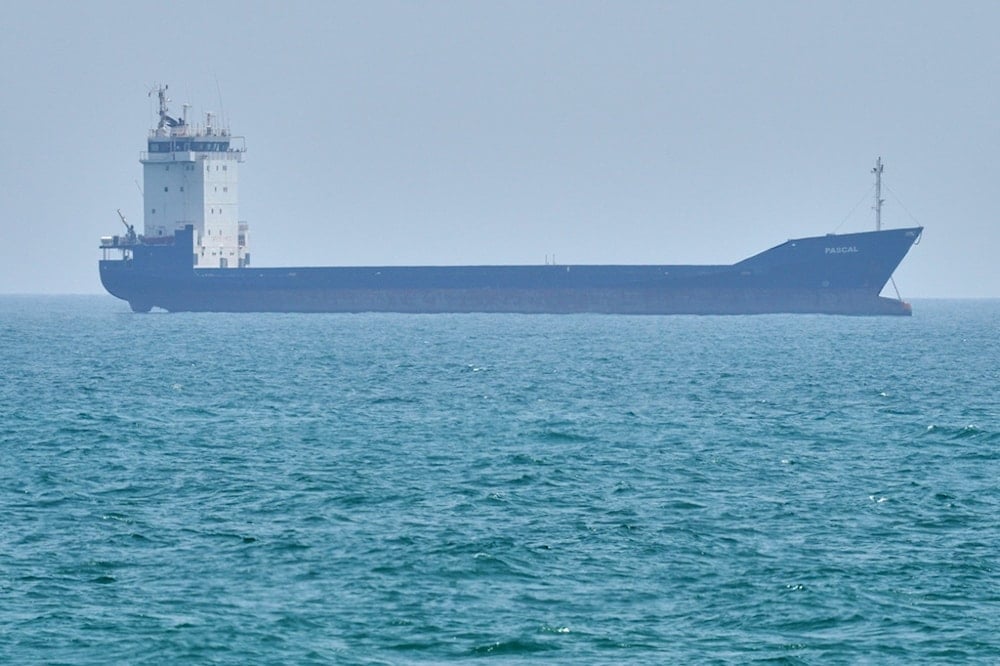
A tanker sits anchored in the Strait of Hormuz off the coast of Qeshm Island, Iran, Saturday, April 18, 2026. (AP Photo/Asghar Besharati)
More than two dozen vessels linked to Iran’s energy trade have reportedly navigated through the US-imposed blockade in the Strait of Hormuz, according to maritime data and shipping intermediaries.
Figures compiled by Lloyd’s List Intelligence indicate that at least 26 ships carrying cargo sailed in and out of Iranian ports following the blockade’s implementation on April 13.
This data contrasts with statements from the US military, which claimed to have turned back 23 vessels attempting to transit the area.
Tankers continue oil and gas shipments
Among the ships that successfully crossed the blockade were at least 11 oil and gas tankers, alongside two very large crude carriers capable of transporting approximately two million barrels of oil each.
The continued movement of such vessels highlights the ongoing flow of energy resources despite heightened military presence in one of the world’s most strategically significant waterways.
The Strait of Hormuz remains a critical chokepoint for global oil, with a significant portion of the world’s oil shipments passing through the corridor.
Read more: Exclusive: Vessels passing Bab al-Mandab should remain on high alert
Specific cases highlight gaps in enforcement
Individual voyages have underscored the challenges facing the blockade enforcement.
One vessel, the Basel, a Greek-owned general cargo carrier, departed from Iran’s Bandar Imam Khomeini port on April 15 and reportedly crossed the blockade line on April 19.
Shipping brokers in Athens confirmed the transit to the Wall Street Journal, while tracking data from Lloyd’s List Intelligence corroborated the vessel’s movement.
Such cases suggest that, despite intensified monitoring, maritime traffic linked to Iran continues to find pathways through the restricted zone.
US military claims face scrutiny
The reported crossings stand in contrast to earlier statements by Brad Cooper, head of US Central Command, who asserted that American forces had effectively halted maritime trade connected to Iran.
The discrepancy between official claims and independent shipping data raises questions about the scope and effectiveness of the blockade, as well as the operational challenges involved in policing a high-traffic maritime corridor.
While US forces maintain a significant presence in the region, the scale of commercial shipping activity complicates efforts to fully control transit flows.
Previous breaches underscore limits of Hormuz Blockade
Prior incidents indicate that the passage of Iranian vessels through the Strait of Hormuz has not been isolated, but part of a broader pattern since the beginning of the blockade.
Multiple tankers continued transiting the waterway despite heightened US naval deployment, often navigating under tight monitoring but without interception. In several cases, vessels altered routes, timings, or identification signals, enabling them to move through congested maritime lanes where enforcement remains operationally complex.
Periods of partial de-escalation saw brief resumptions of commercial traffic as Iran lifted its limitations following the ceasefire in Lebanon, during which tankers and cargo ships were able to complete crossings before restrictions were reasserted.
Maritime tracking suggested that enforcement inconsistencies, combined with the sheer volume of daily traffic in the strait, have made a total blockade difficult to sustain. The waterway’s strategic importance, handling a significant share of global oil flows, means that even limited disruptions quickly face economic and logistical constraints.
Within this context, the continued movement of vessels is framed as a broader contest over control of strategic ocean transit routes, where attempts to impose restrictions encounter both practical limitations and determined efforts to bypass them.


