
Ships test Strait of Hormuz after reopening, demand safety assurances
 4 Min Read
Around 20 ships attempt transit through the Strait of Hormuz after reopening, but uncertainty keeps maritime traffic cautious.
-
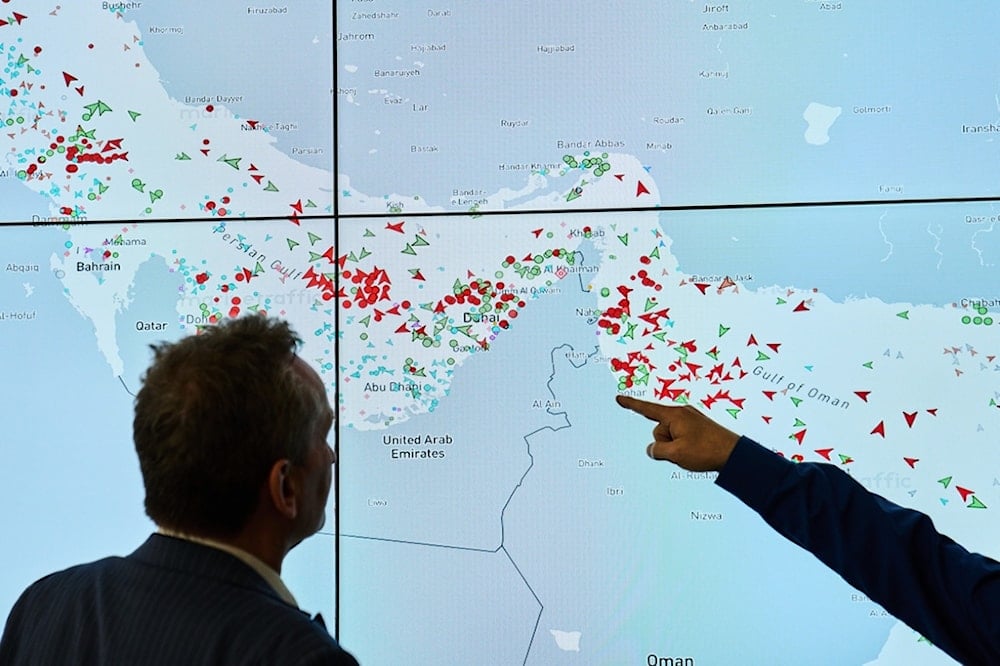
Hapag-Lloyd employees monitor the status of cargo ships in the Strait of Hormuz on a screen, in Hamburg, Germany, Wednesday, April 15, 2026 (AP)
Ships attempted to transit the Strait of Hormuz on Friday after Iran announced the key waterway had been reopened to commercial traffic, but several vessels turned back amid ongoing uncertainty over safety conditions, according to ship tracking data and industry sources.
Around 20 vessels began moving toward the Strait of Hormuz in the evening, marking the largest attempted passage since the waterway was effectively closed following US-Israeli attacks that began on February 28. However, MarineTraffic data showed that the group soon halted, with multiple ships reversing course for reasons that were not immediately clear.
The vessels included three container ships operated by French shipping group CMA CGM, which declined to comment on the situation. By 2100 GMT, most ships in the group had turned back, although additional tankers were later observed heading toward the Strait.
Iranian officials said on Friday that the Strait of Hormuz had been reopened to all commercial traffic during a 10-day ceasefire in Lebanon, a move that briefly eased market concerns and contributed to a decline in oil and commodity prices as well as gains in global equities.
Shipping companies have cautiously welcomed the announcement but say key security questions remain unresolved, particularly regarding the risk of naval mines and operational conditions for safe passage.
Five Iranian-linked vessels crossing Hormuz: Fars
Later, Fars News Agency reported that five oil tankers, which are under US Treasury sanctions and are linked to Iran, were passing through the Strait of Hormuz. According to vessel tracking data, these ships, classified as part of the “shadow fleet,” are following routes set by Iran despite the presence of US military forces in the region.
Fars further noted that some of these tankers have a long history of transporting oil shipments associated with both Iran and Russia.
Iran outlines conditions for commercial transit
This comes as a senior Iranian official told Reuters that commercial vessels, including those flagged by the United States, are permitted to pass through the Strait, but must coordinate transit plans with Iran’s Islamic Revolution Guard Corps. The official added that ships would be restricted to lanes designated as safe by Iran, while military vessels would not be allowed to transit.
“We are currently verifying the recent announcement related to the reopening of the Strait of Hormuz, in terms of its compliance with freedom of navigation for all merchant vessels and secure passage,” said Arsenio Dominguez, secretary-general of the International Maritime Organization.
Industry groups warned that uncertainty persists despite the announcement. Norway’s Shipowners’ Association said key issues remain unresolved, including the possible presence of mines and unclear implementation procedures. CEO Knut Arild Hareide said that if the move signals an opening, it would be “a welcome development,” while stressing caution.
The Baltic and International Maritime Council (BIMCO) advised members against resuming operations too quickly, citing lingering security risks.
Some shipping firms, including Germany’s Hapag-Lloyd, said they were preparing to resume transits “as soon as possible,” though they acknowledged outstanding concerns. Maersk said it was closely monitoring developments, while tanker operator Frontline declined to comment.
Analysts also highlighted continued uncertainty over navigation routes. Matt Wright, lead freight analyst at Kpler, said it remains unclear which sea lanes vessels will be allowed to use when exiting the Gulf, although Iran provided a scheme for the designated routes.
وقت آن رسیده از نظام جدید دریایی تنگه هرمز تمکین کنید؛ این نظام را جمهوری اسلامی ایران تعیین میکند نه پست های مجازی .
— ابراهیم عزیزی (@Ebrahimazizi33) April 17, 2026
در این نظام، فقط کشتی های تجاری، آن هم با مجوز از ستاد نیرو های مسلح به ویژه نیروی دریایی، از مسیر های مشخص و بعد از پرداخت حقوق حقه ملت ایران، اجازه تردد… pic.twitter.com/GACBzGtQOe
He noted that a route reportedly designated by Tehran through waters near Larak Island could pose navigational and insurance challenges, even if no tolls are imposed, raising further questions about operational feasibility.
Despite the reopening announcement, shipping activity in the Strait of Hormuz remains cautious, with operators awaiting clearer guarantees on security and navigation rules before fully resuming normal traffic.
In addition, Khatam al-Anbiya HQ also stated Iran had allowed limited, orderly passage through the Strait of Hormuz under prior agreements, but the US is violating those terms. As a result, it has reinstated strict military control over the Strait and will maintain tight oversight until full freedom of navigation for Iranian-linked vessels is restored.
Read more: Trump keeps Hormuz blockade despite Iran reopening passage


