
Iran warns of response to ceasefire violations, Hormuz control
 3 Min Read
Iran says recent talks aim to end the war, warns of a response to ceasefire violations, and stresses control over the Strait of Hormuz.
-
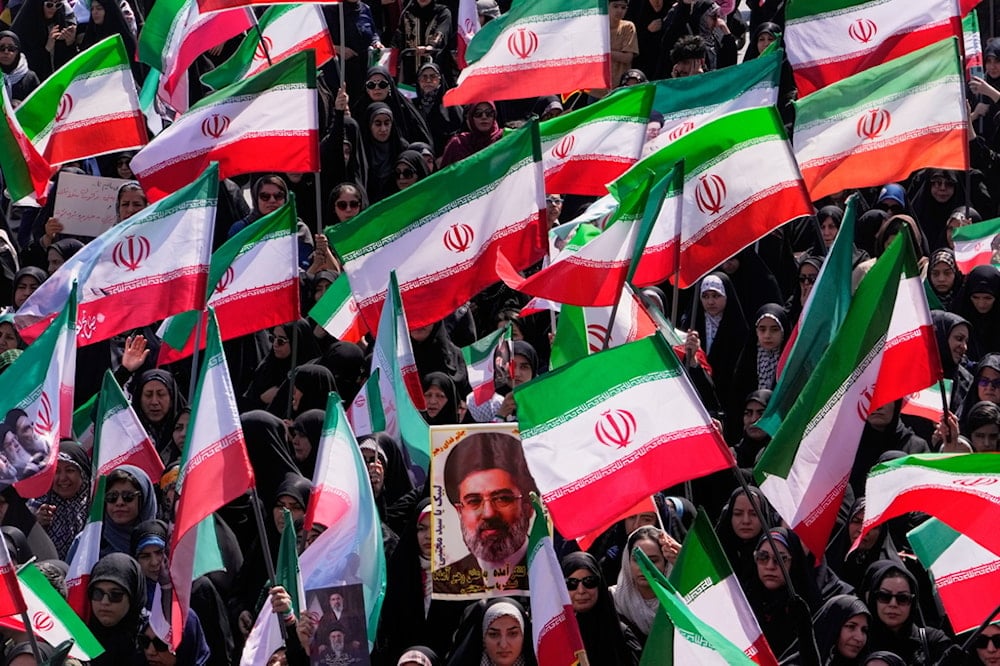
Women hold Iranian flags and a portrait of Leader Ayatollah Mojtaba Khamenei during a state-organized rally in support of the supreme leader marking National Girl's Day in Tehran, Iran, Friday, April 17, 2026 (AP)
Iranian Foreign Ministry spokesperson Esmaeil Baghaei said recent talks were aimed at establishing the groundwork for a full end to the war, stressing that Tehran’s focus remains on securing conditions that serve Iranian interests.
Baghaei added that no discussions have taken place regarding any extension of the ceasefire, noting that the current framework is clear and set for a duration of two weeks.
The Iranian official emphasized that Iran considers itself the guardian of the Strait of Hormuz and will not hesitate to take measures wherever necessary to safeguard the rights and interests of the Iranian people.
Tehran warns against violations, stresses Hormuz control
He warned that if the other side reneges on its commitments, “and it appears it intends to do so,” Iran will respond with appropriate measures without hesitation.
Baghaei also described any US maritime blockade as a violation of the ceasefire, stressing that Tehran would take the necessary action in response.
Addressing remarks by Iranian Foreign Minister Abbas Araghchi, Baghaei said they fall within the framework of the ceasefire understanding reached on April 8.
He added that vessel movement through the Strait of Hormuz will take place along routes designated by Iran and in full coordination with the relevant Iranian authorities.
Iran's right to peaceful nuclear energy
Addressing Iran’s nuclear program, the spokesperson reiterated that it is solely for peaceful purposes, stating that “Iran’s right to the peaceful use of nuclear energy is not something granted by others to be taken away under pressure or war.”
He further emphasized that uranium enrichment is a right derived from Iran’s membership in the Nuclear Non-Proliferation Treaty (NPT), adding, “As long as we are members of the treaty, it is natural for us to continue enrichment.”
Baghaei also criticized US officials, accusing them of deliberately ignoring Iran’s stated positions. “US officials insist on pretending they are unaware of Iran’s positions, which in itself is evidence of their bad intentions,” he said, adding that “US-Israeli aggression is an enemy to all Iranian people.”
Trump claims US-Iran talks possible within two days
US President Donald Trump signaled a possible resumption of negotiations with Iran in Pakistan, pointing to renewed diplomatic momentum following a recent round of deadlocked talks.
Speaking on April 14, Trump suggested that progress could materialize within days, highlighting ongoing behind-the-scenes efforts. “You should stay there, really, because something could be happening over the next two days, and we're more inclined to go there,” he was quoted as saying in remarks reported by the New York Post.
His comments came after negotiations held last weekend in Islamabad, which marked the first direct engagement between US and Iranian officials in more than a decade. Despite the high-level nature of the meeting, the talks ended without a breakthrough, as both sides remained divided over key issues.
Vice President JD Vance led the US delegation, while Parliament Speaker Mohammad Bagher Ghalibaf led the Iranian delegation. Iranian officials reportedly presented a framework for a potential agreement, but US negotiators reiterated longstanding demands that Tehran has consistently rejected.


