
Iran announces depositing first transit fees imposed on Hormuz passage
 2 Min Read
Iran says initial transit fee revenues from the Strait of Hormuz have been deposited in its central bank, amid control of the strategic shipping route.
-
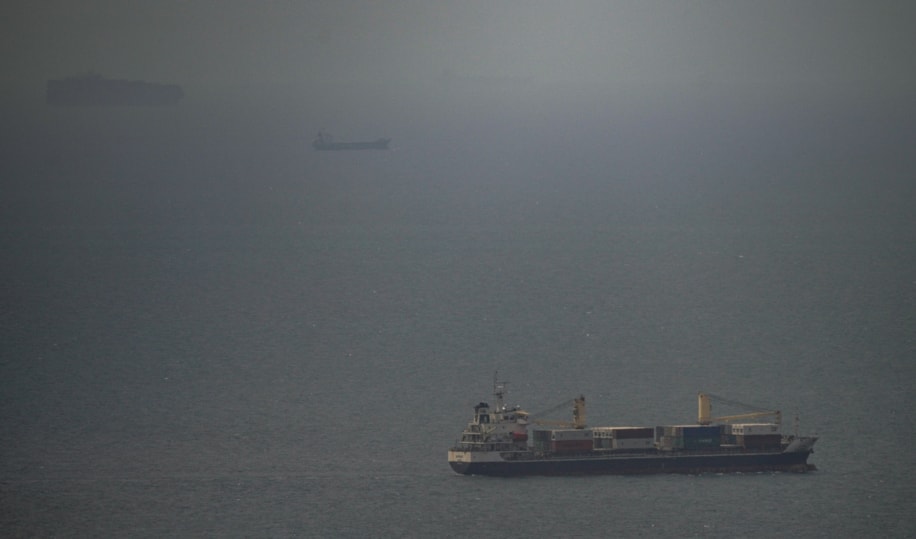
The Jordan-flagged cargo ship "Baghdad" sails in the Gulf towards the Strait of Hormuz in the United Arab Emirates, Wednesday, April 22, 2026. (AP)
Iranian Deputy Speaker of Parliament Hamid Reza Haji Babai announced on Thursday that the first revenues from transit fees imposed on vessels passing through the Strait of Hormuz have been “deposited into the Central Bank account.”
Babai noted that approximately 20% of global oil trade and 35% of global gas shipments pass through the strategic waterway, stressing that “control over it signifies Iran’s role in the international economy.”
Meanwhile, Ahmad Naderi, a member of the Iranian Parliament’s Presidium, confirmed that transit fees in the Strait of Hormuz will be collected in Iranian rials, emphasizing that “these charges will be permanent.”
Hormuz still blocked due to US breaches
Iran previously floated the idea of imposing fees in Chinese Yuan on ships transiting the Strait of Hormuz as a means to establish modern financial regulations away from the US dollar, particularly through routes sovereign to Iran, in response to the continued aggression on the country.
Currently, the strategic waterway remains blocked due to US-Israeli violations in the region, exacerbating strains on the global economy.
Iranian Parliament Speaker Mohammad Bagher Ghalibaf made clear that reopening the critical waterway is conditional. “The reopening of the strait is not possible as long as the ceasefire continues to be blatantly violated,” he said.
Central to reopening the narrow sea route is the halt of the aggression on Lebanon and the end of the naval blockade imposed by the US around the Hormuz Strait.


