
Trump directs aides to prepare for long-term blockade of Iran
 3 Min Read
Trump orders his national security team to prepare for a prolonged naval blockade of Iran, maintaining pressure on its economy and oil exports instead of resuming strikes.
-
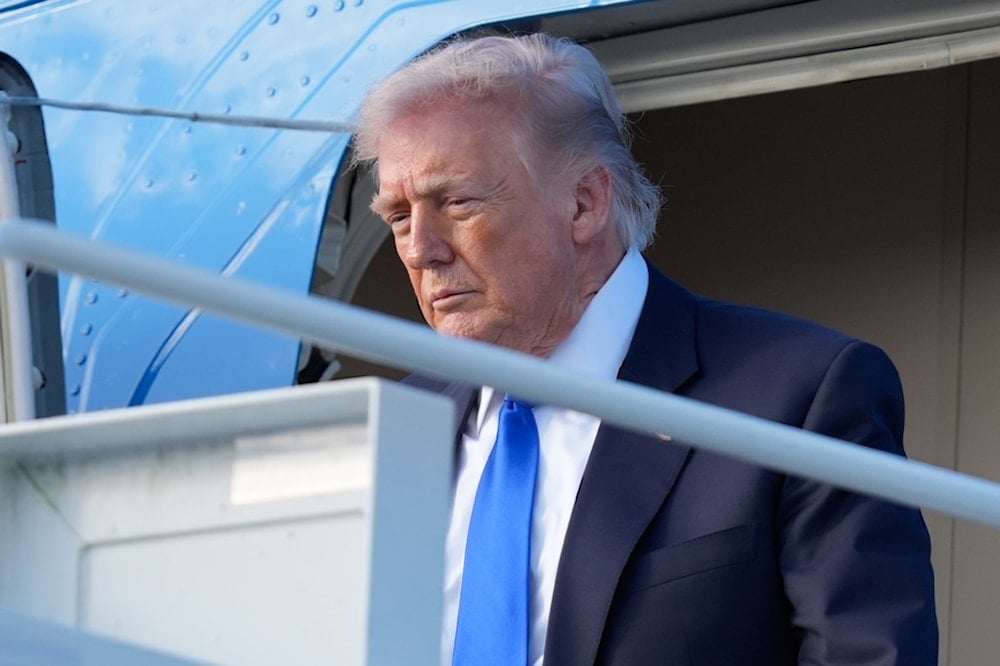
President Donald Trump arrives on Air Force One at Palm Beach International Airport in West Palm Beach, Florida, on April 24, 2026 (AP)
US President Donald Trump has told aides to prepare for an extended blockade of Iran, US officials reported on Tuesday, targeting its finances in a high-risk attempt to force Tehran's capitulation.
During recent meetings, including a Monday discussion in the Situation Room, Trump concluded that continuing to prevent shipping to and from Iranian ports carried less risk than his other options of resuming bombing or withdrawing from the war.
Yet prolonging the blockade also extends a war that has driven up gasoline prices, damaged Trump's polling numbers, and darkened Republican prospects in the upcoming midterm elections. The blockade has also resulted in the lowest number of transits through the Strait of Hormuz since the war began.
Since the April 7 ceasefire took effect, the bombing of Iran has halted, and Trump is now keeping space open for diplomacy after previously issuing threats of extreme military action. However, he continues to pursue a “maximum pressure” approach, aiming to intensify economic and strategic leverage on Iran to compel it to accept a deal that includes the dismantling of its nuclear program.
Trump rejects Iran's three-phase proposal
On Monday, Trump told aides that Iran's three-step offer to reopen the Strait of Hormuz while saving nuclear talks for a final phase proved Tehran was not negotiating in good faith, The Wall Street Journal reported. For now, Trump is comfortable with an indefinite blockade, which he wrote on Truth Social is pushing Iran toward a "State of Collapse."
A senior US official said the blockade is demonstrably crushing Iran's economy, straining its ability to store unsold oil, and has sparked fresh outreach from Tehran to Washington. However, the decision represents a new phase of the war and highlights that the president, who always seeks a quick and saleable victory, lacks a clear path forward.
Unilaterally stopping the fight would offer a quick exit and relief to the US and global economies, but Iran's proposal would have allowed Tehran to set the terms of that off-ramp.
Experts warn of prolonged stalemate
"Iran is calculating that its ability to withstand and circumvent the blockade outstrips the US interest in preventing a wider energy crisis and potentially a global recession," said Suzanne Maloney, an Iran expert and vice president of the Brookings Institution's foreign policy program.
On the other hand, White House spokeswoman Anna Kelly said the US has met Operation Epic Fury's military objectives and that "thanks to the successful blockade of Iranian ports, the United States has maximum leverage over the regime" during negotiations. "The president will only accept a deal that protects the national security of our country."
The lack of a clear, decisive pathway has some US officials saying the eight-week war will likely end with neither a nuclear deal nor a resumption of the war.


