
Iran control of Strait of Hormuz 'permanent': Iranian MP warns Trump
 4 Min Read
Iranian security committee member Alaeddin Boroujerdi says Tehran continues to assert strategic control over the Strait of Hormuz.
-
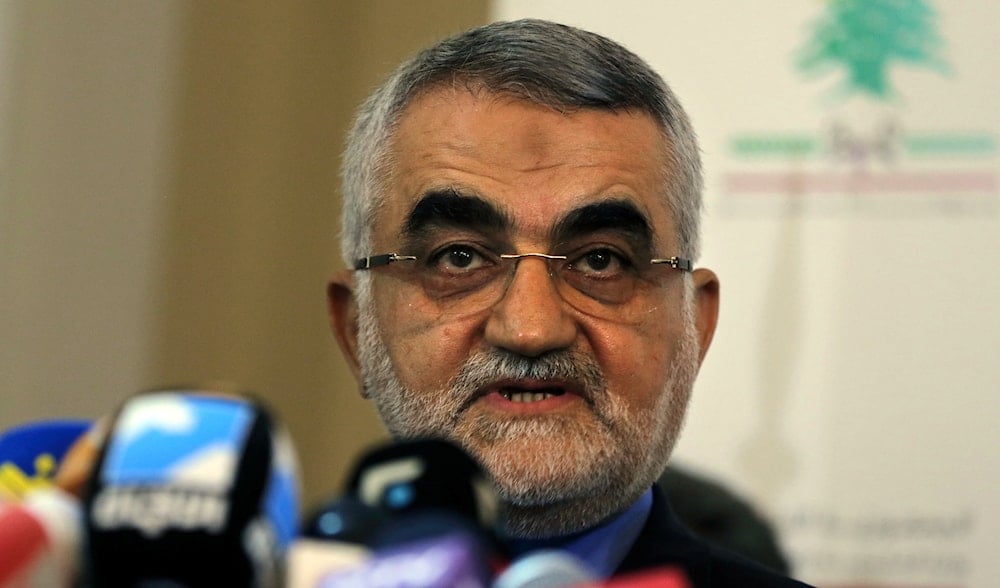
Alaeddin Boroujerdi, then Chairman of the Committee for Foreign Policy and National Security at the Iranian Shura Council, speaks to journalists in Beirut, Lebanon, Monday, Aug. 1, 2016. (AP Photo/Bilal Hussein)
Iranian member of the National Security Committee, Alaeddin Boroujerdi, said on Wednesday that Iran’s control over the Strait of Hormuz would remain “permanent,” while warning US President Donald Trump that Tehran would not “leave him alone".
Speaking in televised remarks carried by Tasnim News Agency, Boroujerdi said Western countries have come to recognize what he described as Iran’s strength and influence, asserting that the Islamic Republic has established a position of deterrence.
He added that negotiations are “not a field for bargaining or humiliation,” stressing that Iran entered the talks under the direction of Iranian Leader Mojtaba Khamenei, while Parliament Speaker Mohammad Bagher Ghalibaf is overseeing the process with his “valuable expertise.”
Boroujerdi also dismissed Trump’s statements as "never-ending empty threats", saying they would only humiliate the United States while reinforcing Iran’s position.
Commenting on a ceasefire with the US, he said it had been extended after two weeks without significant developments, reiterating his warning that Iran would continue to respond to Washington’s actions.
Iran warns of new naval capabilities in face of US threats
The warnings add to a growing pattern of escalation, with Iranian officials signaling readiness to deploy advanced naval capabilities and respond forcefully to any US action, underscoring a more assertive deterrence stance as tensions persist.
Iran has warned earlier today that it could unveil new naval capabilities if the United States makes what it described as another strategic mistake, according to a senior official in the Islamic Revolutionary Guard Corps (IRGC).
Mohammad Akbarzadeh, political assistant to the commander of the IRGC Navy, said Tehran is prepared to reveal advanced maritime capabilities, including what he described as “smart targeting technology,” in response to continued US pressure.
He stated that Iran’s naval forces are ready to introduce new systems if Washington escalates tensions further, framing the warning as part of Iran’s deterrence posture in the region.
Warning of consequences for US naval presence
Akbarzadeh also issued a direct warning regarding US military assets in the region, saying that American warships would face severe consequences in the event of any attack on Iran.
He said that “US giant warships will burn and be taken out of service” if aggression is launched against the country, escalating rhetoric amid already heightened regional tensions.
The IRGC official added that other tools of the Axis of Resistance would be activated in response to any further US escalation, describing coordinated retaliation as part of Iran’s broader deterrence strategy.
Trump directs aides to prepare for long-term blockade of Iran
Iran’s defiant rhetoric over its control of the Strait of Hormuz and warnings aimed at the US president preceded Trump's move that underscored escalating tensions between Washington and Tehran.
Trump has told aides to prepare for an extended blockade of Iran, US officials reported on Tuesday, targeting its finances in a high-risk attempt to force Tehran's capitulation.
During recent meetings, including a Monday discussion in the Situation Room, Trump concluded that continuing to prevent shipping to and from Iranian ports carried less risk than his other options of resuming bombing or withdrawing from the war.
Yet prolonging the blockade also extends a war that has driven up gasoline prices, damaged Trump's polling numbers, and darkened Republican prospects in the upcoming midterm elections. The blockade has also resulted in the lowest number of transits through the Strait of Hormuz since the war began.
Since the April 7 ceasefire took effect, the bombing of Iran has halted, and Trump is now keeping space open for diplomacy after previously issuing threats of extreme military action. However, he continues to pursue a “maximum pressure” approach, aiming to intensify economic and strategic leverage on Iran to compel it to accept a deal that includes the dismantling of its nuclear program.


