
Hormuz traffic stays muted as US continues naval blockade of Iran
 2 Min Read
Shipping data show just seven vessels crossed the Strait of Hormuz in 24 hours, down from a pre-war average of 140.
-
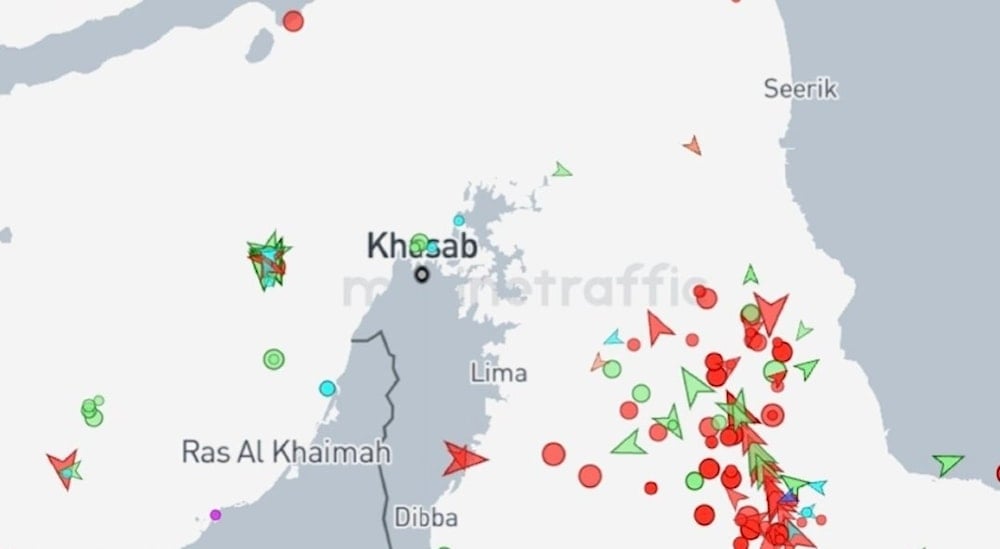
Radar imager showing the build-up of ships near the Strait of Hormuz following Iran's closure of the strait (Marine Traffic)
Shipping movement through the Strait of Hormuz remains at a fraction of pre-war levels, with no breakthrough in sight in stalled Iran-US negotiations, new shipping data showed on Monday.
At least seven vessels crossed the strategic waterway over 24 hours, in line with the suppressed activity recorded in recent days. The ships were mainly dry bulk carriers, including vessels departing Iraqi ports and one dry bulk ship from an Iranian port, according to tracking data from Kpler and satellite analysis by SynMax.
The figure represents a stark drop from the average 140 daily passages recorded through the Strait before the US and "Israel" launched a war on Iran on February 28, 2026, which has effectively choked one of the world's most vital maritime chokepoints.
Iran seizes vessels, shuts commercial passage
The latest flashpoint came on Sunday, when the IRGC Navy intercepted and seized two container ships, the MSC Francesca, a Panamanian-flagged vessel linked to "Israel," and the Epaminondas, at the entrance to the Strait. The Iranian flag was raised aboard the MSC Francesca.
Tehran said the operation was a direct response to US "maritime piracy", manifested in Trump's naval blockade of Iran and his targeting of Iranian vessels.
The IRGC also announced it had closed the passage it had previously kept open for commercial shipping.
Additionally, US-Iran talks aimed at resolving the standoff have stalled, with no deal in sight.
Economic toll mounts
Brent crude reached $108 per barrel on Monday, up almost 50% since the war began, feeding directly into US inflation, which hit 3.3% on an annual basis in March, its highest level since May 2024.
Economists warn that full normalisation of energy supply will take considerable time, given the extent of damage to West Asian energy infrastructure, with some projections placing the Personal Consumption Expenditures index at 4% by year-end, double the Federal Reserve's target.


