
US pressure falls short as Iran leverages Strait of Hormuz
 4 Min Read
The Strait of Hormuz crisis intensifies as US-Iran tensions disrupt oil supply, driving global energy market instability and economic pressure.
-
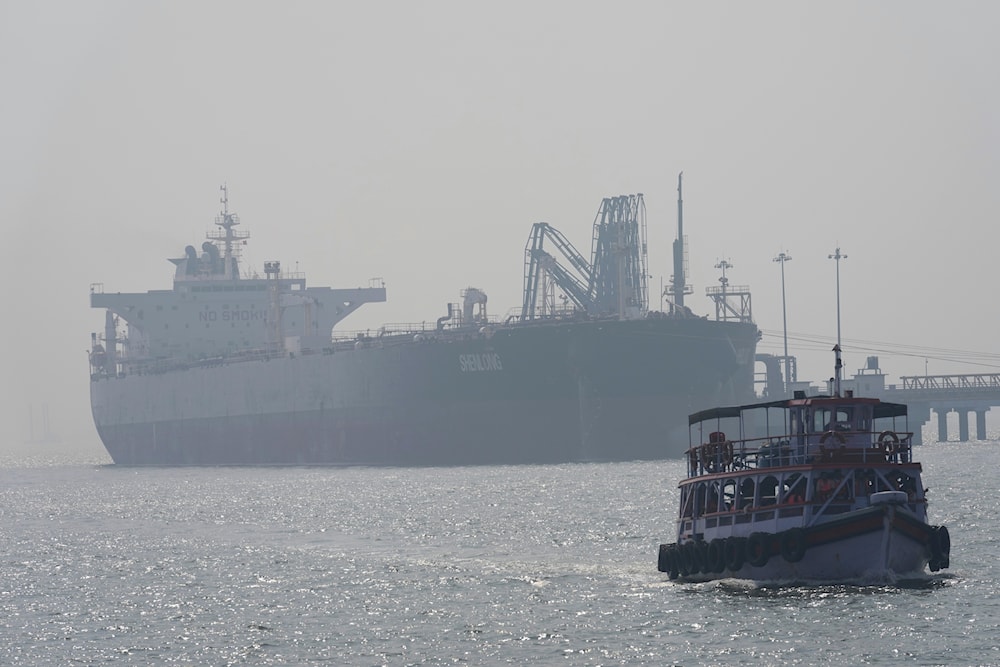
Oil tankers and cargo ships line up in the Strait of Hormuz as seen from Khor Fakkan, United Arab Emirates, Wednesday, March 11, 2026 (AP)
US President Donald Trump’s announcement that the United States would “hold our attack” on Iran until a deal is reached has underscored a widening geopolitical reality: Tehran is leveraging control over the Strait of Hormuz to impose sustained global economic pressure, even as it absorbs mounting domestic costs.
A new report by The Independent on Monday states that Washington's decision marks a significant shift in the US's posture after weeks of escalating threats and a naval blockade aimed at restricting Iranian maritime activity.
While the US continues to apply military and economic pressure, including efforts to choke Iranian trade flows, officials acknowledge that the situation remains unresolved and heavily dependent on diplomatic progress.
Strait of Hormuz as Iran's central piece of leverage
At the centre of the standstill is the Strait of Hormuz, through which roughly a fifth of global oil and liquefied natural gas normally passes. Iran’s ability to disrupt or restrict traffic through the waterway has become its most powerful strategic tool, sending energy prices higher and reshaping global trade dynamics.
Despite facing estimated daily losses running into hundreds of millions of dollars due to reduced trade flows, Iran has demonstrated a high tolerance for economic strain. Analysts say this endurance has limited the effectiveness of US pressure, turning what was intended as coercive containment into a drawn-out contest of resilience.
The US Navy maintains a blockade posture in the region, aiming to restrict Iranian maritime operations and maintain pressure on exports. However, the closure of the strait has also imposed high costs on global markets, contributing to rising fuel prices and inflationary pressure across major economies, including the United States and Europe.
In the US, higher petrol prices are already translating into political sensitivity ahead of domestic electoral cycles, with economists warning that energy-driven inflation could constrain Washington’s strategic flexibility. European economies are also feeling the effects, with officials warning of prolonged instability in energy markets if the disruption continues.
Miad Maleki of the Foundation for Defense of Democracies told The Intercept that while Iran’s economy is under strain, the strategic impact of its actions extends far beyond direct financial losses. By controlling a critical chokepoint in global energy supply, Tehran has been able to impose disproportionate costs on adversaries and global markets alike.
Experts argue that this dynamic reflects a broader asymmetry in the confrontation. Military superiority has not translated into rapid operational control over maritime flows, while Iran’s geographic position allows it to sustain pressure without requiring conventional battlefield success.
Regional and global consequences of a prolonged impasse
Dr. Andreas Krieg, a senior lecturer in security studies, told The Intercept that the situation is economically “corrosive” for all sides, but noted that Iran can “tolerate this kind of pressure longer than most outsiders would like to admit,” while simultaneously reinforcing its internal security structure and political cohesion.
The prolonged impasse is also reshaping regional calculations. Gulf states and global energy actors are accelerating efforts to diversify shipping routes and invest in alternative infrastructure, reflecting growing uncertainty over the reliability of the Strait of Hormuz as a stable artery of global trade.
Britain and France have sought to assemble a multinational effort to stabilise maritime traffic, but have stopped short of direct intervention pending a broader ceasefire arrangement. Meanwhile, diplomatic efforts between Washington and Tehran remain fragmented, with significant gaps still unresolved over security guarantees and economic conditions.
Dr. Krieg notes that the longer the confrontation persists, the more entrenched this pattern becomes: Iran absorbs economic pressure but strengthens its strategic deterrence role, while the United States imposes costs without achieving a decisive reversal of Iranian leverage.
In this evolving confrontation, neither side is achieving a clean resolution. Instead, the Strait of Hormuz has become a focal point of sustained asymmetric pressure, one that is reshaping global energy markets, testing US strategic reach, and reinforcing Iran’s position as a pivotal, if embattled, power in regional geopolitics.


