
5 killed, 28 wounded in Gaza amid continued Israeli violations
 3 Min Read
The Gaza death toll has risen to 73,821 since October 7, 2023, as Israeli strikes continue and casualties are reported across the enclave.
-
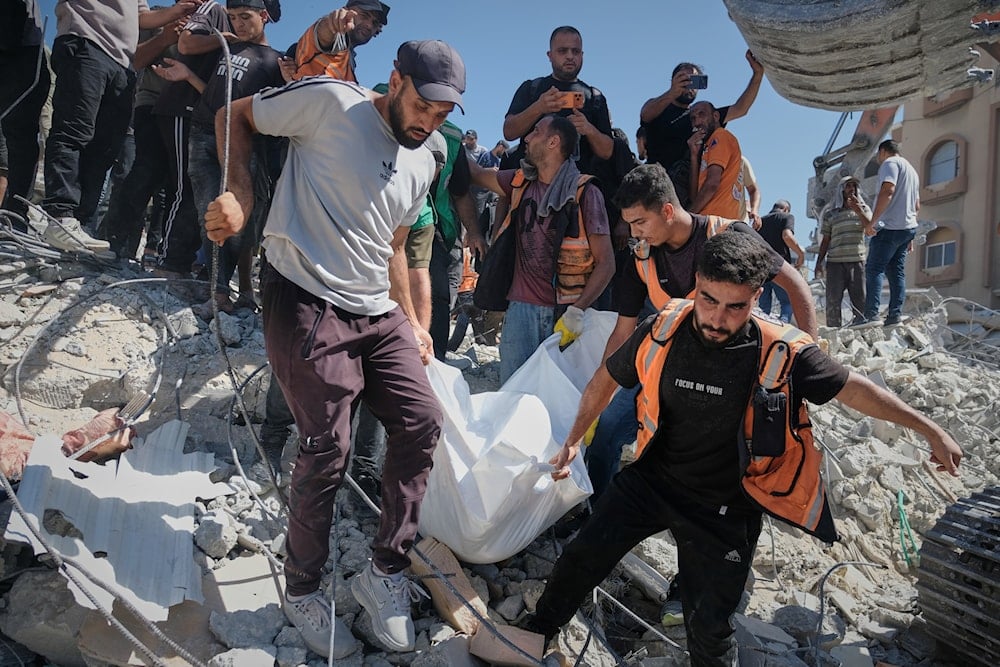
Palestinian civil defense crews carry a body from the rubble of a collapsed building that housed displaced Palestinians and was heavily damaged during the Israel war, in Gaza City, Wednesday, Sept. 16, 2026 (AP)
Five bodies and 28 injured people arrived at hospitals across the enclave over the past 24 hours as a result of ongoing Israeli aggression, the Palestinian Ministry of Health in the Gaza Strip announced on Wednesday.
The ministry said three of the dead were newly killed, while two died of their wounds. Since the announcement of a ceasefire on October 11, 2025, the ministry said the toll has reached 1,386 dead and 4,784 injured, in addition to the recovery of 831 bodies from under the rubble.
The cumulative toll since the start of the strikes on October 7, 2023 has risen to 73,821 dead and 174,897 injured, according to the ministry.
Building collapse kills 21 in Gaza
The collapse of a building in the Gaza Strip on Tuesday killed 21 people and injured more than 14 others so far, with a number of people still missing, raising the total number of deaths from building collapses to 61, the ministry said.
The Al-Saada Building in the Gaza Strip collapsed at dawn on Tuesday due to cracking in ceilings, walls and foundations and severe damage sustained as a result of continuing Israeli bombardment of the enclave, according to the ministry.
Israeli strikes on the Gaza Strip continue by air and artillery and through machine-gun sweeps, causing deaths and injuries on a near-daily basis, the ministry said, alongside "Israel's" failure to honor its commitments under the ceasefire agreement, particularly regarding the entry of humanitarian aid, necessities of life and logistical equipment for the health sector.
Hospitals face critical fuel shortage
Earlier on September 16, the Health Ministry said hospitals are facing acute shortages of fuel, oil and spare parts needed to operate the remaining main power generators.
The ministry said more than 70% of the generators had already gone permanently out of service, warning that critical and life-saving departments could be forced to stop operating at any moment.
The ministry also said an unprecedented shortage of medicines and medical consumables, coupled with malfunctioning diagnostic equipment, was further undermining healthcare provision.
At the same time, patients and wounded people waiting for treatment abroad remain unable to access external medical care because exit routes remain closed, according to the ministry.


